From Hunting Cranes to Harvesting Honey: How Beekeeping is Transforming Lives in Kenya
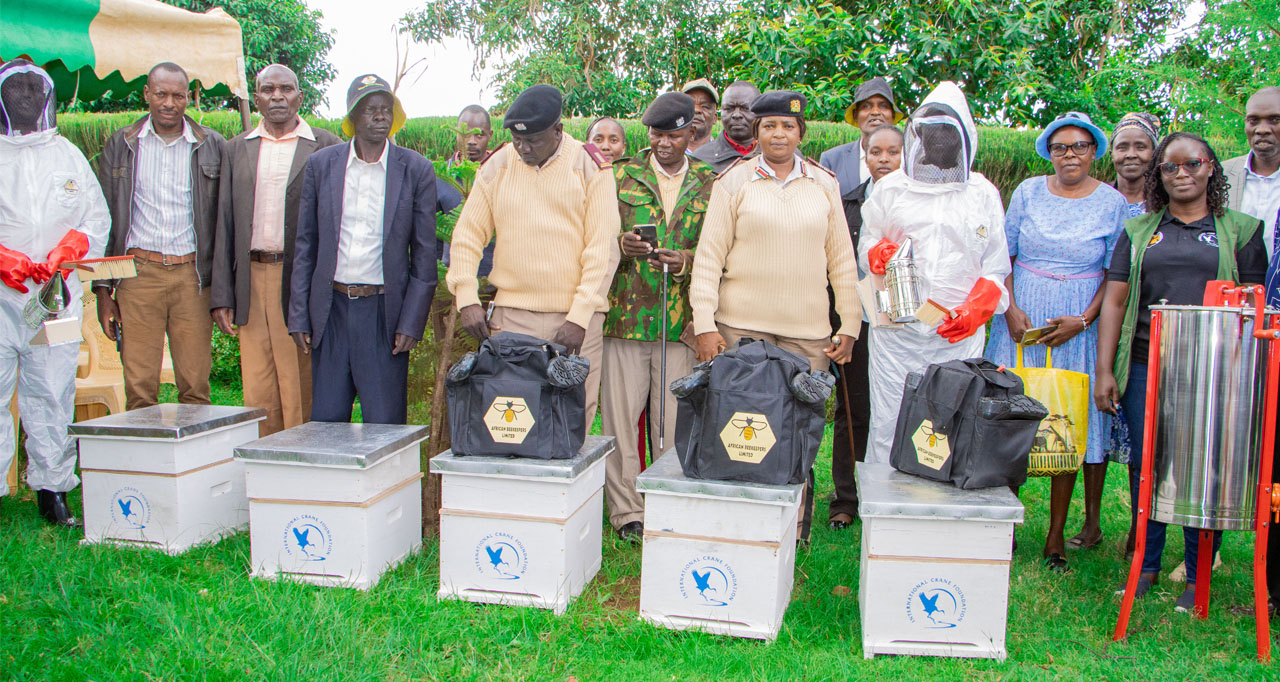
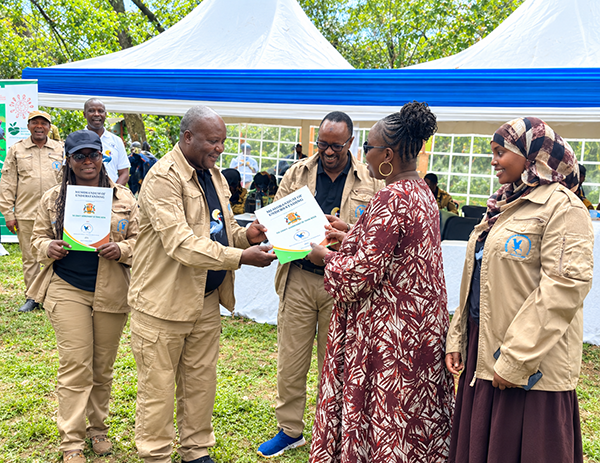
The local community and administration officials receive beehives from International Crane Foundation field staff in Kitale.
CONTACT: Jim Ongowo, Communications & Marketing Specialist, East Africa
On the edge of Ziwa Wetland in Uasin Gishu County, where morning mist rises slowly from reeds and papyrus and the calls of Grey Crowned Cranes echo across open water, a quiet but profound transformation is taking place. It is a place where conservation and survival have long existed side by side, sometimes in harmony and often in tension, as communities depended on the wetland even as its ecological health steadily declined.
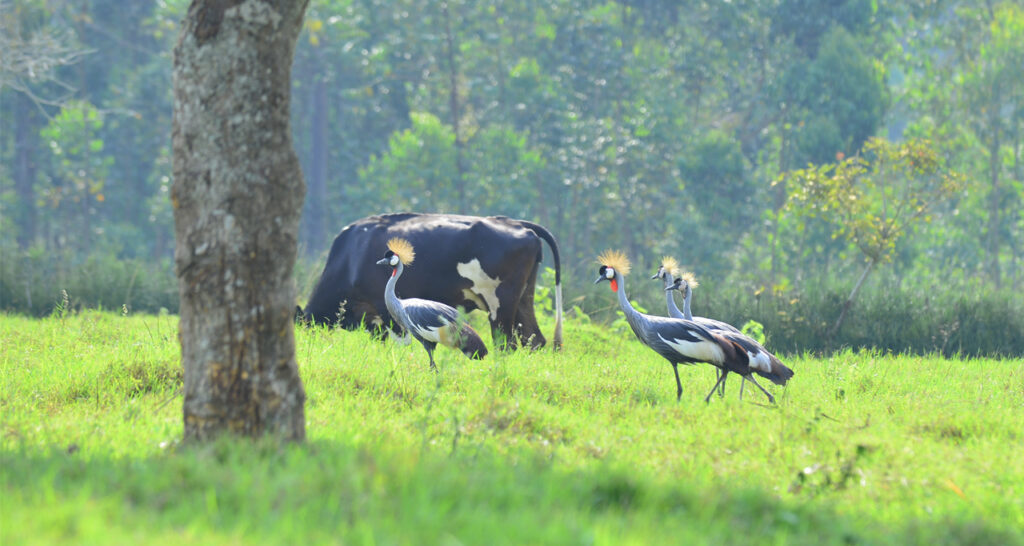
Ziwa Wetland, which spans more than 800 acres, is one of Kenya’s most important habitats for the Grey Crowned Crane. During a 2019 census, more than 1,000 cranes were recorded in a single sighting, a striking reminder of the wetland’s ecological significance. Yet for many years, the people living around it remained largely disconnected from the benefits of conserving the very ecosystem that sustained them.
That disconnect is now beginning to change. Through the Enriched Buffer Zones programme led by the International Crane Foundation, a new model of conservation is taking root, one that seeks to link the protection of wetlands with tangible benefits for the communities who depend on them. Seventy-one riparian land users have been supported to establish buffer zones along the wetland, planting indigenous trees, fruit trees, and fodder crops, while also adopting beekeeping as a sustainable livelihood.
The idea is simple but powerful. When conservation supports livelihoods, communities are more likely to protect the ecosystems they once exploited.
In a significant milestone, the programme has provided 142 modern beehives, along with honey harvesting kits and processing machines, to local groups. But the most important investment has not been in equipment. It has been in people. Before the hives were handed over, beneficiaries underwent hands-on training in apiary management, learning how to care for bees, harvest honey, and process it into marketable products that can support long-term income generation.
The impact of this shift is already being felt in the community, where attitudes toward the wetland and its wildlife are changing in deeply personal ways.
At the heart of this transformation are individuals whose perspectives have shifted in profound ways. One villager candidly reflected on this change, saying:
His words capture not only a change in livelihood, but a deeper shift in identity, where conservation is no longer seen as an external demand but as part of daily life and future opportunity.
The handover ceremony that marked this milestone brought together key local leaders and institutions, including the Deputy County Commissioner, the area chief, and representatives from the Water Resources Authority, the National Environment Management Authority, and the County Government of Uasin Gishu. Their presence reflected a growing consensus that environmental protection and community development must move forward together.
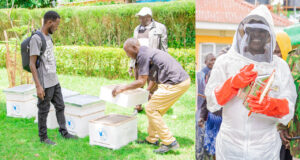
(Left): The local community members receive beehives from ICF field staff. (Right): Beekeeping expert demonstrates the use of honey harvesting equipment.
As the hives begin to buzz across the buffer zones, the changes are becoming visible in more than just economic terms. Households are reporting improved incomes, reduced pressure on the wetland, and a renewed sense of ownership over conservation efforts. With fewer disturbances in the wetland, conditions for species such as the Grey Crowned Crane are expected to improve, strengthening the ecological health of the entire system.
What is unfolding at Ziwa is more than a conservation project. It is a redefinition of how people and nature coexist, built on the understanding that protecting ecosystems begins with improving human livelihoods.
As the first honey harvests draw closer, the sound of bees now joins the calls of cranes across the wetland, signaling not just ecological recovery, but a new partnership between people and the land they call home.