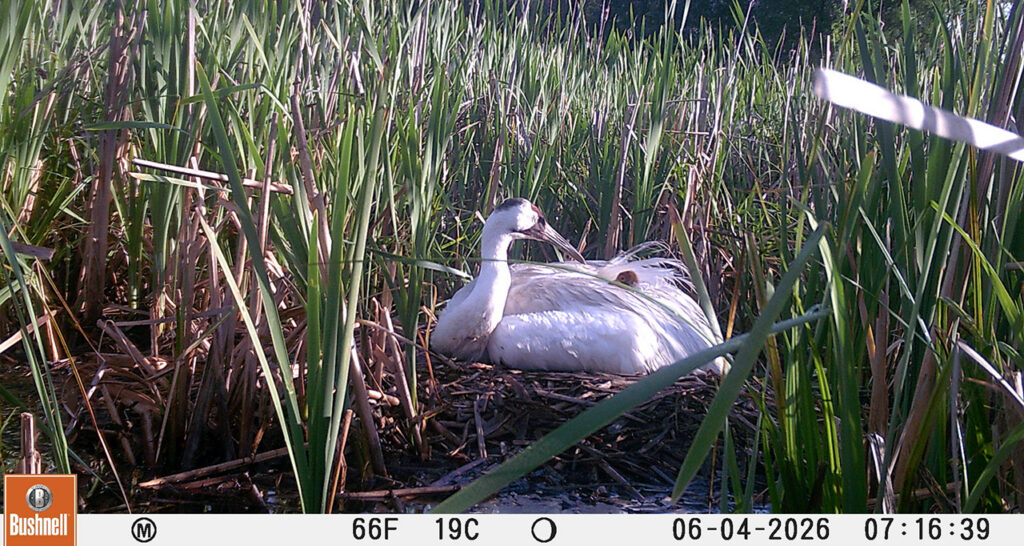
We are excited to announce that there are four new Whooping Cranes flying over the wetlands of Wisconsin! Each spring, Whooping Cranes return to their home marshes, pile vegetation high to build their nests, and carefully lay up to two eggs. They incubate their eggs for about a month, and then fuzzy little Whooping Crane chicks hatch.
We are excited to announce that there are four new Whooping Cranes flying over the wetlands of Wisconsin! Each spring, Whooping Cranes return to their home marshes, pile vegetation high to build their nests, and carefully lay up to two eggs. They incubate their eggs for about a month, and then fuzzy little Whooping Crane chicks hatch.
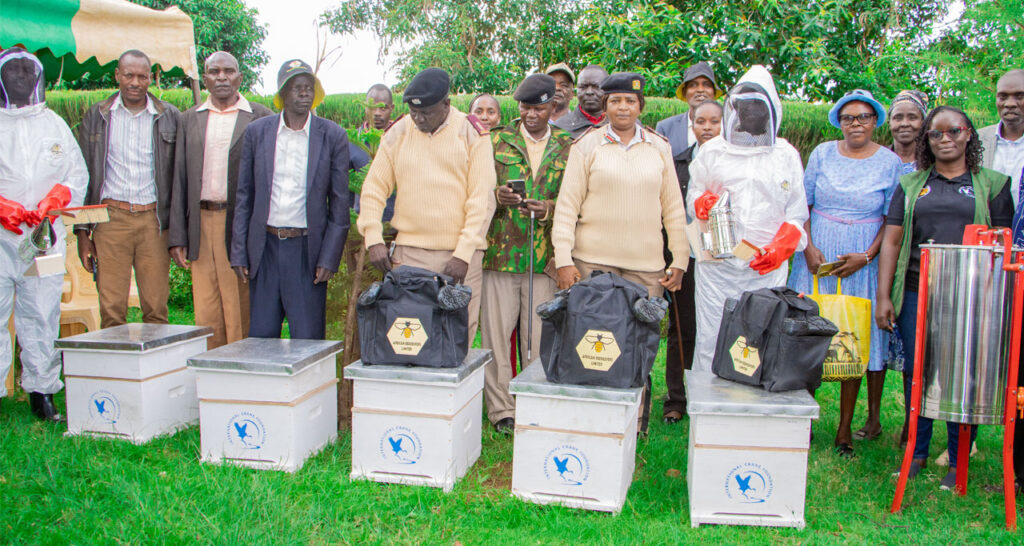
In a significant milestone, the programme has provided 142 modern beehives, along with honey harvesting kits and processing machines, to local groups. But the most important investment has not been in equipment. It has been in people. Before the hives were handed over, beneficiaries underwent hands-on training in apiary management, learning how to care for bees, harvest honey, and process it into marketable products that can support long-term income generation.
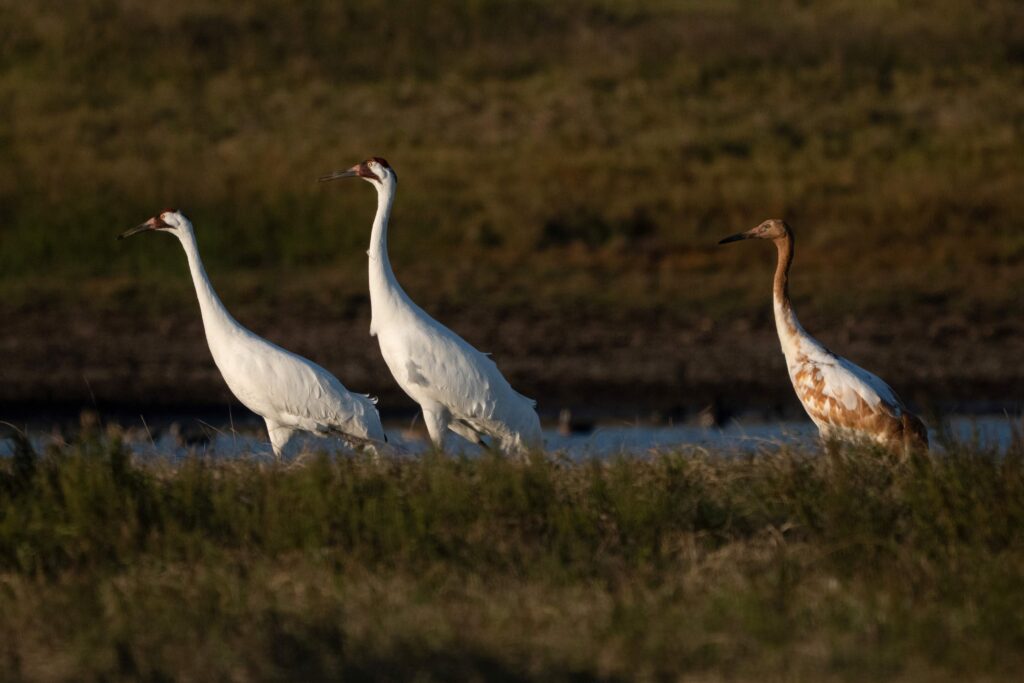
Annual USFWS aerial surveys estimate 540 Whooping Cranes near Aransas NWR in 2025–2026 — roughly flat with last year’s estimate of 557 — as the species enters its tenth year above 500 individuals.
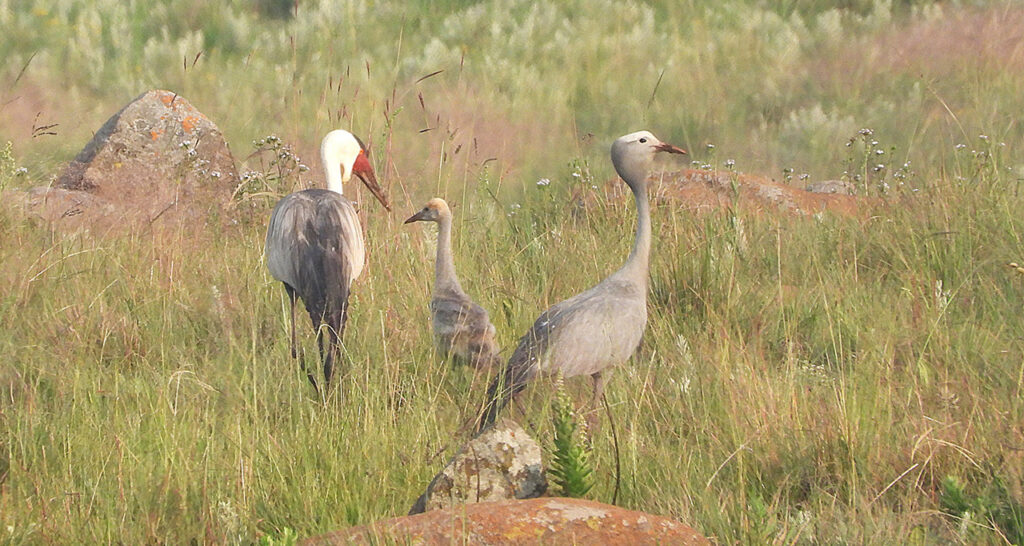
For the last few years, we have been receiving reports of a lone Wattled Crane among Blue Cranes in Mpumalanga province, eastern South Africa. Never in our wildest dreams did we think a Wattled crane would pair up with a Blue Crane, but the inevitable happened.
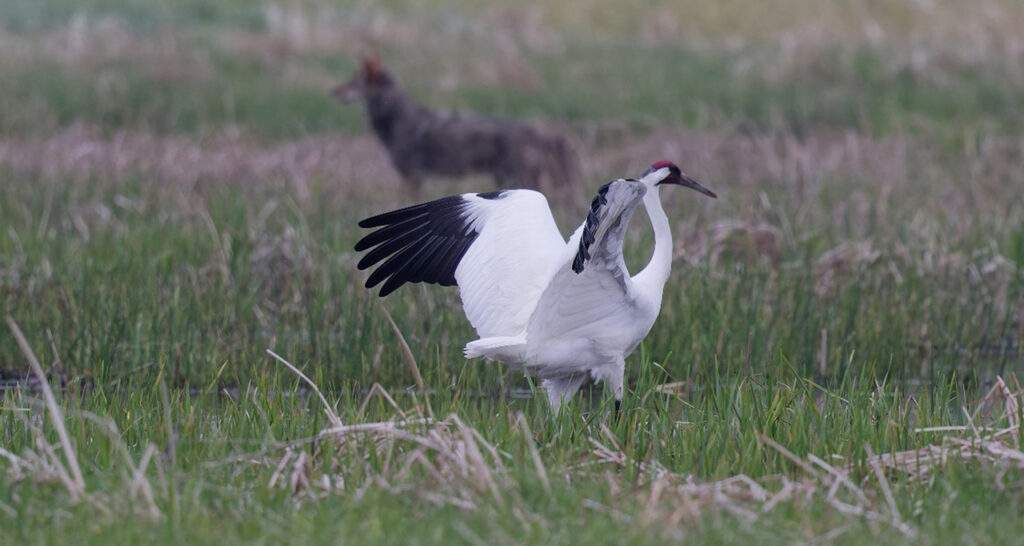
From 2019-2024, our team monitored 81 Whooping Crane nests across Wisconsin to determine the main predators of the population’s eggs.

The Government of the Republic of Zambia through the Ministry of Green Economy and Environment, in partnership with the Ministry of Tourism, the International Crane Foundation and WWF Zambia, has launched a five-year US$9 million Global Environment Facility (GEF) Kafue Flats Project aimed at restoring the Kafue Flats ecosystem, and securing wildlife habitat and species, while improving livelihoods, strengthening climate resilience, and supporting sustainable development for communities across the wetland landscape.
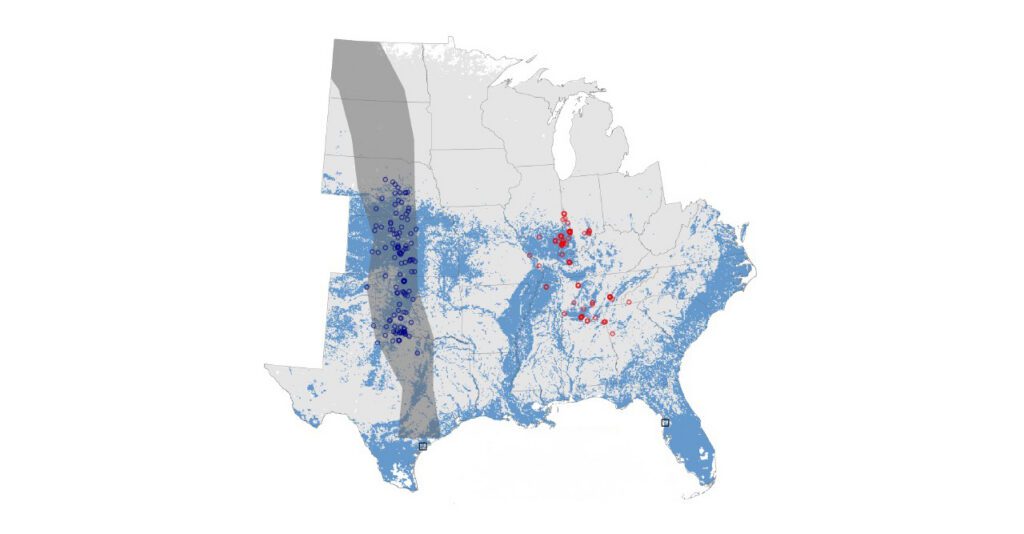
The two populations of North America’s migrating Whooping Cranes exhibit vastly different behaviors on their journey south. The remnant Aransas-Wood Buffalo Population (AWBP) migrates about 2,500 miles along the Central Flyway to reach their historic wintering grounds in coastal Texas. The Eastern Migratory Population (EMP), a reintroduced population established in 2001, was originally taught to fly to coastal Florida to salt marshes that mimic the conditions of the wintering habitat in Texas.
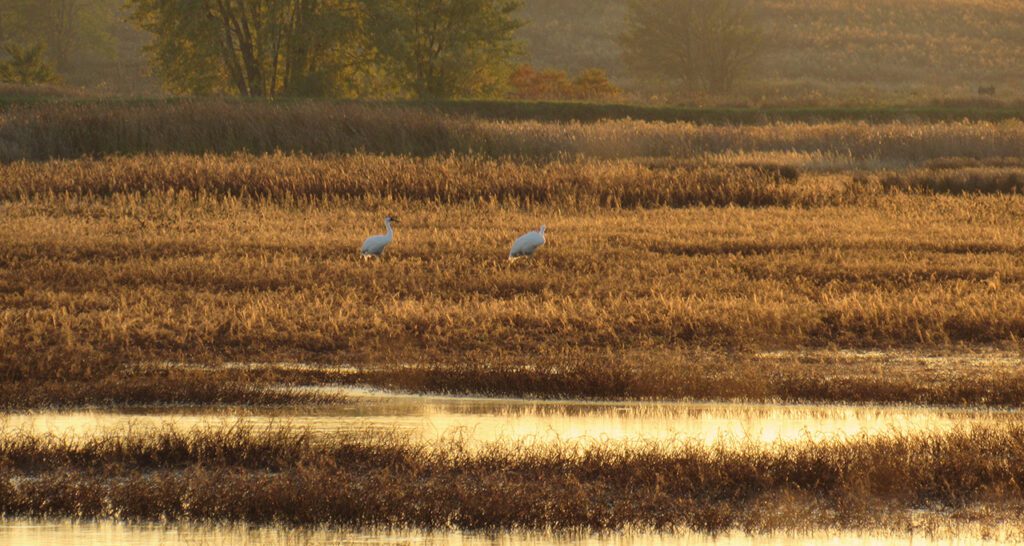
For decades, conservationists have worked to combat threats that nearly drove the Whooping Crane to extinction. Their population hit a historic low of only 21 individuals in the wild in the 1940s. As part of the effort to save the species, a population of migratory Whooping Cranes was reintroduced to Wisconsin in 2001, known as the Eastern Migratory Population, or EMP. Today, the EMP consists of around 70 individuals who spend their summers in Wisconsin before migrating further south for the winter, mostly in Alabama and Indiana. Through this reintroduction and countless other conservation measures, there are now about 700 Whooping Cranes in the wild in three populations. Despite this impressive growth, threats continue to emerge that threaten the species’ survival, and these must be met with creative research, dedicated partnerships, and decisive action to safeguard the future of Whooping Cranes.

In a landmark conservation achievement for the Texas coast, a coalition of partners at the International Crane Foundation, The Conservation Fund, and the Coastal Bend Bays & Estuaries Program has secured permanent protection for more than 3,300 acres of high-priority wintering habitat for the federally endangered Whooping Crane, one of North America’s rarest and most endangered birds.
No results found.
Adjust the filters and try again.