What Exactly Is Happening with the Endangered Species Act?
What Exactly Is Happening with the Endangered Species Act?
If you’ve seen headlines this week about the Endangered Species Act (ESA) being “rolled back,” you might be wondering what that actually means — and why we’re so concerned. Here’s a plain-language breakdown of what changed, why it matters, and what it means for species like the Whooping Crane.
What is the ESA?
The ESA is a federal law passed in 1973, widely considered one of the most effective conservation laws in the world. It’s credited with saving 99 percent of the species it has protected from extinction — species that, without it, would very likely be gone today. Bald Eagles, Gray Wolves, American Alligators, and Whooping Cranes all owe their continued existence, at least in part, to this law.
The ESA works by identifying species at risk of extinction and giving them legal protections. Crucially, for more than four decades, the law has also been applied to protect species’ habitats — the places those animals live. Simply put, a species can’t survive if its habitat disappears, even if not a single individual animal is ever directly touched.
What changed?
On Friday, July 10, 2026, the Trump administration finalized a change that fundamentally alters how the Endangered Species Act can be used to protect threatened species like the Whooping Crane and countless others.
The change provides a redefinition of the word “harm” under the ESA. That might sound like a small technical detail. It isn’t.
For five decades, the Endangered Species Act has made clear that preventing “harm” to a species includes preventing the destruction or degradation of the species’ habitat — the loss of the wetlands, grasslands, and other natural areas it needs to survive. This interpretation was challenged in 1995 and upheld by the U.S. Supreme Court in Babbitt v. Sweet Home Chapter of Communities for a Great Oregon, cementing habitat protection as a core part of how the law functions.
With this shift, the Endangered Species Act no longer protects those vital habitats. “Harm” is now defined only as causing direct injury to an animal. Habitat destruction is no longer considered unlawful harm unless a protected animal is directly injured or killed.
Federal habitat protection for Whooping Cranes and so many other species under the Endangered Species Act is gone.
Why does this matter?
Because for most endangered species, habitat loss — not direct harm — is the primary threat to their survival.
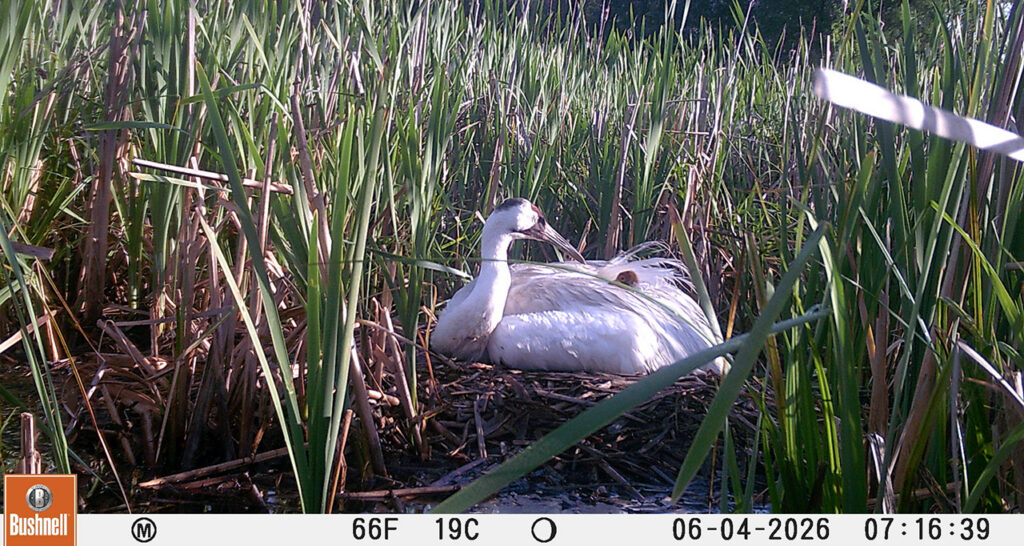
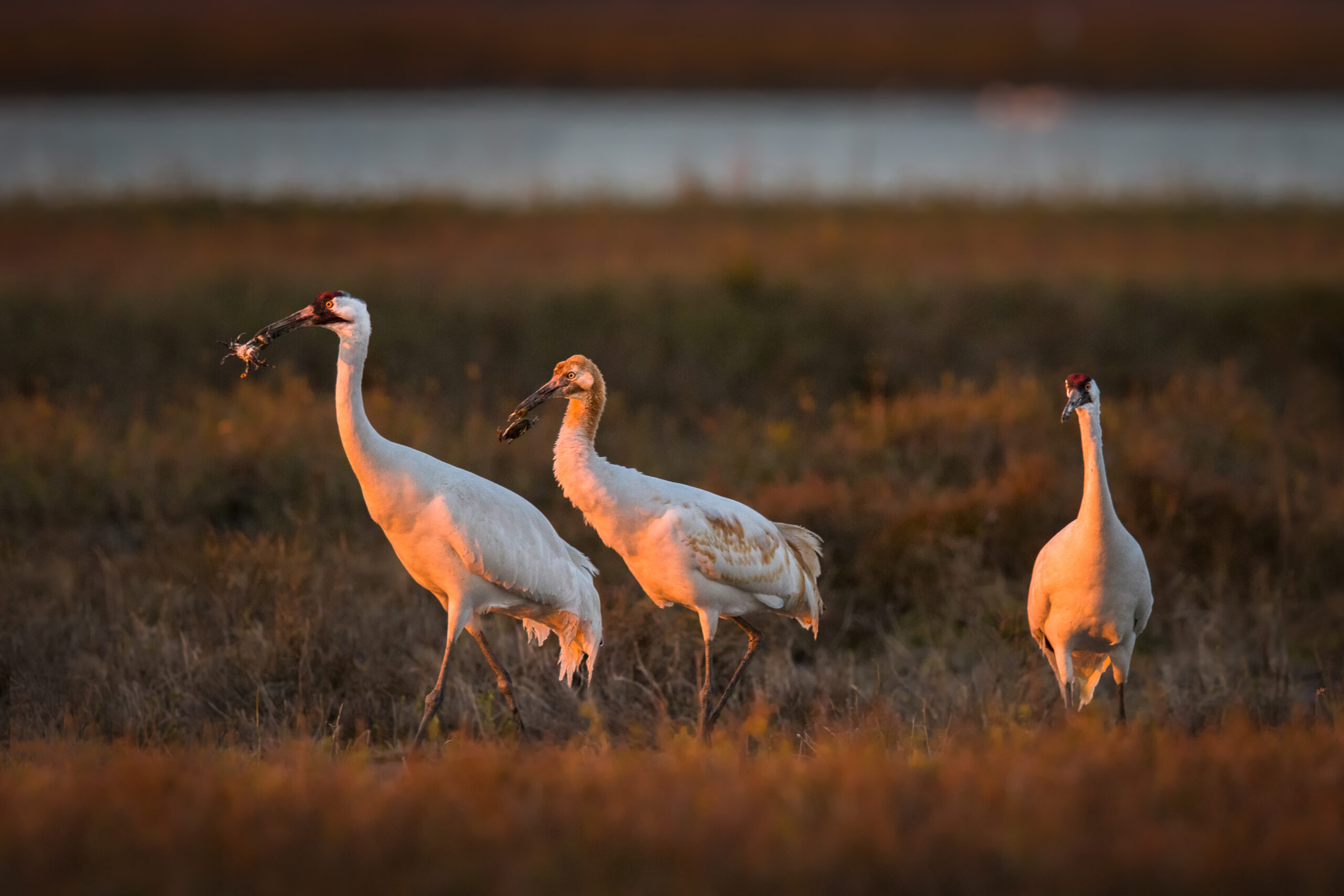
Consider the Whooping Crane, North America’s tallest bird and one of its rarest. Whooping Cranes were among the very first species protected when the ESA became law in 1973 — the same year the International Crane Foundation was established.
At the time, fewer than 50 birds remained in the wild, driven nearly to extinction by unregulated hunting and massive habitat loss. Today, thanks in large part to habitat protections under this law, there are nearly 700 wild Whooping Cranes. That recovery is one of the great American conservation stories, and it is a direct result of this law working exactly as intended. Whooping Cranes are living proof that the Endangered Species Act works.
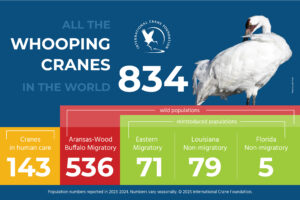
Whooping Cranes migrate the length of the continent, and their survival depends on an unbroken chain of healthy habitat. Protecting that chain of wetlands and grasslands along their entire migratory corridor is also vital to hundreds of other lesser-known species not covered by the ESA. Take away habitat protection, and you take away the mechanism that made that recovery from near extinction possible in the first place.
You cannot protect a species while allowing the destruction of the places it needs to survive. A Whooping Crane cannot nest in a wetland that has been drained. It cannot feed in a grassland that has been paved over or converted. Removing habitat destruction from the definition of “harm” does not change what actually harms wildlife — it only changes whether the law is allowed to do anything about it.
And Whooping Cranes aren’t unique in this. The same is true for most of the more than 1,600 species currently protected under the ESA.
Is this just about cranes?
No — and that’s an important point. Aside from the hundreds of species protected under the ESA, so many species share overlapping habitat. Protecting the range of one species has always had ripple effects for many others that don’t have legal protections of their own. A protected wetland doesn’t just shelter Whooping Cranes; it shelters countless other birds, amphibians, fish, insects, and plants that live alongside them.
When habitat protection is weakened for one species, the effects extend far beyond that species alone.
What happens now?
This redefinition doesn’t repeal the ESA itself — species are still formally listed as threatened or endangered, and other protections remain in place. But one of the law’s most powerful tools, the one most responsible for its 99 percent success rate, has been significantly narrowed.
Conservation organizations, including the International Crane Foundation, are voicing strong opposition to this change and urging that it be reconsidered. Legal challenges are also expected to prevent implementation of the rule change.
In the meantime, our on-the-ground conservation work — land protection, habitat restoration, partnerships with landowners — continues. It’s simply operating with fewer legal guardrails than it had a week ago.
It’s easy to think of endangered species laws as abstract or distant from daily life. But the ESA represents a fairly simple idea: that some things, once lost, cannot be brought back — and that as a society we must work together to save these places we all depend upon.
Fifty years of recovery, for hundreds of species, was built on that idea. Without this vital tool, Whooping Cranes and so many other species face an even greater hurdle to a thriving future.

Story submitted by Ryan Michalesko, Senior Communications & Marketing Specialist.