Balancing the Flock: A New Male Black-necked Crane Hatches at the International Crane Foundation
With pride, we introduce you to our new Black-necked Crane chick, Shire.
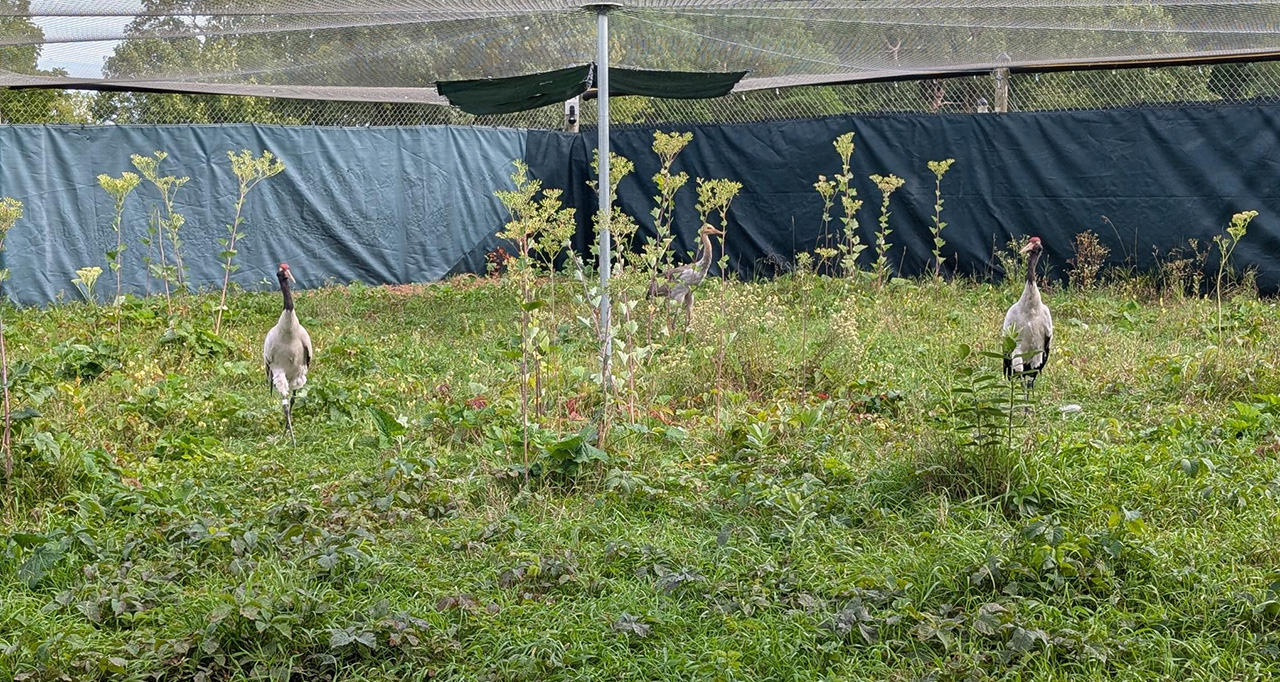
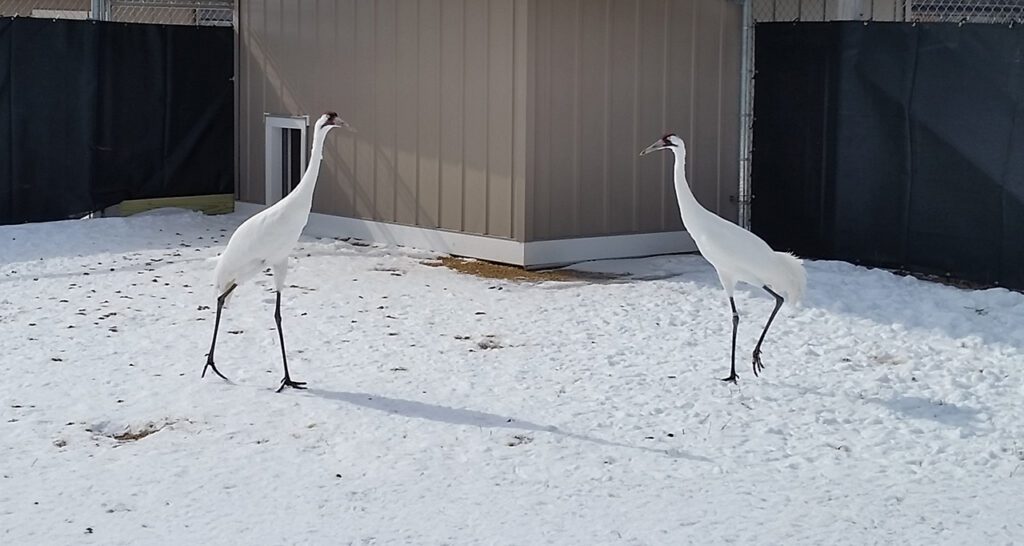
Two-month-old Black-necked Crane Shire (center) stands with his parents, Gimli and Glacier, in their Crane City habitat. Photos by Crane Conservation Department staff/International Crane Foundation
In the mid 1980s, the International Crane Foundation was gifted a pair of Black-necked Cranes from China, becoming the first organization in North America to hold this species. From that original pair of cranes, we learned important Black-necked Crane husbandry and breeding techniques. The International Crane Foundation’s Black-necked Crane population grew over the next few decades until the early 2000s, when our breeding focus shifted more toward Whooping Crane reintroduction work.
Today, as our residential crane population ages, we find ourselves needing to reestablish breeding goals for some species. Our Black-necked Cranes are one of those species. Not only are our cranes getting older, but most of our Black-necked Cranes are female, so we need males to balance out our female-to-male ratio. Additionally, our Black-necked Cranes all originated from a single pair, so most of them are related to one another. All except for one 35-year-old, genetically diverse, and therefore, very valuable male, named Bhutan.
Due to his disposition, Bhutan is not physically paired but shares a fence line with a female Black-necked Crane in our breeding facility, Crane City. On the opposite end of Crane City lives a pair of female Black-necked Cranes, Gimli and Glacier. Over the past several years, Gimli and Glacier have laid eggs and have done a fantastic job incubating valuable Whooping Crane eggs. Still, it was high time for them to shine by helping out their own species and raising a chick of their own, preferably a male.
As with many of our breeding plans, our Crane Conservation Department staff utilized assisted reproduction techniques to produce fertile eggs. Only one of the females, Gimli, was selected to produce fertile eggs so that we could be confident in the chick’s parentage. As is typical for this female pair, Gimli and Glacier each laid two eggs, for a total of four eggs, in their nest. All four eggs had to be incubated since we were not confident which female laid which eggs. Our staff waited 10 days to verify the eggs’ fertility, hoping that at least one would be fertile.
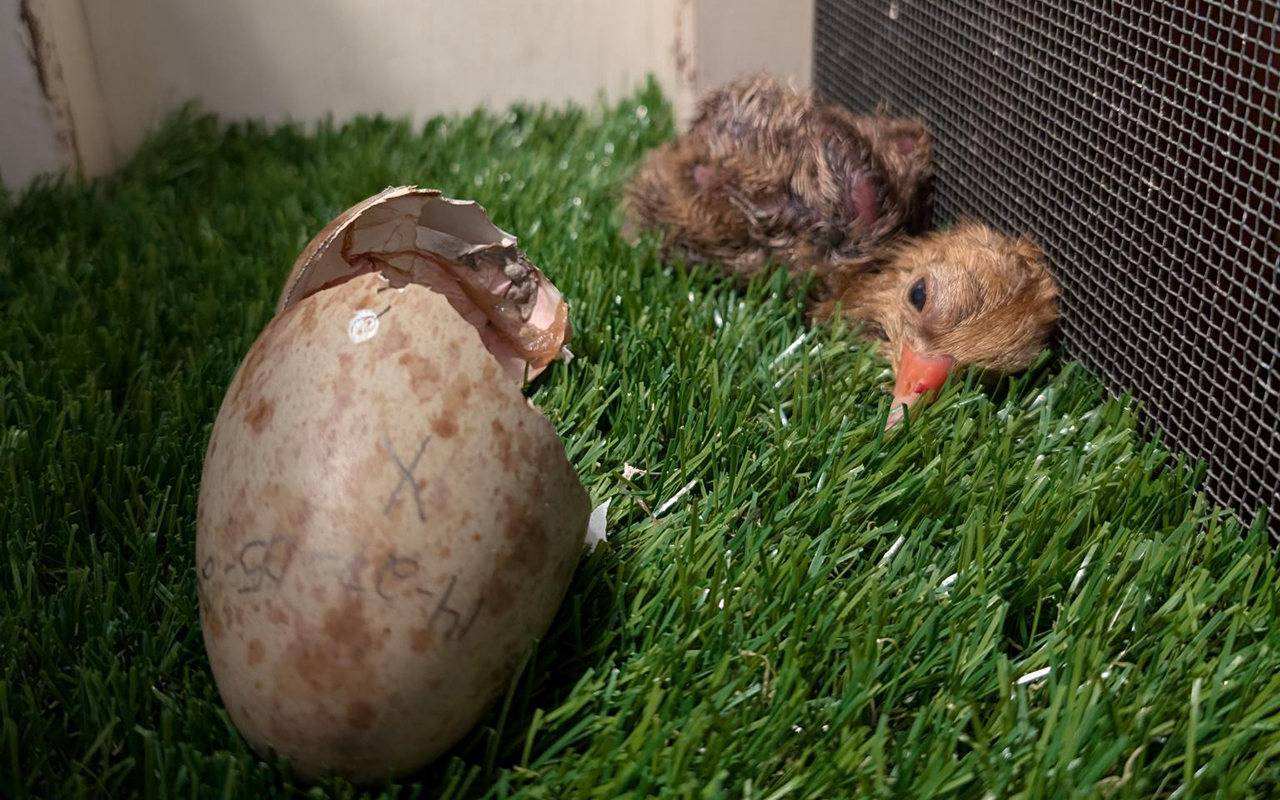
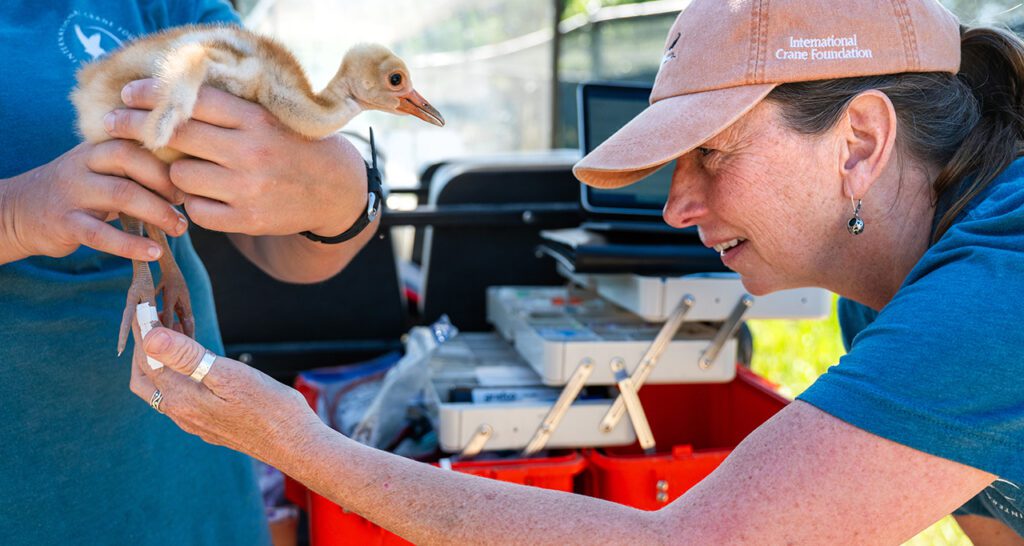
Black-necked Crane chick Shire rests in the hatcher shortly after our staff gently helped him out of the shell.
Much to our delight, two eggs were fertile! However, the team would have to wait another 10 days before the embryos were sufficiently developed to safely take a small blood sample to determine whether they were male or female. Unfortunately, one of the eggs failed early in the incubation process, putting a lot of pressure on the remaining egg to succeed. Around Day 20 of incubation, a small blood sample was taken from the egg and sent to the lab. The developing embryo was a male!
As the egg neared hatching, we observed that its air cell was not growing as it should have in preparation for hatching. This can be detrimental to the embryo, as it needs the pocket of air at the large end of the egg to take its first breaths. Once again, the pressure was on! We made mental preparations to help our Black-necked Crane egglet hatch. As anticipated, the egglet ended up starting the hatching process but failed to progress – he was just too big for the shell! The egglet failed to lose enough water (and therefore weight) during incubation, so he was too big, and his aircell was too small. Incubation staff gently helped him out of the shell, and he was lovingly and temporarily named “Chunky Monkey.”
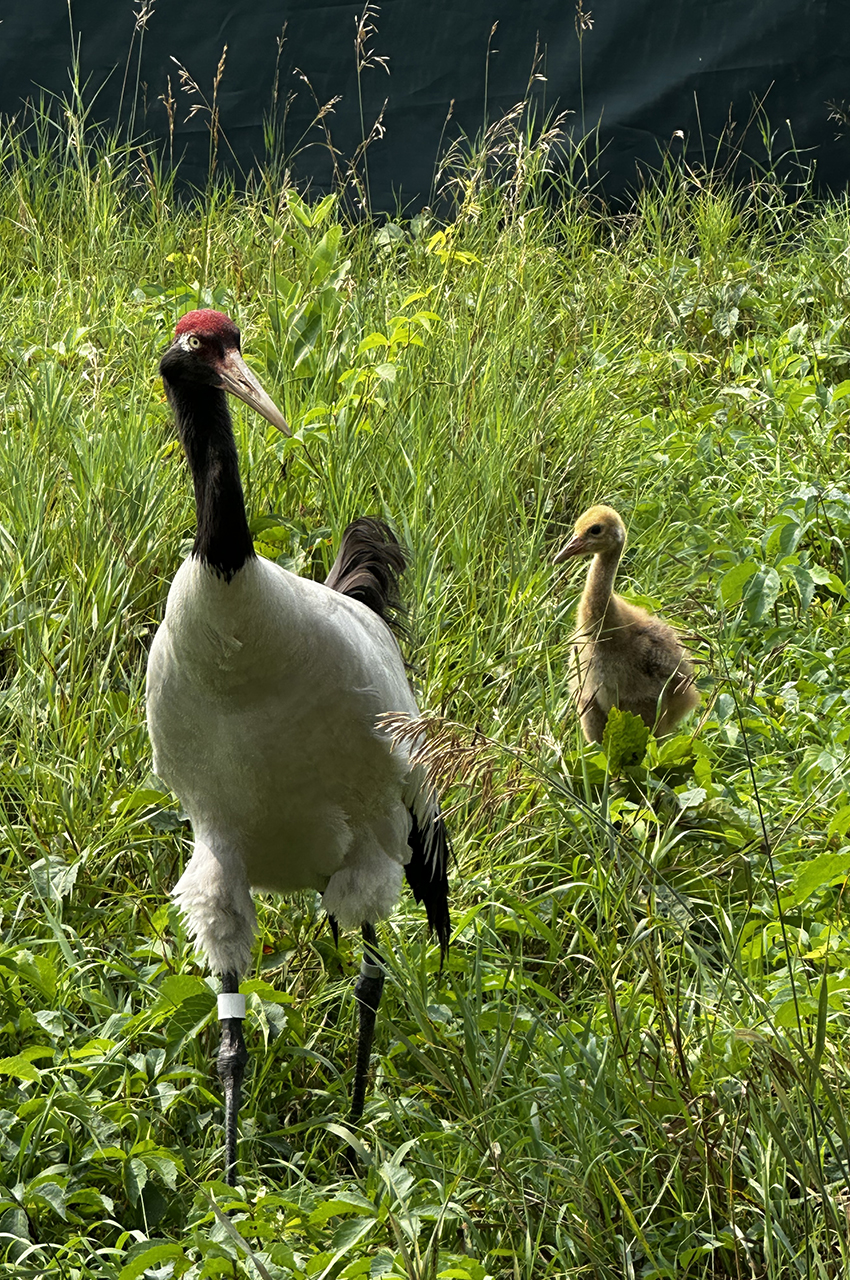
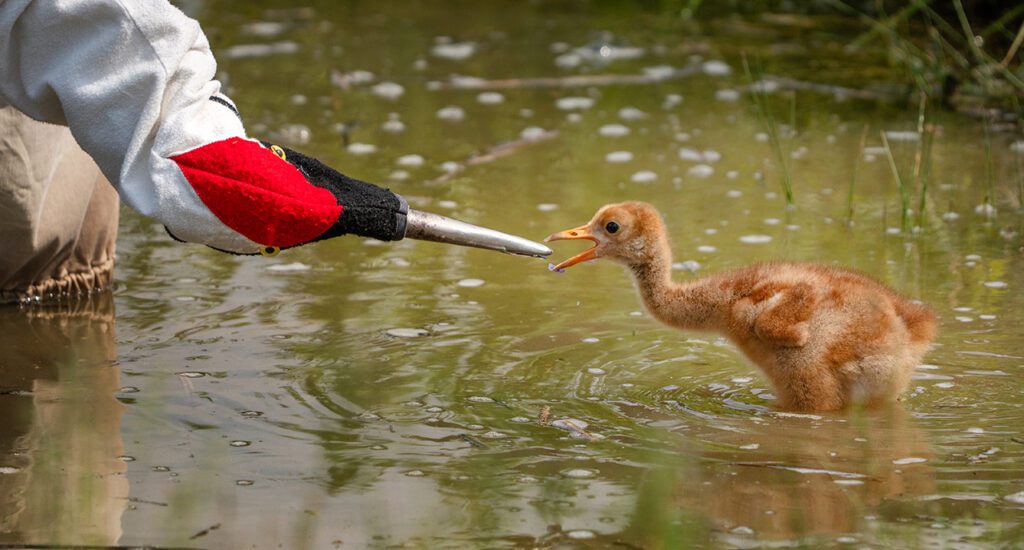
Once hatched, “Chunky Monkey” was placed in Gimli and Glacier’s nest to be reared. Gimli gravitated right to the chick and started brooding him immediately. Since Gimli and Glacier were new parents, the new family has been closely monitored by the Aviculture and Conservation Medicine staff to ensure their success. We provided lots of insects daily, in addition to their pelleted diet, to help the new family thrive and ensure plenty of treats for everyone to enjoy. After a couple of days, both parents instinctively figured it out, began feeding him lots of food, and he started to grow big and strong. Big and Strong like a Shire.
Gimli displays a bustle threat as she stands protectively in front of Shire – our staff is checking on the family through their enclosure door.
Story by Senior Aviculturist Kyle Tainter and Assistant Curator of Birds Cyndie Gitter
September 2, 2026