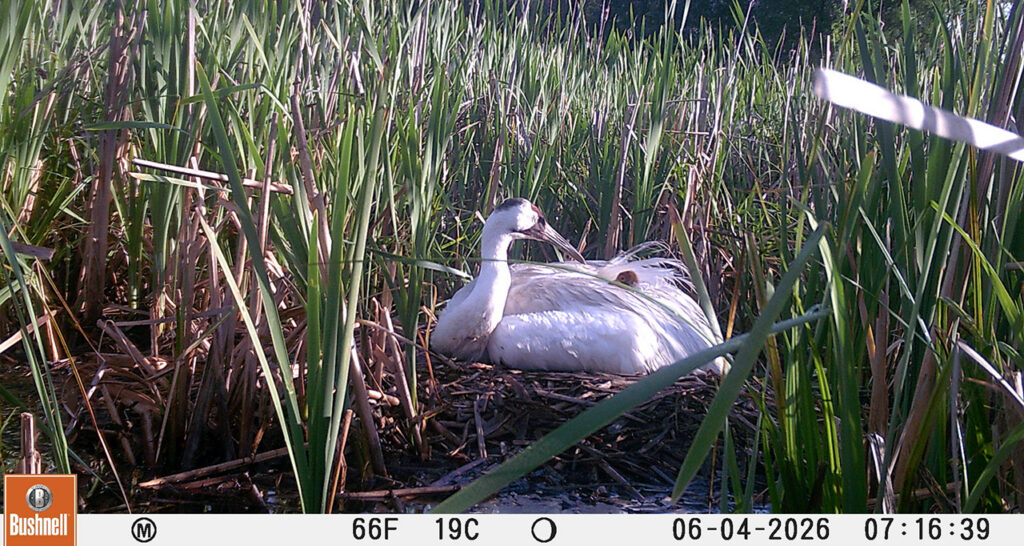
We are excited to announce that there are four new Whooping Cranes flying over the wetlands of Wisconsin! Each spring, Whooping Cranes return to their home marshes, pile vegetation high to build their nests, and carefully lay up to two eggs. They incubate their eggs for about a month, and then fuzzy little Whooping Crane chicks hatch.
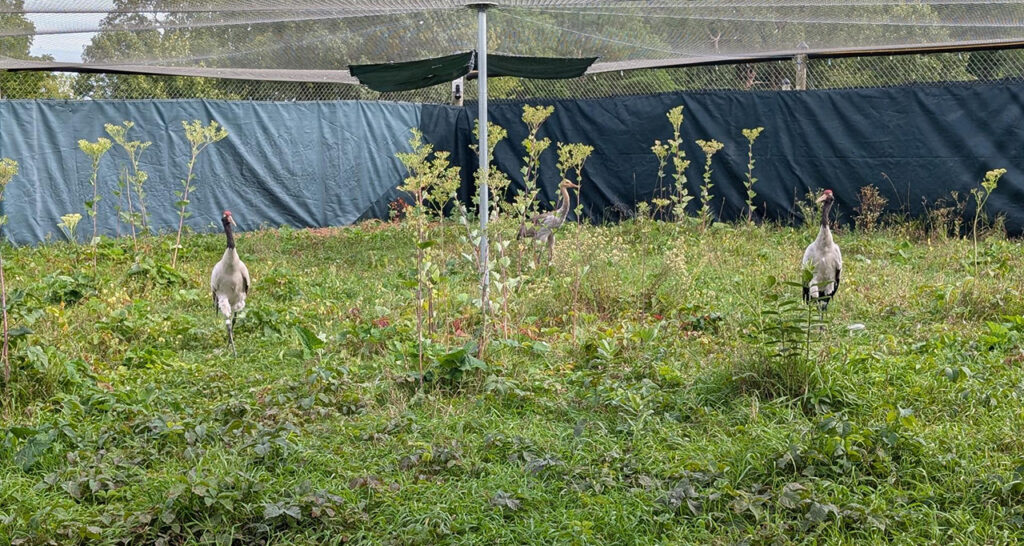
On the opposite end of Crane City lives a pair of female Black-necked Cranes, Gimli and Glacier. Over the past several years, Gimli and Glacier have laid eggs and have done a fantastic job incubating valuable Whooping Crane eggs. Still, it was high time for them to shine by helping out their own species and raising a chick of their own, preferably a male.
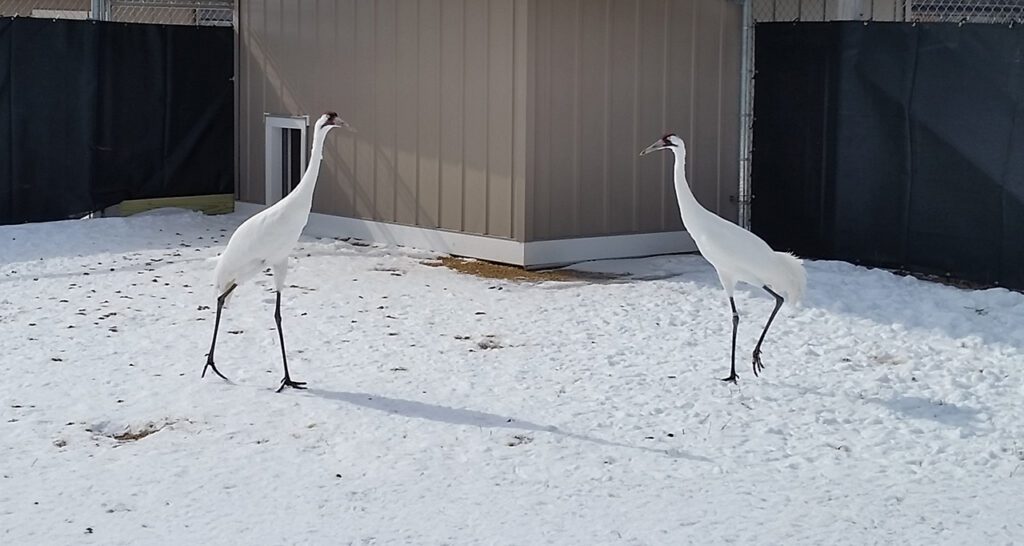
If you ask the Crane Conservation Department—our aviculture team responsible for the daily care of our flock—what’s going on with our cranes during the winter months, you will likely hear us talk about “socialization.”
Over the past five years, our aviculture staff has been working to strategically increase the number of Sarus Cranes in our residential flock at our Global Headquarters, aiming to meet our specific collection goals for this species. We acquired an established pair, Yuva and Minu, to serve as our Sarus Crane ambassadors on exhibit at the Crane Discovery Center.
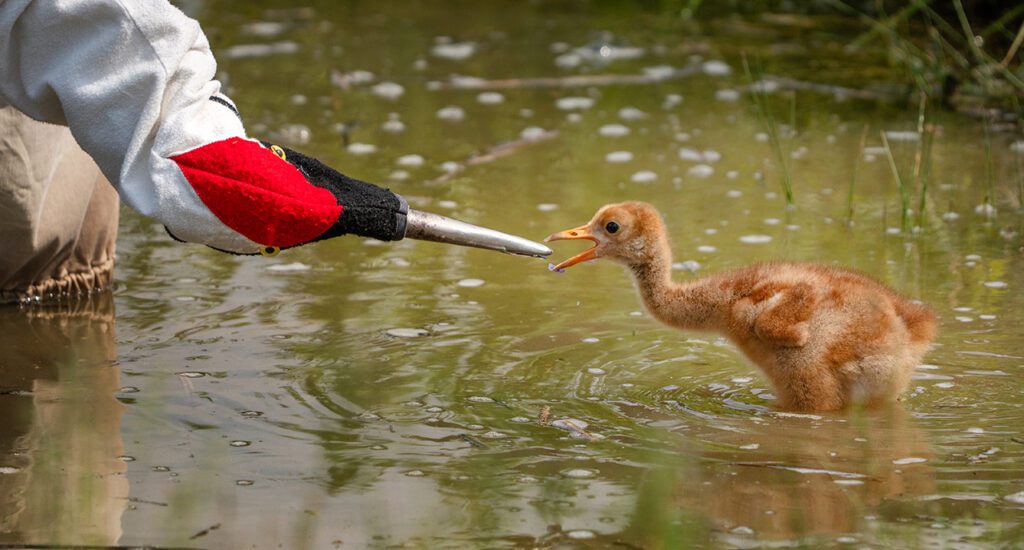
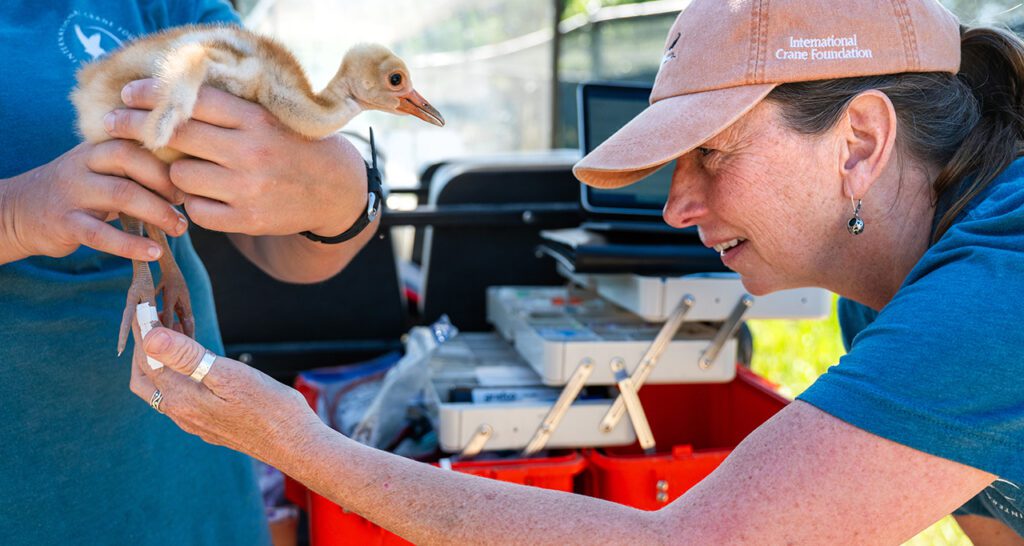
The Aviculture team has had a busy past few weeks with the hatching of 12 Whooping Crane chicks at our headquarters!
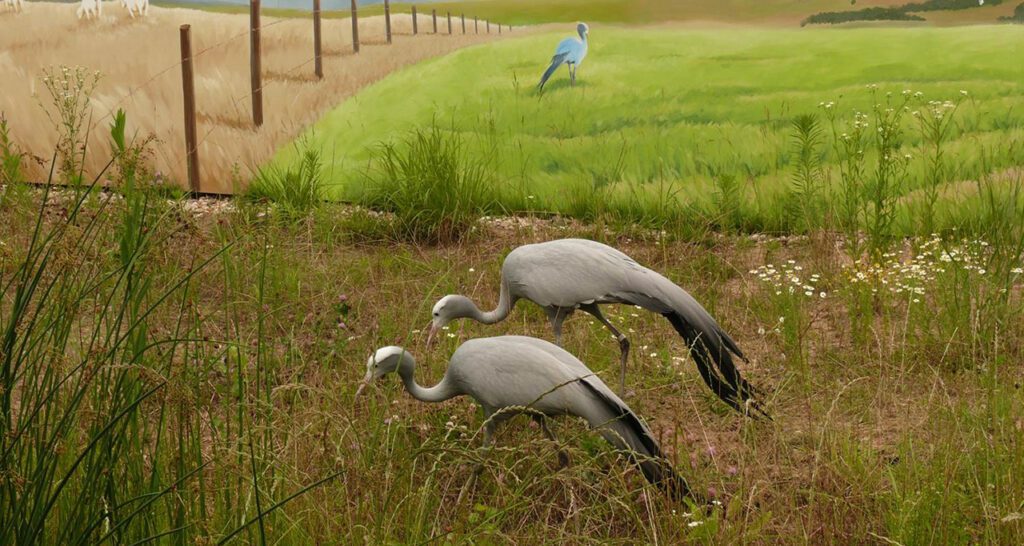
Blue Crane, Kito, known and loved by visitors to the Crane Discovery Center for many years, is receiving extra attention as we work to help him feel more comfortable in his indoor enclosure.
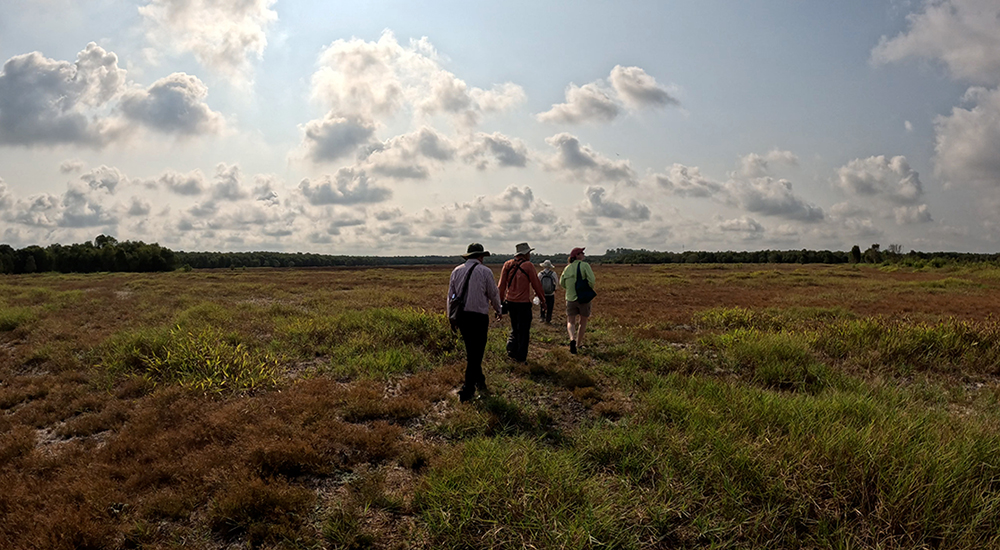
This spring, our Curator of Birds, Kim Boardman, and Director of Conservation Medicine, Dr. Diana Boon, traveled to Vietnam and Thailand to join Dr. Tran Triet, our Southeast Asia Program Director.
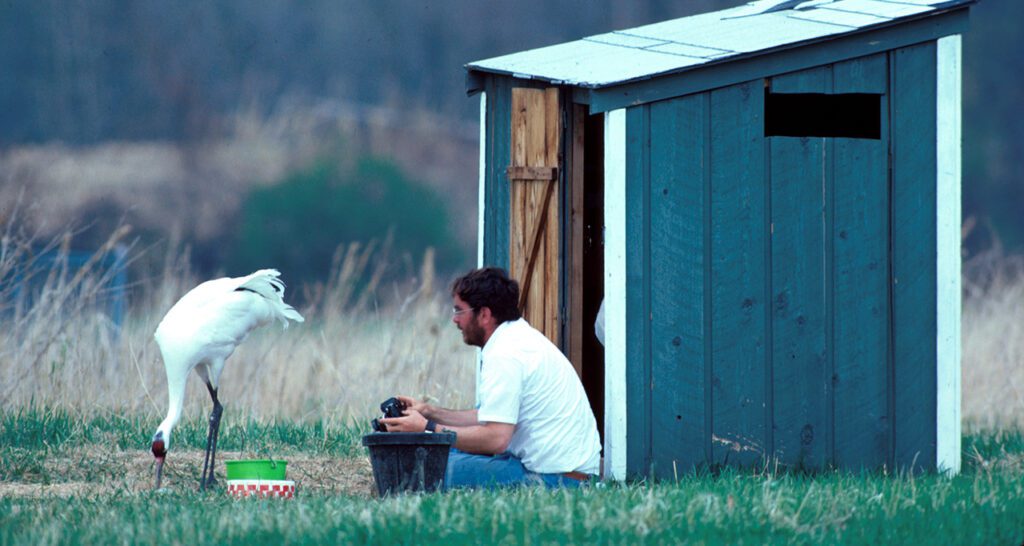
Gee Whiz, a Whooping Crane extremely important to crane reintroduction, passed away recently in Crane City, our breeding facility. He lived for 38 years and nine months.
No results found.
Adjust the filters and try again.