Love Is in the Air—Socializing New Crane Pairs at our Headquarters
If you ask the Crane Conservation Department—our aviculture team responsible for the daily care of our flock—what’s going on with our cranes during the winter months, you will likely hear us talk about “socialization.” This means we are working on introducing unpaired cranes to one another and allowing them to pair up…or not. Most of our socialization work takes place in our breeding facility, Crane City. We choose to socialize during the winter months because that is when most of the cranes are out of their breeding season and, in the wild, would be more likely to be socializing in groups and looking for mates. Behaviorally, they are more accepting of a new bird entering their yard and sharing their resources.
To facilitate this behavior in Crane City, we have special socialization pens where birds share a common fence line both in their outside yards and in their houses, so they can get used to being next to each other and sharing a house, while still having a barrier for protection. We monitor potential pairings in these yards for signs of interest and comfort with each before starting their supervised visits. These initial introductions usually begin at 30 minutes and increase in small increments, slowly building up to them living together full-time. We let the birds’ behaviors show us when they are ready to move on to the next step, so some socializations take days or weeks, while others can take months to years, and some just might not work out at all. Some of the signs we look for in a successful socialization are synchronized calling and dancing together, being comfortable sleeping and preening in close proximity, and sharing food and water.
Our aviculture team has been working on 11 different socializations this winter—learn about a few of the newly socialized pairs from the staff working with each pair:
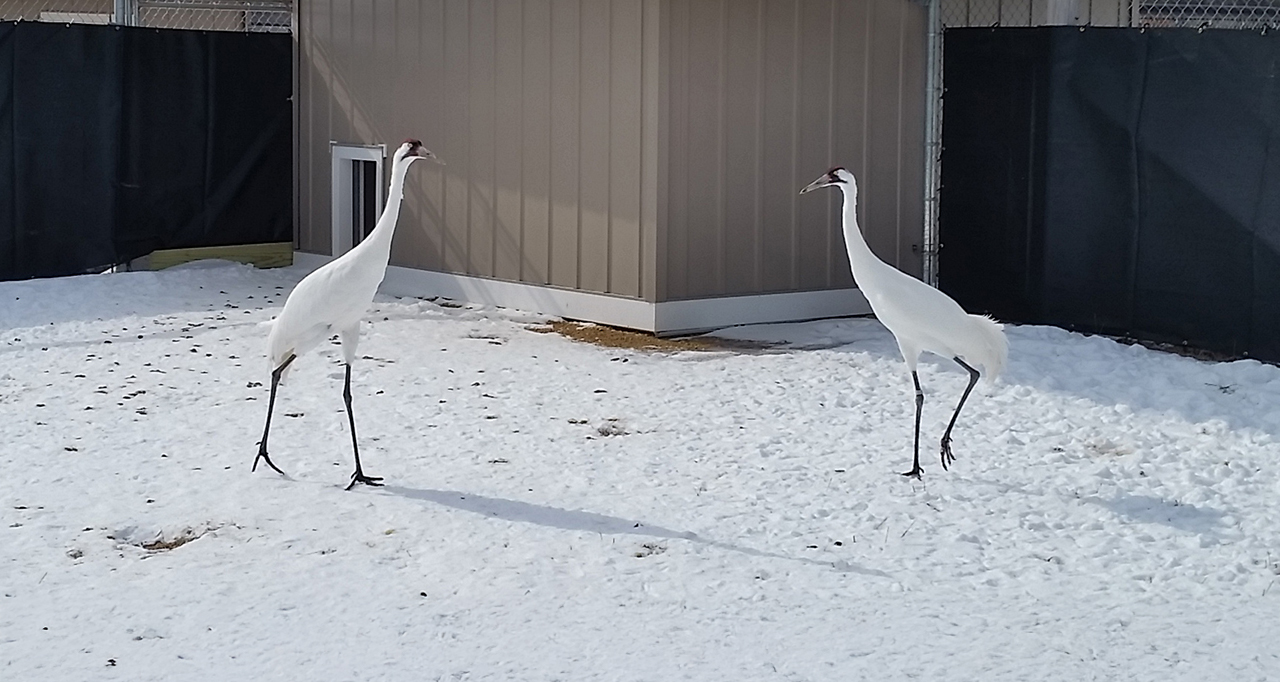
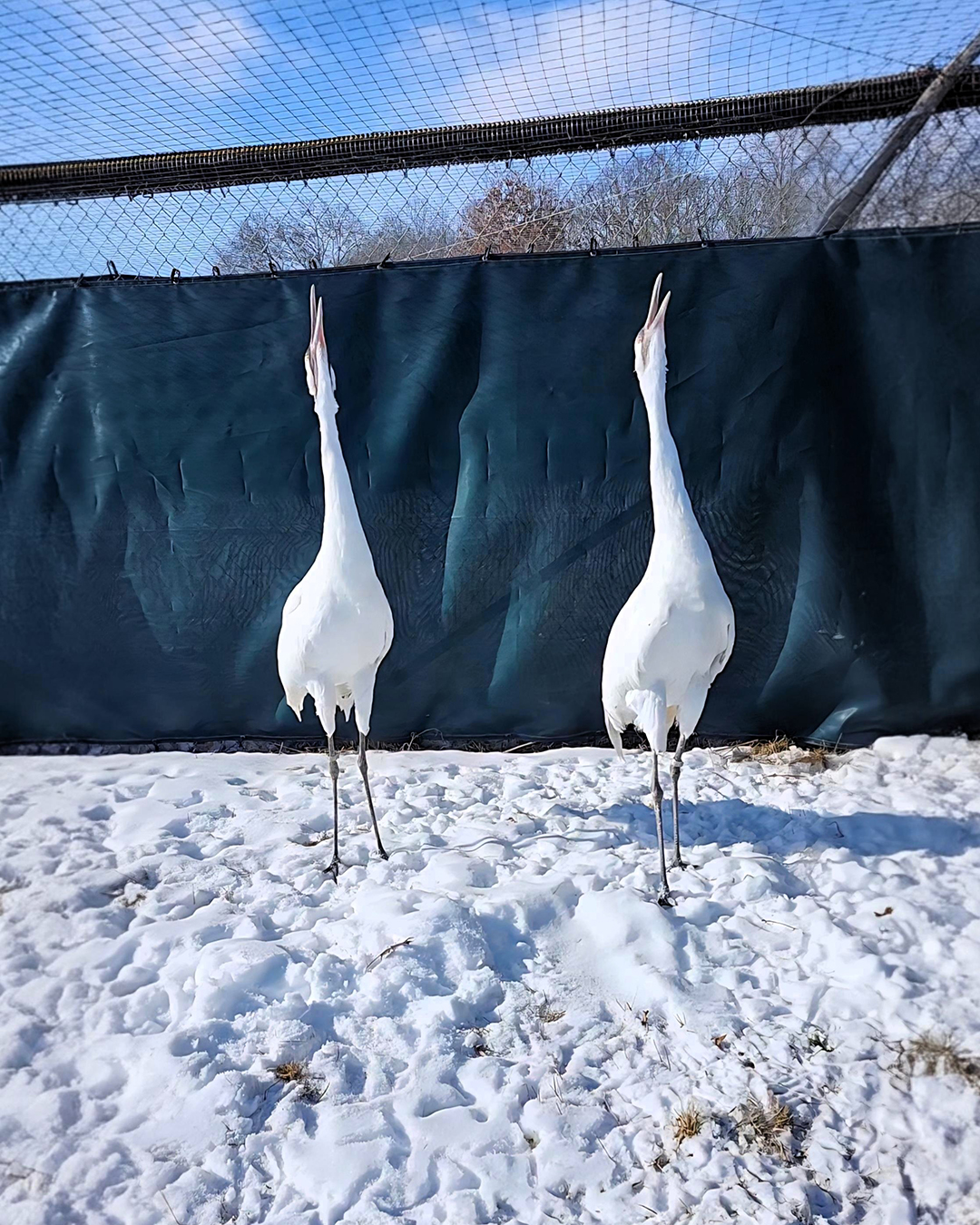
Whooping Cranes Josh (35 years old) and Aransas (36 years old) were both previously paired to other cranes and contributed to our breeding program in their younger years. Unfortunately, for both of them, their former mates passed away due to age-related illness. Given their ages now, they are less likely to participate in breeding activities or lay eggs, but we felt it was important to find each of them a buddy for life in retirement!
Lucky for us, they took to each other pretty quickly. Aransas is a more defensive bird, and Josh can have a shyer demeanor. However, since being paired, she has started joining him in protecting their territory!
– Morgan, Aviculturist
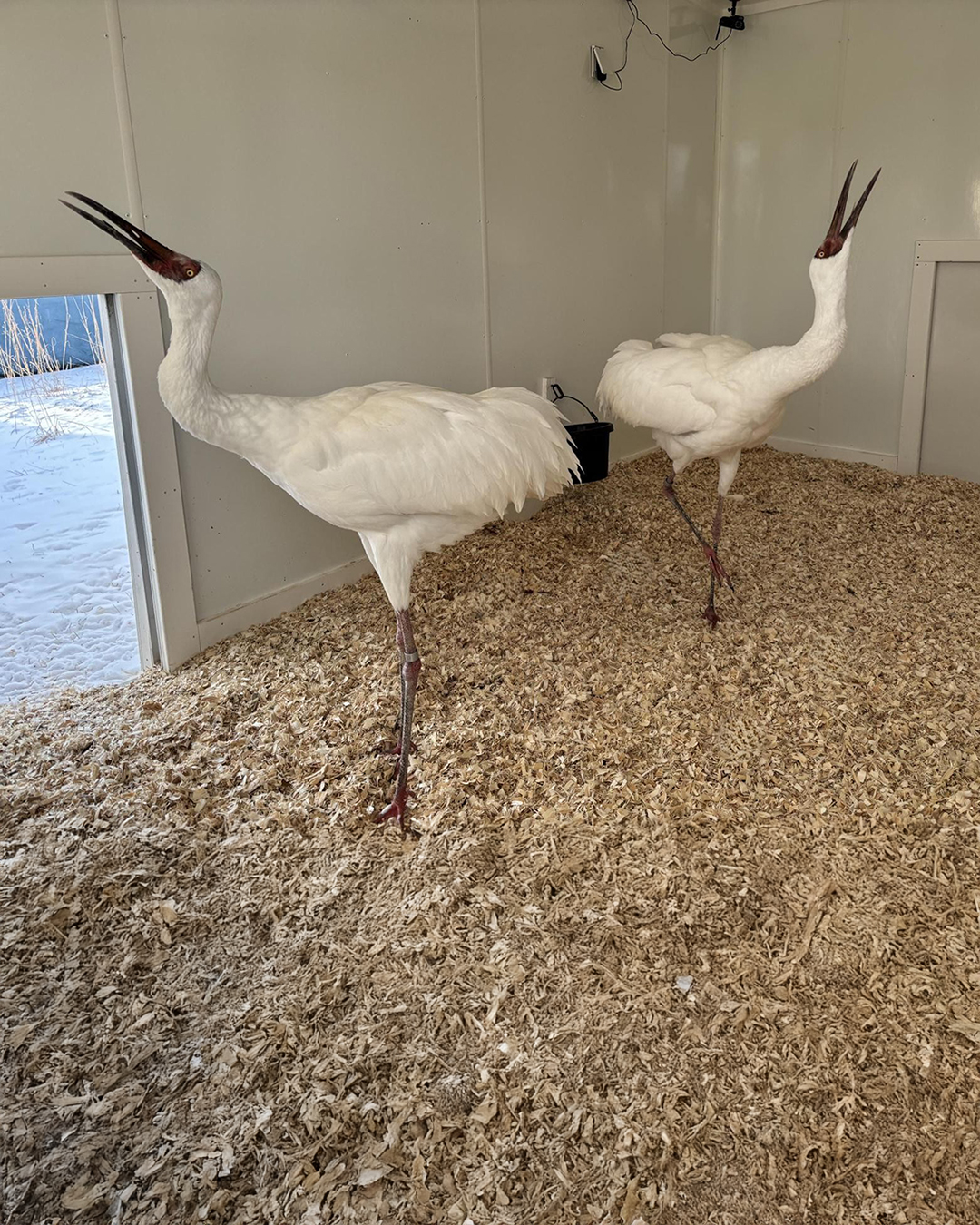
Meet Meenakshi and Khanty, our newest pair of Siberian Cranes! Khanty arrived at the International Crane Foundation in February 2024 to be paired with Meenakshi, who had lost her mate the previous year. They spent the summer in a divided yard across from one another, and in winter their socialization began with supervised introductions, during which they were free to move around the yard together.
They weren’t quite ready to be together that first year, so they spent one more summer side-by-side in their socialization pen. Over the summer, Khanty was observed passing his enrichment items under the fence to Meenakshi, and they made nests across from each other during the breeding season. These were all very good signs that the birds were ready to resume the socialization process! In November, they were officially paired and now live happily together in Crane City.
– Landen, Aviculturist
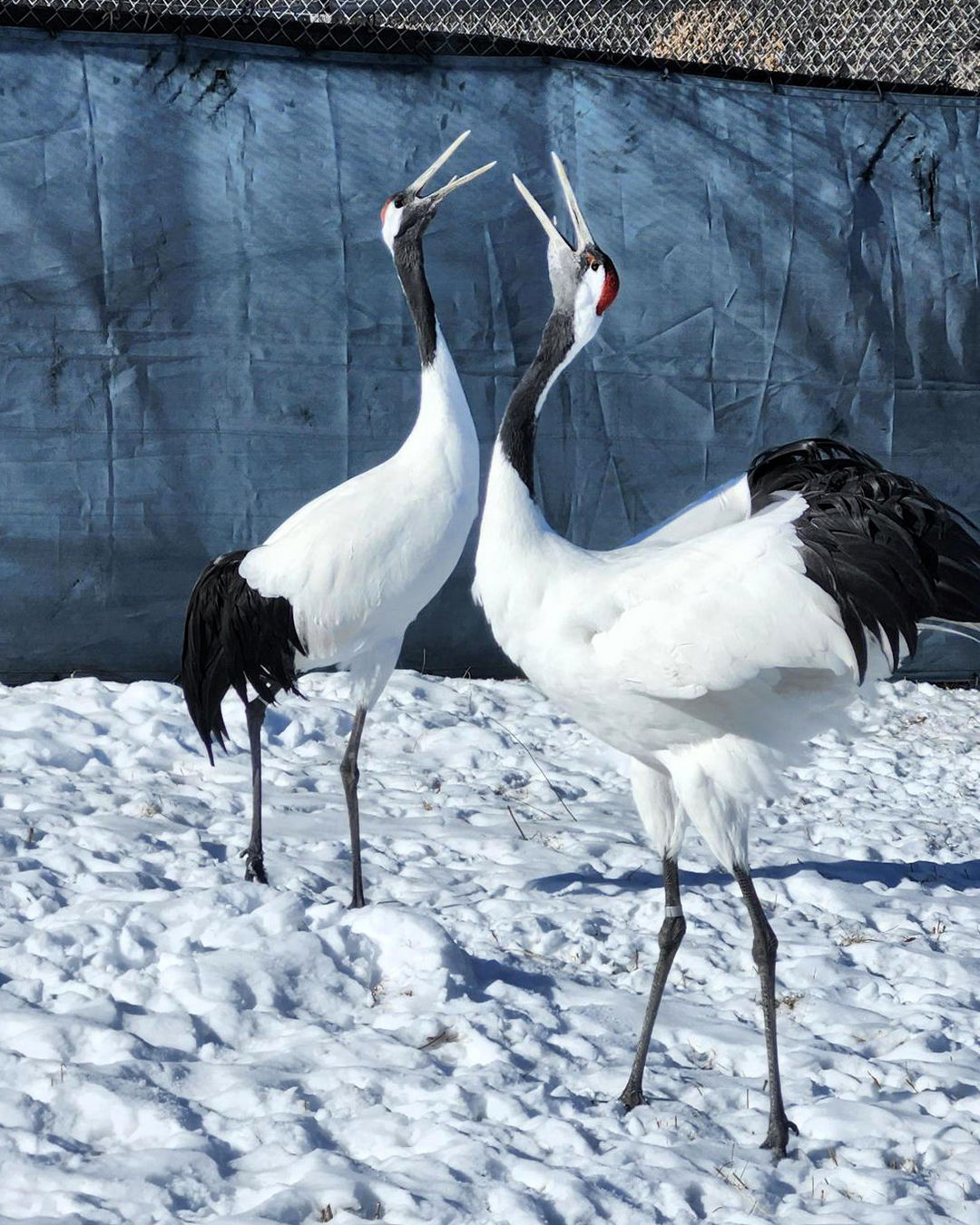
Zhou Ming and Ginny are our newest pair of Red-crowned Cranes. Zhou Ming is 40 years old, and he’s a bit of a “grumpy old man” at times (but we love him anyways) and had been unaccepting of other possible mates. Last year, Ginny joined the International Crane Foundation’s flock from Minnesota and was housed next to Zhou Ming so they could get to know one another. Ginny liked Zhou Ming right away, and although he seemed a bit unsure about her at first, she grew on him, and they progressed in their socialization quickly. Ginny is a very energetic bird, and she loves to dance circles around Zhou Ming (often literally), which keeps him active too!
– Amron, Aviculturist
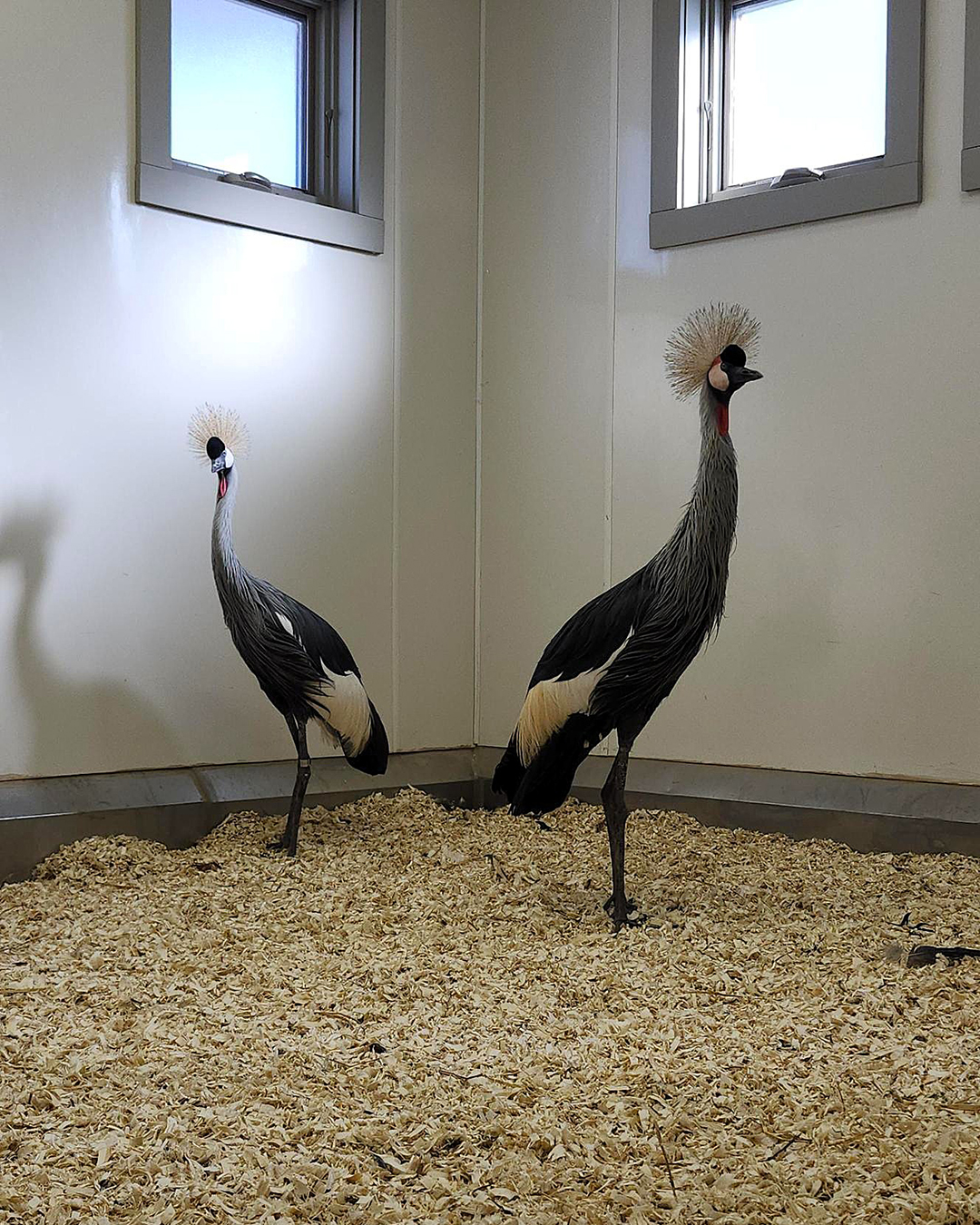
Grey Crowned Cranes Tina and Ichabod, soulmates from the start, were paired in four days. We knew Tina was very interested in Ichabod because she was seen allopreening him on their second day together. Allopreening means they will actually groom each other. Crowned cranes are one of the few crane species that regularly engage in allopreening, so it is really a sight to see! We are excited for you to visit them at our Crane Discovery Center this spring!
– Jessica, Aviculturist
Published February 10, 2026