New Hope for the Kafue Flats and Its Communities and Cranes
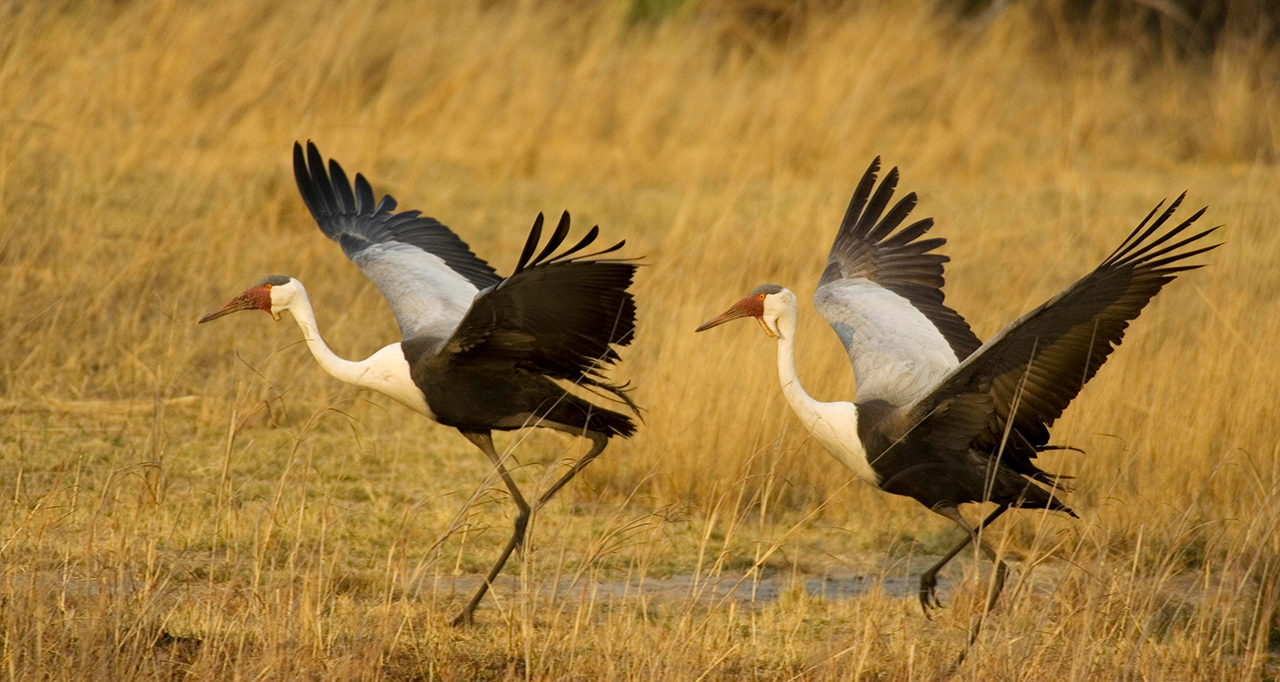
A Wattled Crane pair takes flight in Zambia. International Crane Foundation
I was 14 years old when I first visited the Kafue Flats at Lochinvar National Park. What I saw fuelled my imagination and ambition. The birds and the herds I saw that day gave me the words I use today, almost half a century later. When I began working for the International Crane Foundation in 2018, I participated in a crane nest survey in knee-high water in the floodplain. Standing before a Wattled Crane nest for the first time, I felt as if I had re-discovered myself.
Zambia’s Kafue Flats are a wetland of international importance under the Convention on Wetlands, a key bird and biodiversity area under BirdLife International, a Man and Biosphere Reserve under UNESCO, and a protected area under Zambian national parks and wildlife legislation. Covering 6,500 square kilometers, the area supports more than 470 resident and migratory bird species. It is also home to the Kafue Lechwe, an antelope found nowhere else in the world. Critically Endangered vultures also depend on the ecosystem for foraging and nesting.
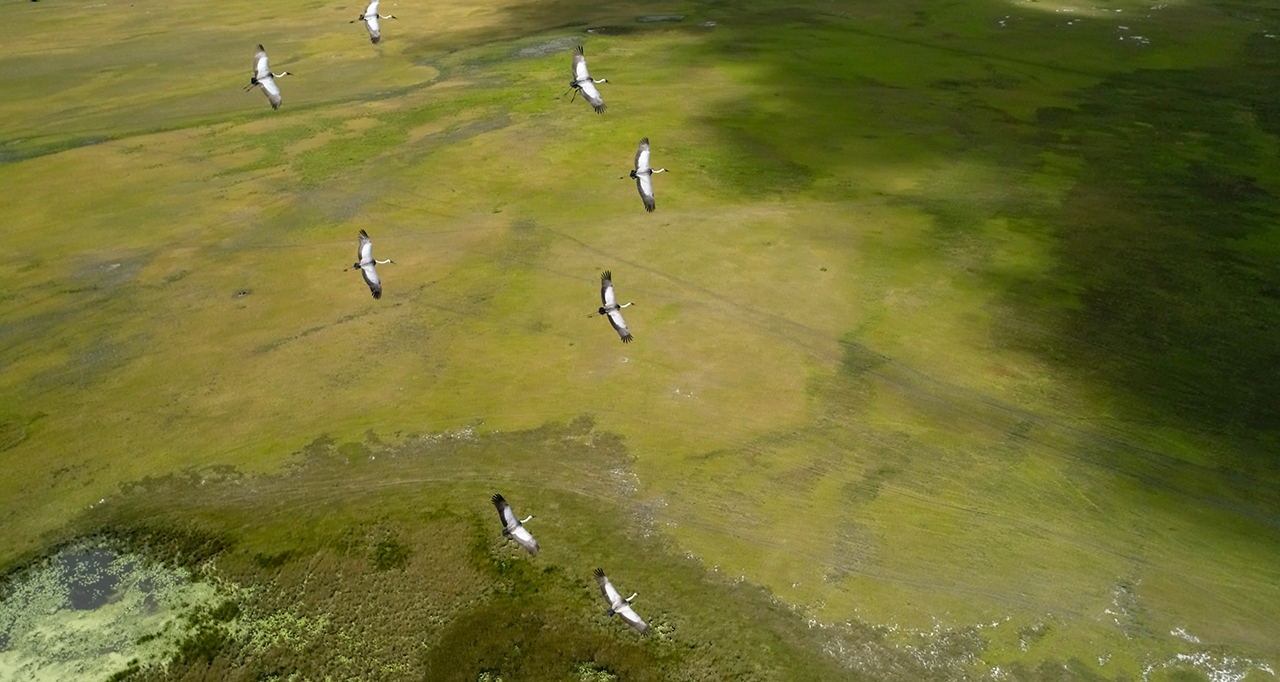
Wattled Cranes in flight over the Kafue Flats. Ufulu Studios
A biodiversity hotspot and a natural water reservoir, the Flats support local livelihoods and give identity to the local Batwa, Tonga, and Ila communities. The Kafue Flats are vital to Zambia’s economy and food systems, supporting the production of sugar, beef, fish, and hydropower. Families depend on the fresh waters of the Kafue Flats for fish, grazing, and fertile soils for farming that sustains economies. To the nation, they are an asset of immense intergenerational value. And to the Wattled Crane, they are the most important floodplain in the world.
However, droughts, floods, degraded grazing areas, loss of wildlife, declining fish stocks, uncontrolled fires, invasive plant species, and the effects of climate change are steadily changing both the landscape and the lives of the communities that call the Kafue Flats home.
This year, a major investment through the eighth replenishment of the Global Environmental Facility(GEF 8) offers renewed hope for protecting and restoring the Kafue Flats and strengthening community resilience. The five-year, $9 million GEF 8 Kafue Flats Project launched on May 29, 2026, and is one of Zambia’s most significant integrated environmental restoration, protected area management, and climate resilience initiatives in the last 20 years.
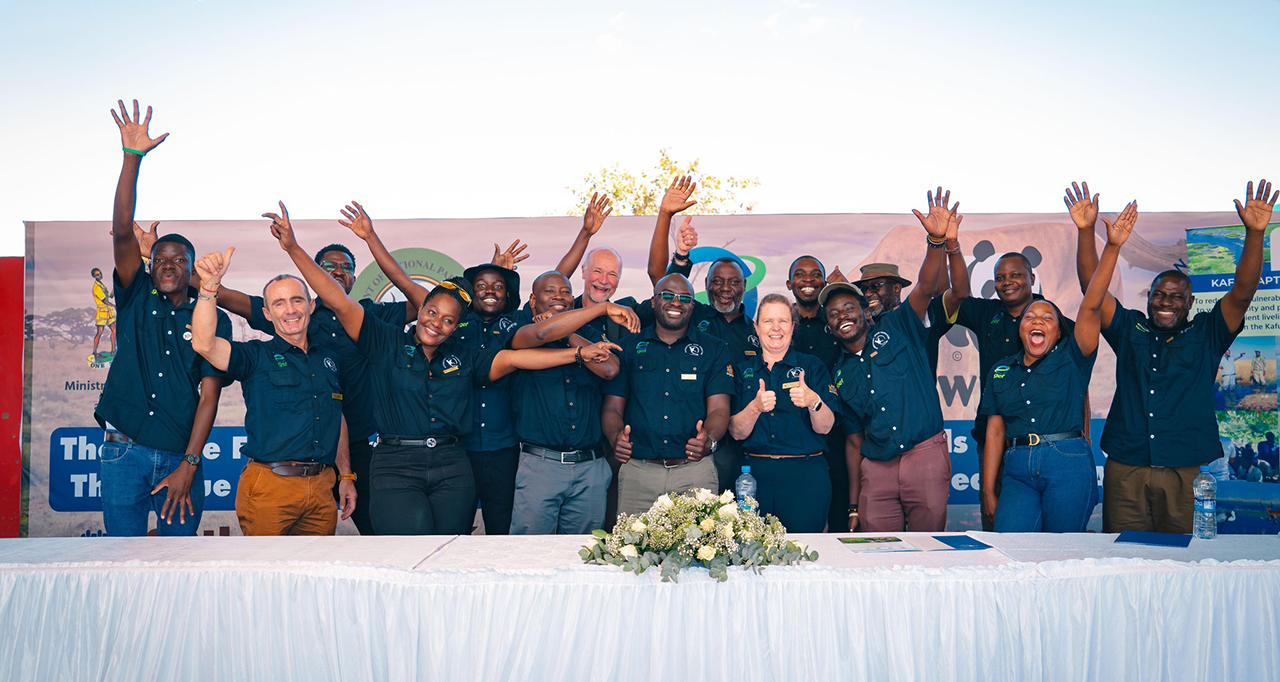
Our ebullient staff celebrate the launch of the Kafue Flats Project grant. Jim Ongowo/International Crane Foundation
The project was developed jointly by the Government of Zambia in partnership with the World Wildlife Fund (WWF) and the International Crane Foundation. We will lead the project implementation on the ground with a newly recruited team dedicated to the project and bringing new capacity. The GEF 8 Kafue Flats Project is an investment in protecting ecosystems that will safeguard wildlife, strengthen climate resilience, and improve livelihoods for communities that depend on the Kafue Flats for survival. It will benefit cranes too!
The project has come with urgency and hope. Under the theme “A Thriving Wetland for All,” the Kafue Flats Restoration Partnership’s scaled-up initiatives combine environmental protection with community resilience and sustainable development.
The project will tackle poaching and wildlife crime, reduce human-wildlife conflict, restore degraded wetlands, strengthen fire management, and continue removal of the invasive Mimosa pigra plant that threatens wetland health in at least 3,000 hectares of wetlands, helping revive wildlife habitats and improve ecological health across the floodplain.
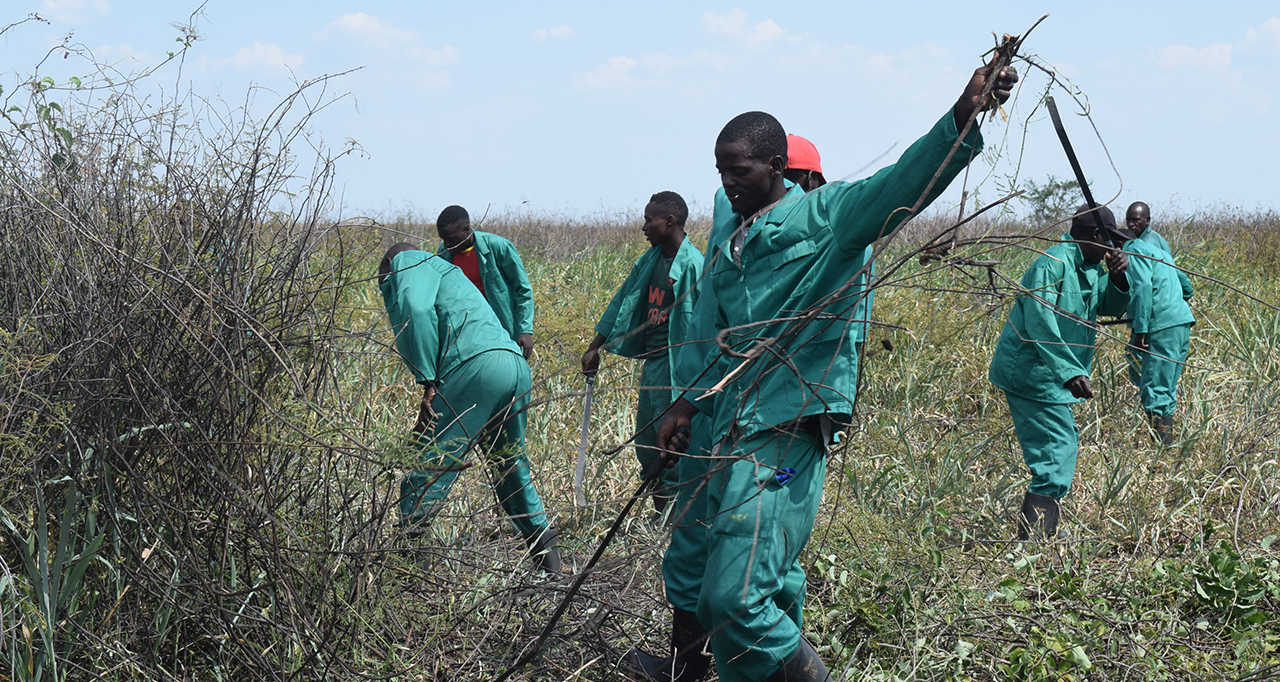
A team from the community around Lochinvar National Park removing Mimosa pigra. Griffin Shanungu
Importantly, the project places communities at the center of conservation. Thousands of households will benefit through climate-smart livelihoods, enterprise development, ecotourism opportunities, and cash-for-work landscape restoration initiatives. Community-based interventions in rotational grazing will improve livestock and wildlife management and address disease risks affecting both animals and people. This recognizes the close link between healthy ecosystems, resilient communities, and sustainable local economies.
Another major focus is climate adaptation and resilience. More than 25,000 hectares of rangeland will be improved, while climate-resilient enterprises will be supported. We will also integrate climate adaptation into district planning. More than 5,000 community members will benefit directly from improved livelihood opportunities and climate resilience measures. The project builds on the work that the International Crane Foundation has been implementing with the Zambian government and WWF in the last five years, developing a model that balances ecosystem conservation with human well-being. For a shared floodplain, balance means that what is good for wildlife is good for livestock, for people, and for cranes!
 Story by Mwape Sichilongo, Regional Director – Southern Africa
Nov. 11, 2026