Understanding Predation of Whooping Crane Eggs in the Eastern Migratory Population
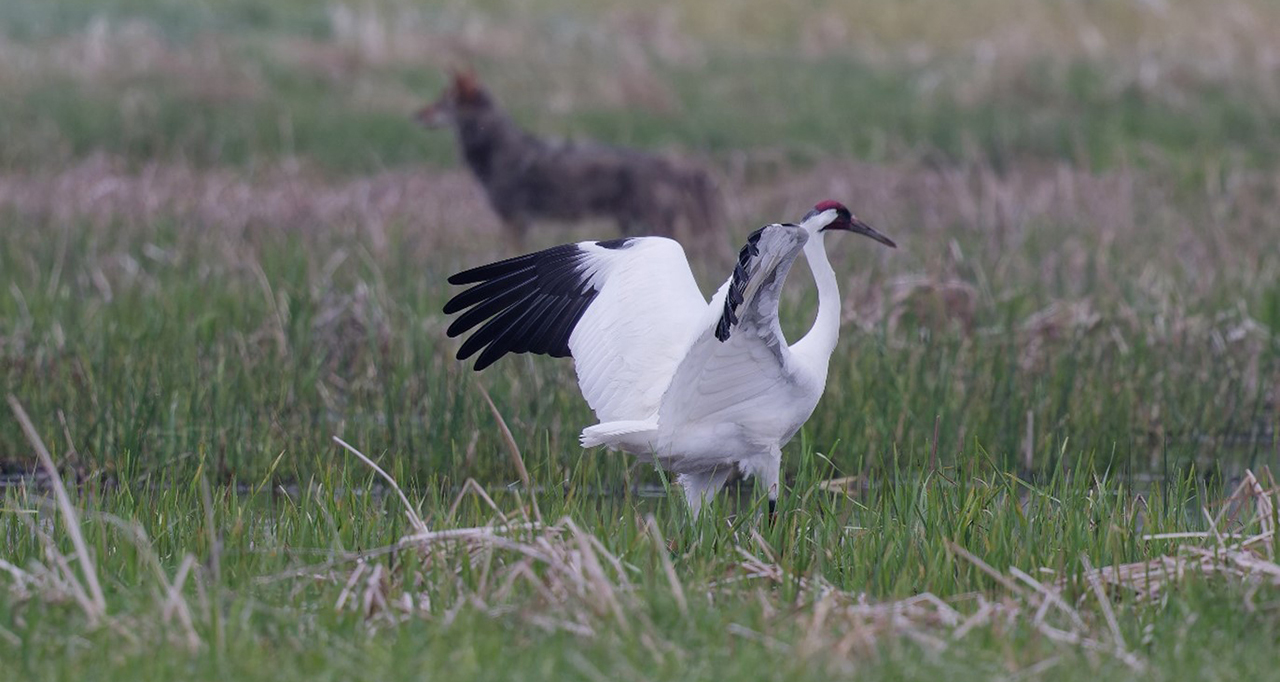
A Whooping Crane defends its nest from a coyote in Sauk County, Wisconsin. Tran Triet/International Crane Foundation
The Whooping Crane Eastern Migratory Population (EMP) spends its breeding season predominantly in central Wisconsin from early spring to late fall. Although wild Whooping Cranes breed in the EMP, the population currently relies on the annual release of cranes raised in human care to maintain its numbers. This is due to low recruitment, meaning not enough of the eggs laid in the wild hatch into chicks that survive to adulthood and therefore don’t offset population losses. Many of these losses have been attributed to predation, particularly predation of eggs and chicks. This raises an important question: What are the main predators of Whooping Crane eggs, and how can this information help inform management decisions to prevent predation?
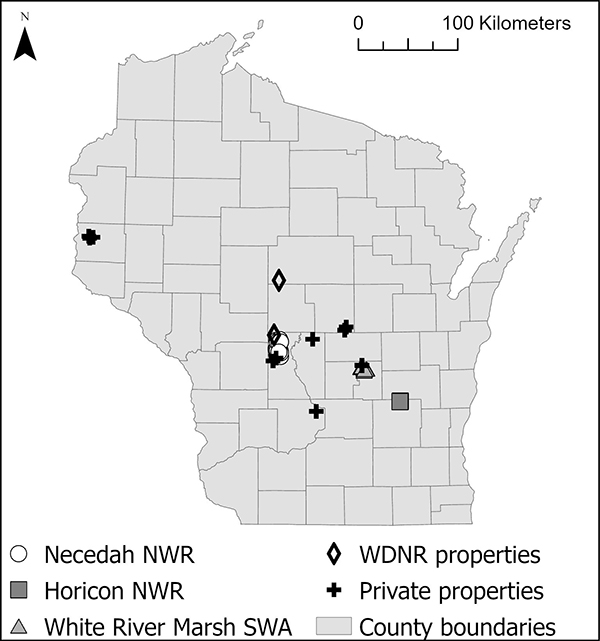
Whooping Crane nesting areas in Wisconsin that were monitored with trail cameras during 2019-2024.
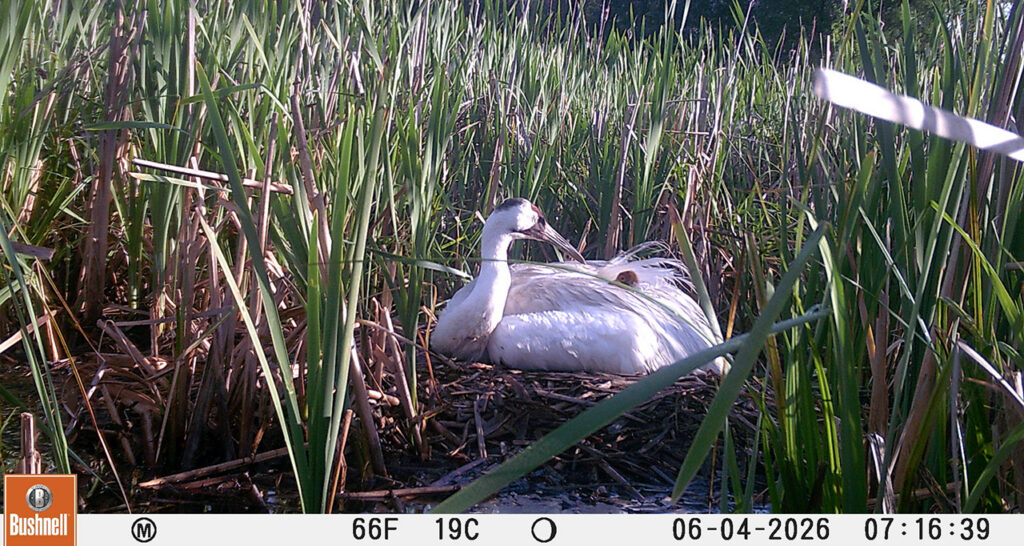
From 2019-2024, our team at the International Crane Foundation monitored 81 Whooping Crane nests across Wisconsin to answer this very question. Our biologists used motion-detecting trail cameras and collected habitat data to better understand how the surrounding habitat may affect predation risk. Of the 81 nests monitored, seven cases of egg predation were observed, and in five of those cases, the predator could be identified. Most of these predation events occurred at night, with only one during the day. Only two species of predators were recorded preying on eggs while cranes were still incubating; coyotes accounted for 60% of egg predation, and the remaining cases were raccoons. Both coyotes and raccoons are common throughout the region and use Whooping Crane habitats. Many predation events occurred at nests in relatively small wetlands, which may have made it easier for predators to reach them.
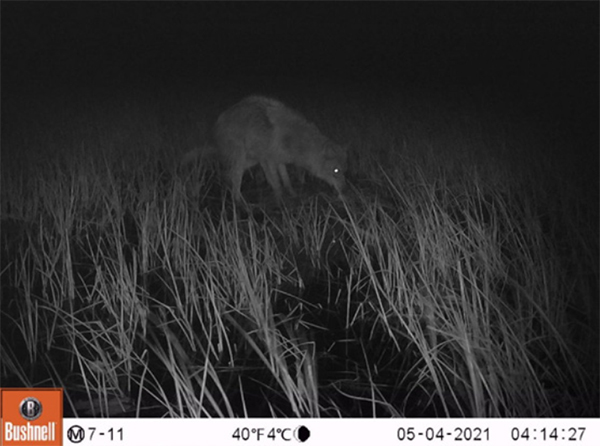
Trail camera image of a coyote eating a Whooping Crane egg at Meadow Valley Wildlife area in Wisconsin.
Another important part of this study was identifying scavengers of Whooping Crane eggs in abandoned nests. While coyotes and raccoons were the most common predators of eggs on actively protected Whooping Crane nests, a wide variety of species scavenged abandoned eggs, including a common raven, a common snapping turtle, an American crow, an American mink, a raccoon, a Bald Eagle, and even a Sandhill Crane. Identifying the difference between scavengers at abandoned nests and predators at active nests helps us better understand which species pose the greatest threat to Whooping Crane recruitment.
Even though predation is the leading cause of mortality in EMP Whooping Cranes, this study found that egg predation remains relatively low, with only nine percent of nests losing eggs to predators. While nesting success in the EMP is high and egg predation remains low, the population is struggling to grow because not enough chicks are reaching adulthood. Many of these losses are not egg predation but rather chick predation, with 32% of chicks lost to predation between 2016 and 2018. While predators of chicks may differ from predators of eggs, there may still be significant overlap, especially for predators of young chicks who may still be on or near the nest.
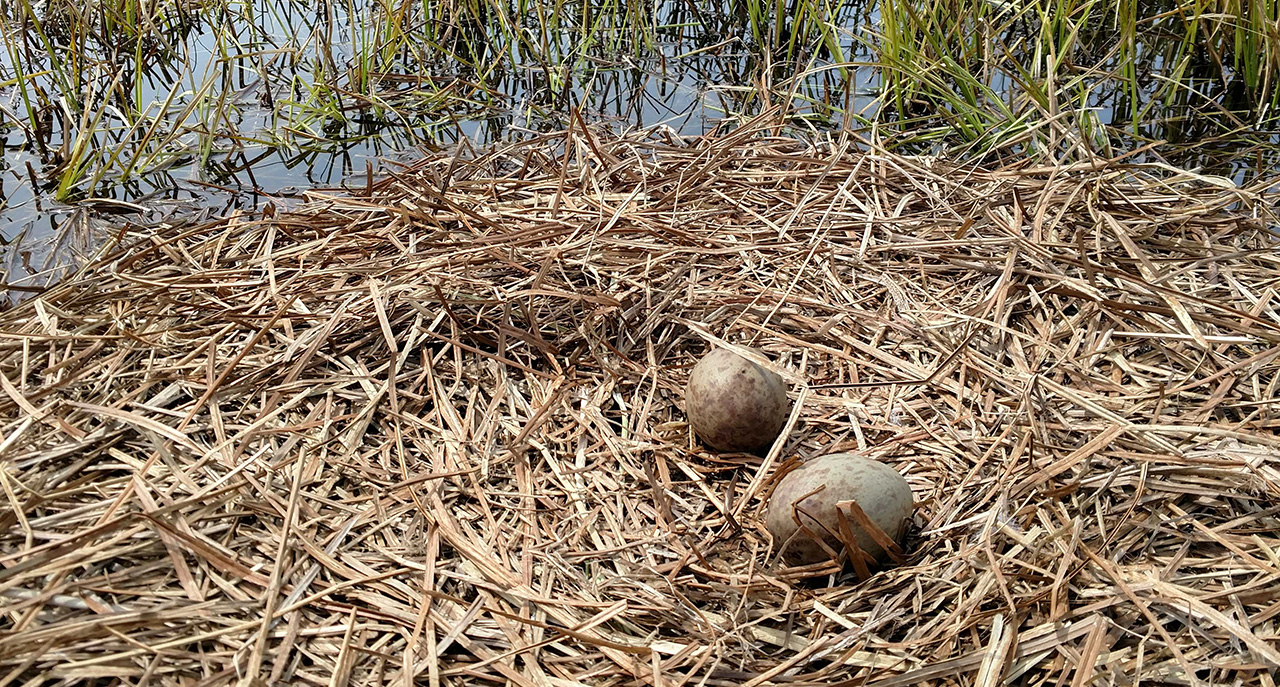
Hillary Thompson/International Crane Foundation
Identifying egg predators helps us better understand the broader predator community near Whooping Crane nesting sites. This is crucial as we work to develop strategies to reduce predation on both eggs and chicks. By assessing the risks posed by different predators, organizations like the International Crane Foundation can make informed decisions about habitat management and predator-response training for captive-reared cranes before releasing them into the wild. This research is a part of our ongoing efforts to increase chick survival and population growth in the EMP and safeguard its future!
We thank Hillary Thompson and Nicole Gordon, the authors of the summarized manuscript “Predators and Scavengers of Eastern Migratory Whooping Crane Eggs,” for permission to share their work.
References:
- Thompson, Hillary & Gordon, Nicole. 2025. Predators and scavengers of eastern migratory whooping crane eggs. Proceedings of the North American Crane Workshop 16:237-242.
Story submitted by Sam Urquidez, Outreach Biologist Assistant, International Crane Foundation
Published June 17, 2026