Africa
About Our Work
Africa is an immense continent, with highly threatened crane populations in more than 20 countries. The struggle for socio-economic development across the continent puts enormous pressure on wetlands, grasslands, and agricultural lands that sustain cranes and other wildlife. To achieve our vision, we aim to fully integrate our crane and biodiversity conservation approaches with the welfare of the communities that share their lands with cranes. Our work builds community resilience in a changing political, climatic, economic, and social world and promotes sustainable land-use practices that benefit people, cranes, and broader biodiversity.
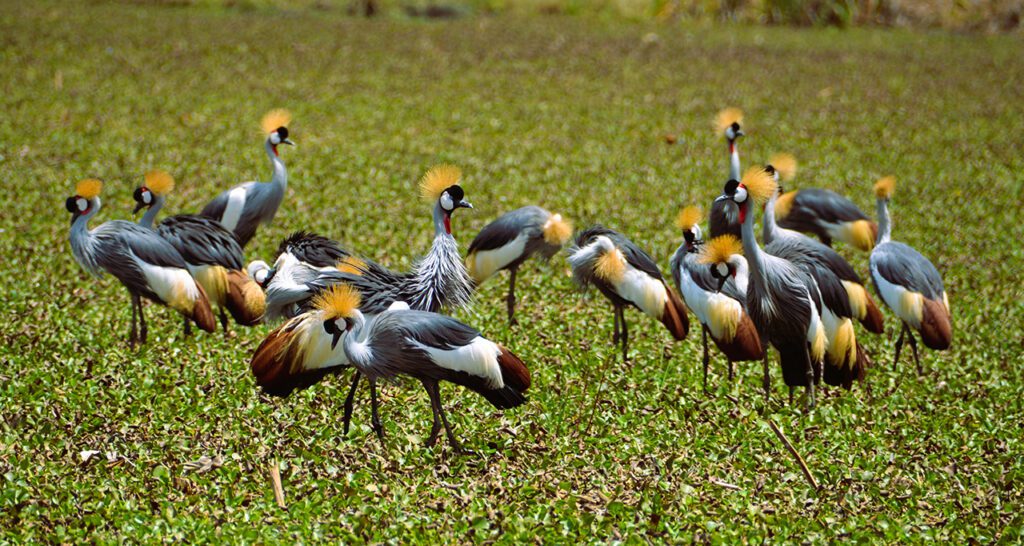
We are working to reverse the decline of all four threatened crane species that are resident in the continent—Endangered Grey Crowned Cranes and Vulnerable Wattled, Black Crowned, and Blue Cranes—by reducing the most serious threats to these species and securing their most important breeding, foraging, roosting, and non-breeding grounds. We are also monitoring migratory Demoiselles and Eurasian Cranes to ensure their wintering grounds in northern Africa remain secure, while our conservation efforts in Eurasia aim to reduce hunting pressure for these species along their Middle East/Central Asia flyway.
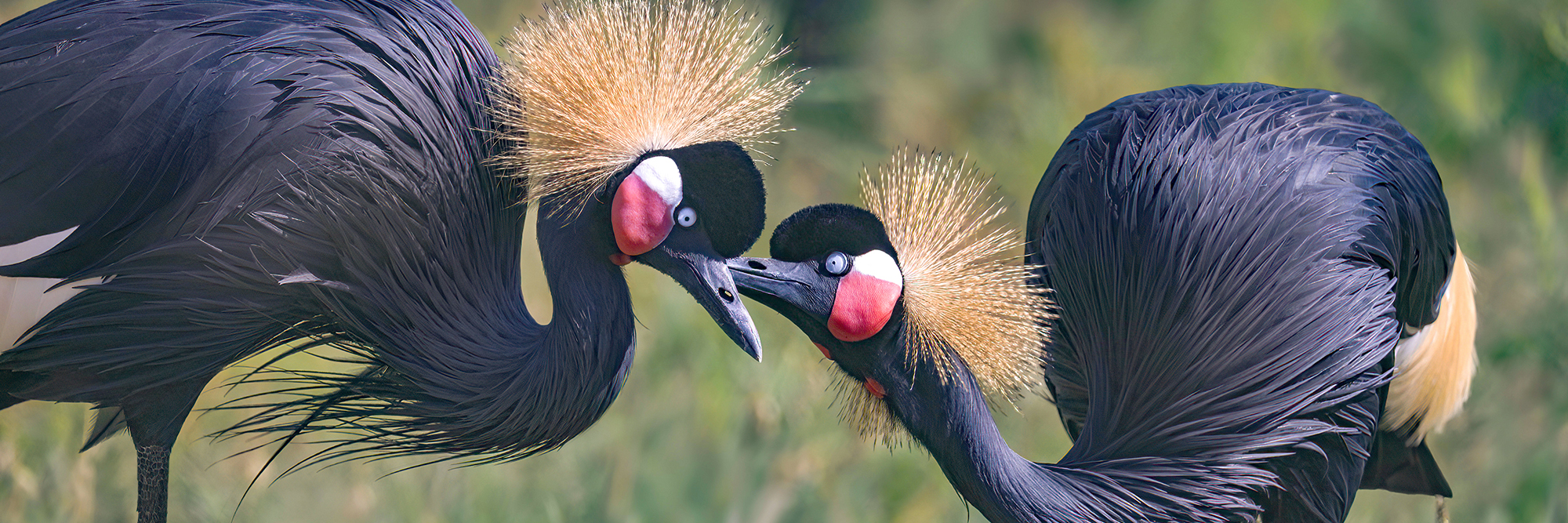
Photo: Black Crowned Crane pair by Ted Thousand

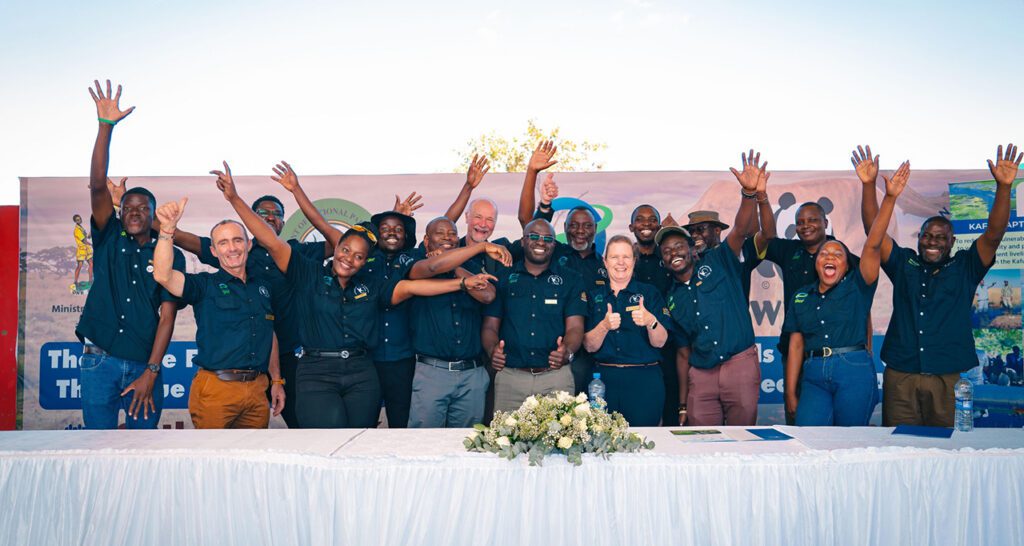
The Government of the Republic of Zambia through the Ministry of Green Economy and Environment, in partnership with the Ministry of Tourism, the International Crane Foundation and WWF Zambia, has launched a five-year US$9 million Global Environment Facility (GEF) Kafue Flats Project aimed at restoring the Kafue Flats ecosystem, and securing wildlife habitat and species, while improving livelihoods, strengthening climate resilience, and supporting sustainable development for communities across the wetland landscape.
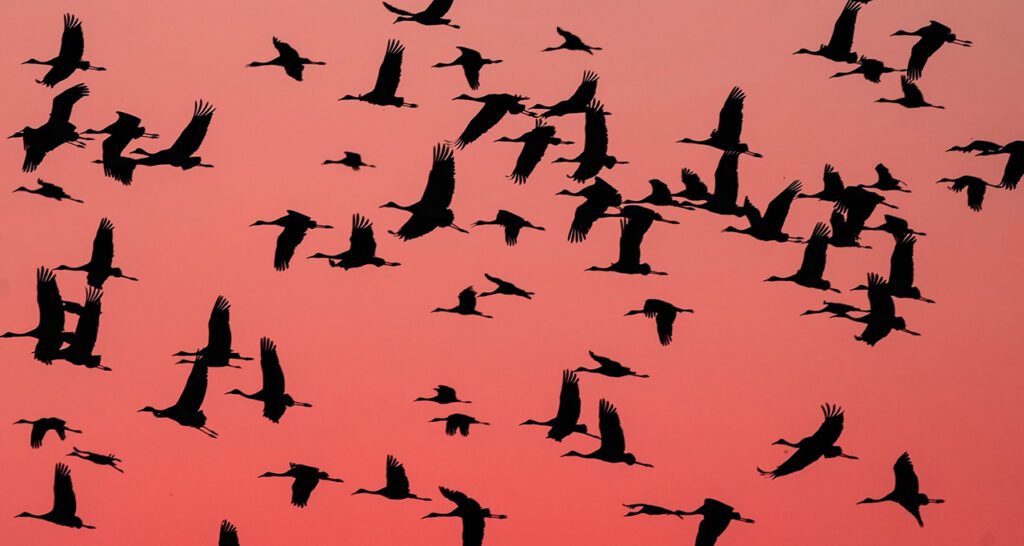
Join us for an inspiring evening with acclaimed naturalist and author Scott Weidensaul, as we celebrate one of nature’s most breathtaking phenomena—migration.
The International Crane Foundation today officially opened its Nairobi office, marking an important milestone in strengthening science-driven conservation, wetlands protection, and community-led environmental initiatives across East Africa.