Rwanda
A National Model for Protecting Rwanda’s Wetlands
In 2012, the International Crane Foundation, in partnership with the Endangered Wildlife Trust and IPRC-Kitabi College, launched a bold initiative to protect Rugezi Marsh and other threatened wetlands in Rwanda. What began as a focused conservation effort has since grown into a national model for integrated landscape restoration and community-driven environmental stewardship.
Our work in Rwanda is inspired by the recognition that protecting cranes means protecting people, biodiversity, and critical ecosystems. Rugezi Marsh is more than a habitat—it is a lifeline for local communities, a sanctuary for endangered species like the Grey Crowned Crane, and a vital contributor to Rwanda’s energy and water systems. Yet, it faces mounting threats from unsustainable agriculture, peat extraction, and the pressures of poverty.
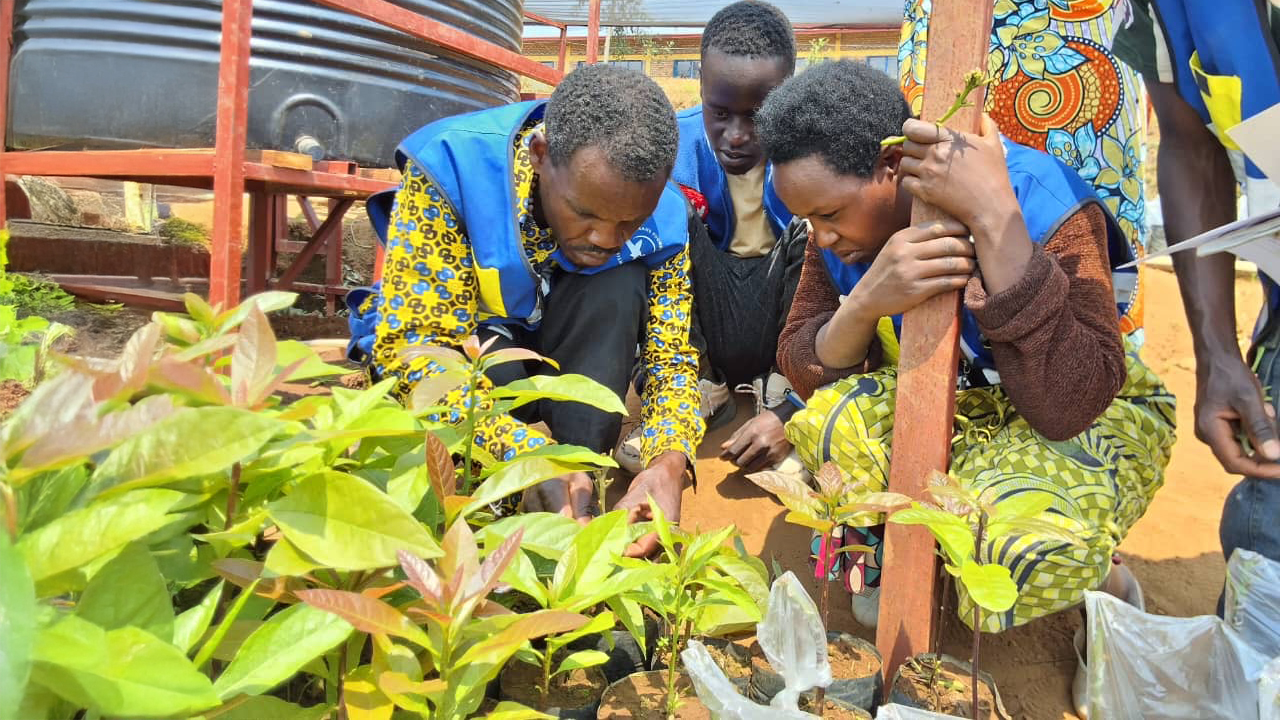
Community members prepare to distribute and plant avocado seedlings. The avocado trees will produce an abundant and nutritious food source that reduces the community’s reliance on wetland resources and provides an alternative income source.
Our Community-Driven Plan
Over a decade later, we have transformed how we approach conservation in Rwanda—from pioneering biodiversity assessments and wetland health surveys, to launching ambitious education programs, alternative livelihoods, and awareness campaigns. The results speak for themselves: more than 105,000 individuals reached, millions of Napier Grass cuttings distributed to reduce wetland pressure, avocado and mushroom farming initiatives launched, energy-saving stoves delivered, and hundreds of families
supported with mattresses to reduce dependence on wetland resources.
Perhaps most importantly, this partnership has demonstrated that sustainable conservation must be rooted in community leadership. We have learned that success is not measured solely by species counts or hectares restored, but by how deeply communities understand, own, and shape the future of conservation in their landscapes. This model of collaborative planning, inclusive education, and locally driven solutions stands as a powerful example for others working across Africa and beyond.
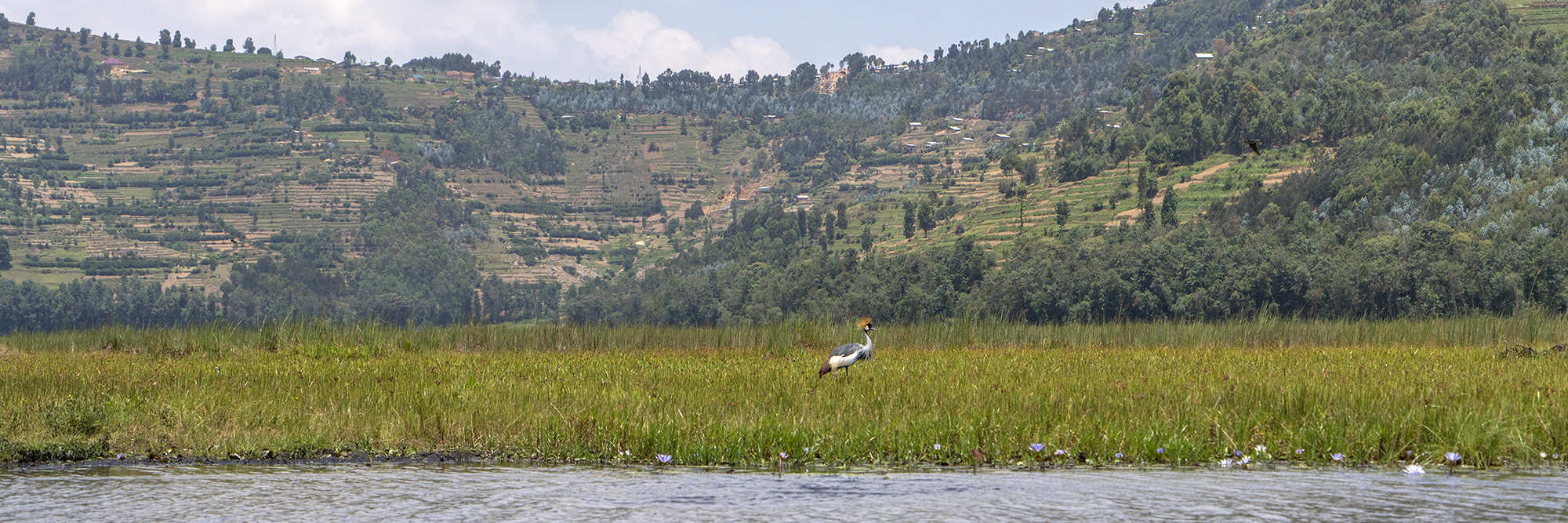
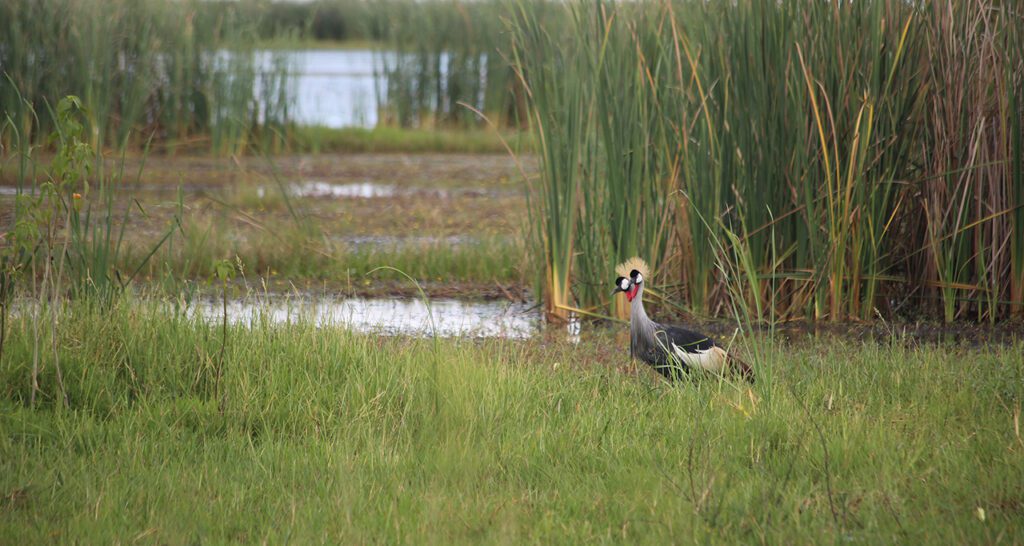
Top photo: A Grey Crowned Crane forages in Rugezi Marsh surrounded by local farms.

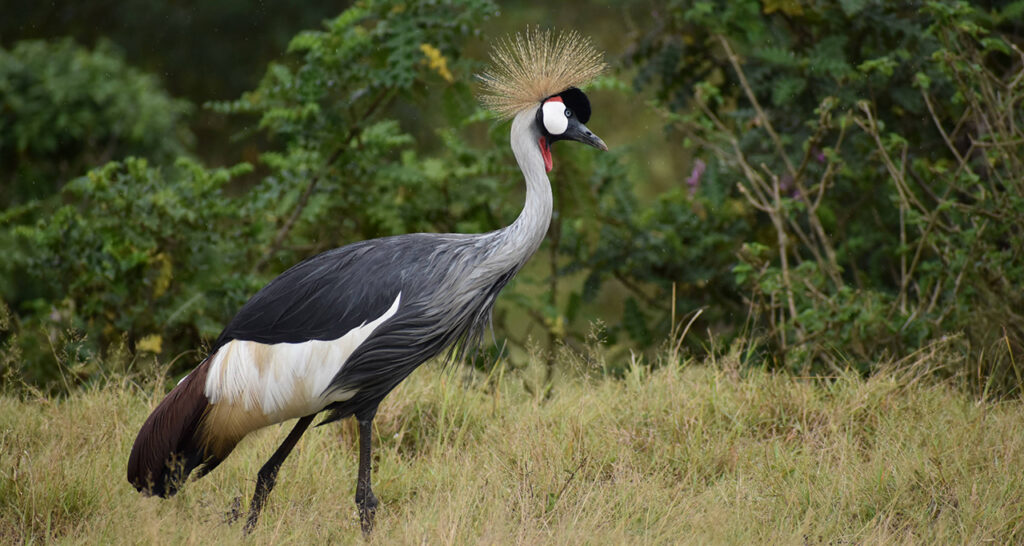
How do you secure Rwanda’s beloved Grey Crowned Cranes and other threatened wildlife that depend on healthy wetlands and agricultural landscapes for their survival?
The International Crane Foundation in Africa calls for governments, organisations, and individuals to work alongside traditional custodians to restore wetlands for a secure future of cranes and people ahead of World Wetlands Day to be celebrated on 2nd February under the theme “Wetlands and Traditional Knowledge: Celebrating Cultural Heritage.”
This successful approach to conservation will be shared by Kerryn Morrison, the International Crane Foundation/Endangered Wildlife Trust Partnership’s Vice President of Africa Programs, during the 9th Session of the Meeting of the Parties of the African-Eurasian Migratory Waterbird Agreement (AEWA MOP9) held from November 11-14 in Bonn, Germany.