First-of-Its-Kind Land Conservation Partnership Preserves Vital Wintering Habitat for Endangered Whooping Cranes
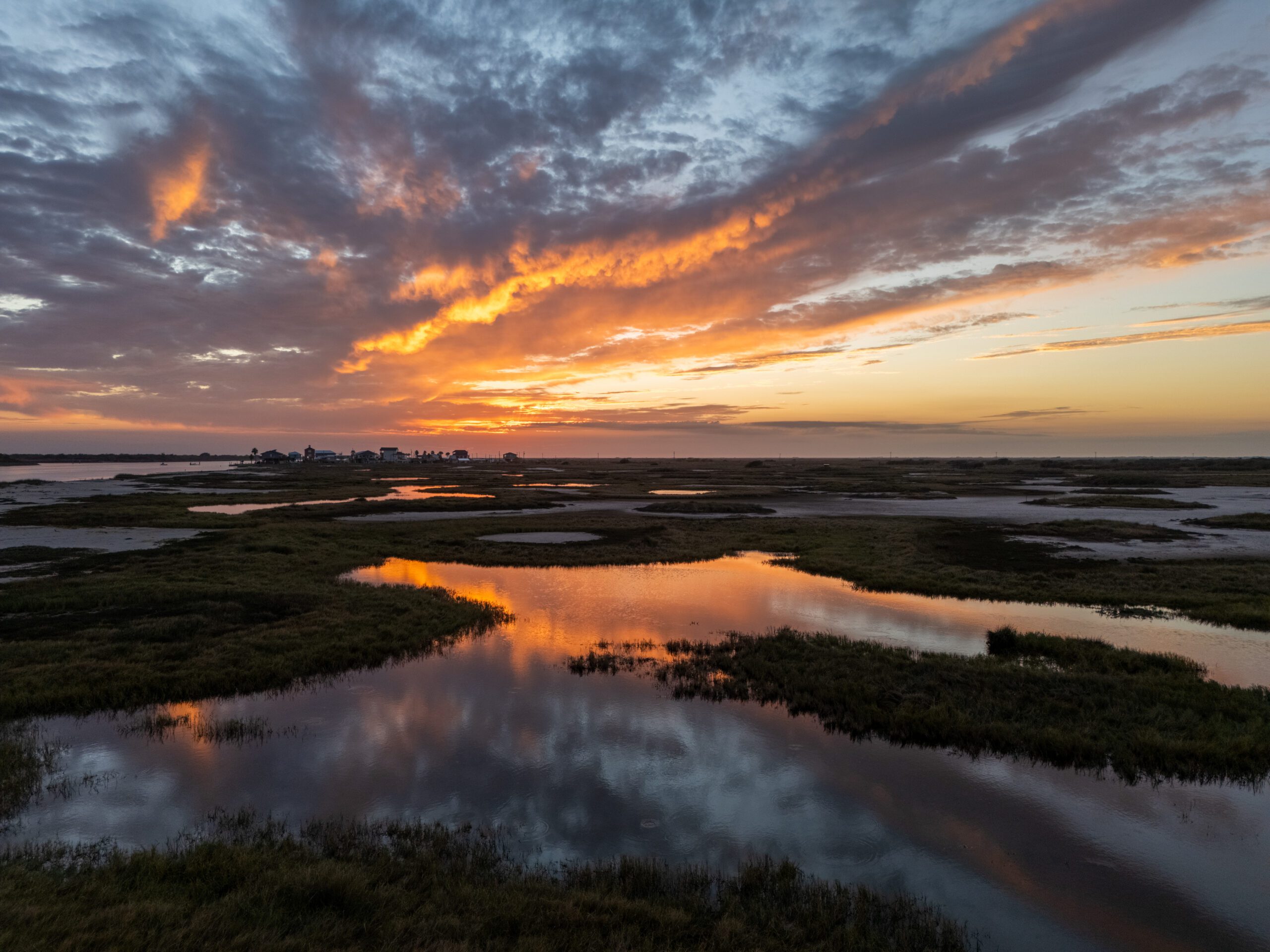
The collaborative partnership further protects over 3,300 acres of vital wetlands and prairie adjacent to Texas’ coastal Aransas National Wildlife Refuge.
MEDIA CONTACT: Ryan Michalesko, Communications & Advocacy Specialist, 608-356-9462 ext. 114
PORT O’CONNOR, Texas (December 18, 2025) — In a landmark conservation achievement for the Texas coast, a coalition of partners at the International Crane Foundation, The Conservation Fund, and the Coastal Bend Bays & Estuaries Program has secured permanent protection for more than 3,300 acres of high-priority wintering habitat for the federally endangered Whooping Crane, one of North America’s rarest and most endangered birds.
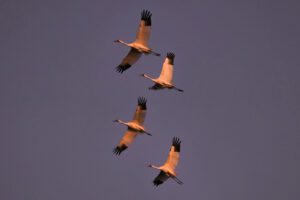
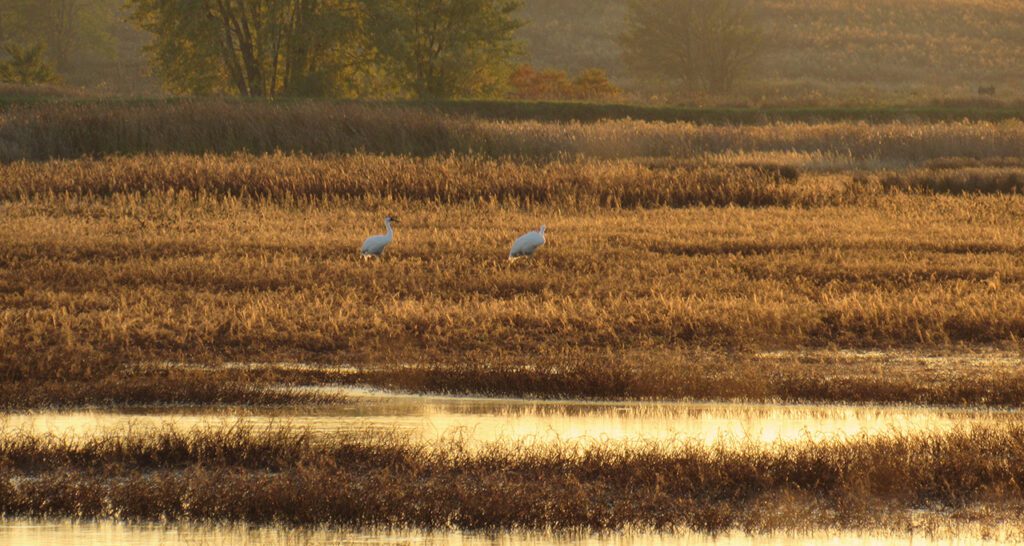
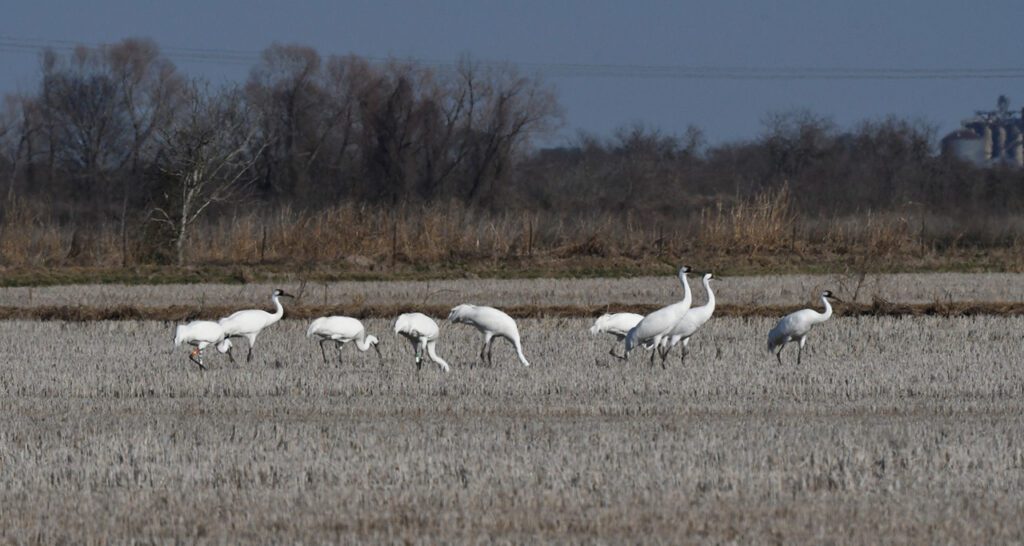
Situated along the Gulf Coast of Texas near the Aransas National Wildlife Refuge, the lands lie within one of the most important landscapes for wetland- and grassland-dependent species in North America. Together, the properties safeguard essential foraging and roosting grounds used by the growing Aransas–Wood Buffalo Whooping Crane population — the only wild, self-sustaining flock in existence. Once reduced to a mere handful, the population has rebounded to more than 500 birds thanks to decades of collaborative conservation. The landscape is also home to the federally endangered black rail, the aplomado falcon, and numerous other declining shorebird and waterfowl species.
The milestone is backed by two land conservation efforts:
- On December 4, the International Crane Foundation took ownership of a 1,150-acre coastal property. This is the first conservation land deal in the International Crane Foundation’s 52-year history, marking a bold new initiative and the organization’s next big step in Whooping Crane conservation. The organization plans to build its Central Flyway Whooping Crane research program around the management of this property and utilize it for community outreach and restoration events.
- On December 15, The Conservation Fund acquired the 2,232-acre Costa Grande Ranch to prevent future development and protect habitat. This acquisition builds on the organization’s decade-long conservation work in the region. The property will later be transferred to its permanent owner, the Coastal Bend Bays & Estuaries Program, a regional conservation organization that will oversee long-term management and restoration of the property. An ongoing fundraising process is underway to support their efforts.
A crane’s-eye view of the International Crane Foundation’s new property. Video by Hank Arnold
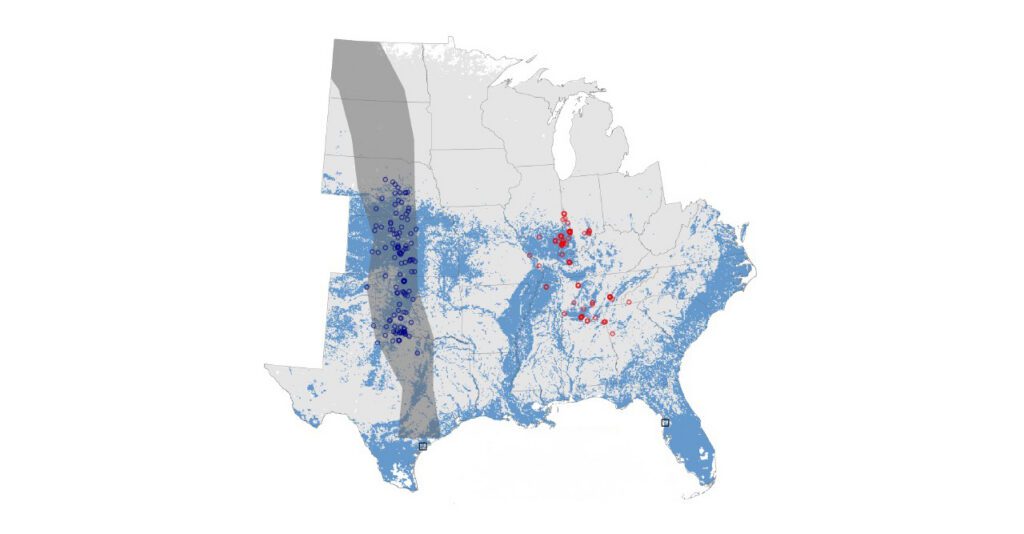
The two properties are located just over three miles apart and lie within a broader conservation mosaic that includes around 150,000 acres made up of the state-owned Powderhorn Wildlife Management Area, Welder Flats Wildlife Management Area, Aransas National Wildlife Refuge, the future Powderhorn State Park, and several privately conserved lands. The protection strengthens ecological connectivity across this entire region, enhancing resilience against coastal development pressures, sea-level rise, and habitat loss.
“Large, intact coastal landscapes are disappearing fast, and protecting this one is a major win for Texas. We’re thrilled to collaborate with partners who share a commitment to safeguarding these wetlands, which are essential for endangered species, migratory birds, and the long-term health of the Gulf Coast. With stewardship by the Coastal Bend Bays & Estuaries Program, this habitat will be managed with the long-term care it deserves,” said Julie Shackelford, Texas state director at The Conservation Fund.
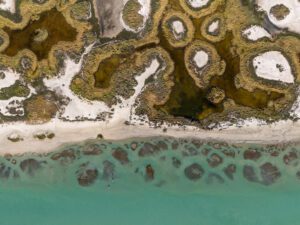
The full protection and management of these two properties will make this landscape more resilient and offer vital habitat for multiple threatened and endangered species, including the federally endangered black rail and aplomado falcon, serve as a key stopover for birds migrating over the Gulf, and provide a nursery for juvenile sport and commercial fish species.
To date, this project has received funding from the Knobloch Family Foundation, The Turner Foundation, Inc., the FarWide Conservation Trust secured through a North American Wetlands Conservation Act grant, the Matagorda Bay Mitigation Trust, the Houston Zoo, the Whooping Crane Conservation Association, the Jacob & Terese Hershey Foundation, the Malcolm C. Damuth Foundation, the Trull Foundation, and hundreds of individual donors.