First Carbon Credits Payments to Protect Crane Habitat Received in Partnership with South Africa’s Farmers
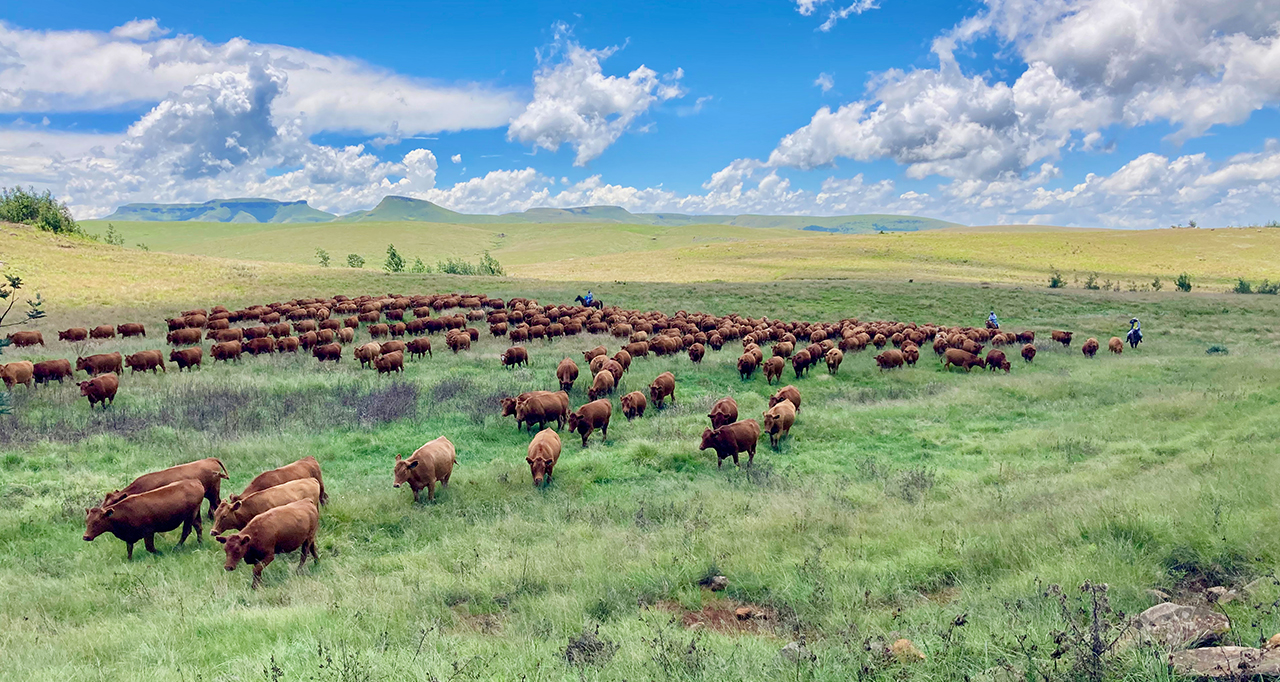
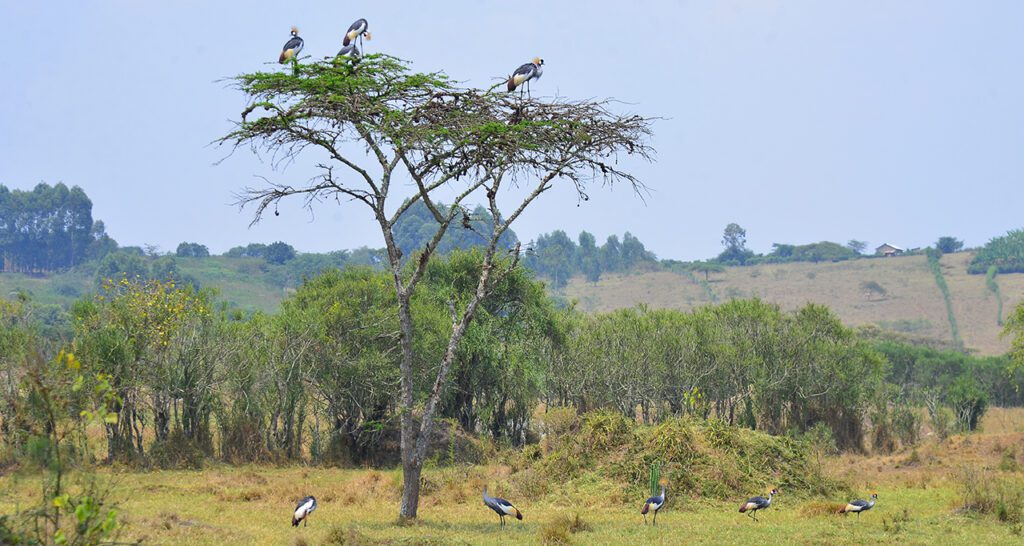
Working landscapes support both farmers and cranes in the Drakensberg region of South Africa. Pieter Botha/International Crane Foundation-Endangered Wildlife Trust
CONTACT: Jodi Legge, Vice President of External Affairs, 608-356-9462 ext. 120
South Africa – January 15, 2026 – More than 90,000 hectares (222,600 acres) of irreplaceable Drakensberg Grasslands will now be conserved as part of South Africa’s first large-scale, verified soil carbon project, and one of the world’s first that is applying Verra’s VM0026 Sustainable Grassland Management methodology at this scale. Verra is the world’s leading authority for carbon credit certification.
The International Crane Foundation, in partnership with the Endangered Wildlife Trust, has reached an important milestone, recently receiving official issuance of 805,971 Verified Carbon Units (VCUs). This important milestone for long-term, sustainable grasslands conservation is the product of more than 20 years of work and is part of a joint commitment to saving crane habitat in the Drakensberg region of South Africa.
These VCUs are independently audited and confirmed climate benefits, demonstrating exceptional scientific integrity and accuracy in project design, modelling, and implementation.
The project, which began in July 2018, spans along the Drakensberg range, from Mpumalanga in the north to the Eastern Cape in the south. Most of the land is managed through long-term biodiversity stewardship agreements with private landowners. The properties were selected for their ecological importance for Wattled, Blue, and Grey Crowned Cranes, their potential for soil carbon sequestration, and their landowner’s demonstrated commitment to sustainable grazing and fire management.
Using Verra’s VM0026 Sustainable Grassland Management methodology, the project delivers benefits for climate and biodiversity, significantly enhances agricultural resilience by improving soil health, water infiltration, and forage productivity. These are critical factors for long-term farming stability in a region increasingly affected by drought and climate variability. Restoring grassland ecosystems helps commodity producers maintain a viable operation while enabling better functioning biodiversity, benefiting pollinators, raptors, cranes, and numerous grassland-dependent species.
Carbon projects like this do not replace the need to reduce emissions or efforts to secure a pathway to net zero, but rather complement them. Nature-based (NBS) climate solutions are an essential part of rebuilding the ecosystem and creating resilience in the landscape. Financial support, in the form of ongoing credits to farmers, in turn supports ongoing sustainable land management and enables farmers to engage in land use activities to support adaptation and resilience in the face of a changing climate.
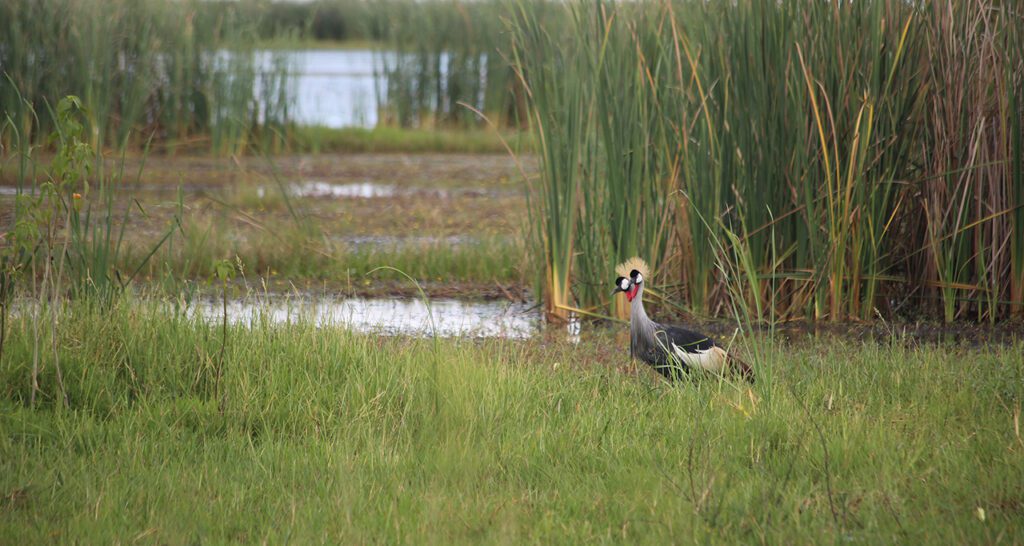
 Our team is collaborating with landowners in the Drakensberg region to restore vital grassland habitat for Blue Cranes and other wildlife. Sara Gavney Moore/International Crane Foundation
The International Crane Foundation and the Endangered Wildlife Trust, in partnership with WeAct, are already underway with the second monitoring period, which will run from January 1, 2023, to December 31, 2027. This next phase of the project creates an opportunity for like-minded conservation-oriented landowners to join the project as partners. This will expand the conservation footprint by 54,000 hectares (130,000 acres), strengthening ecological and agricultural outcomes across the region.
All participants have committed to a minimum of a 40-year contract horizon. This commitment provides a sustainable financing mechanism to reinvest carbon revenue into conservation, creating real long-term agricultural resilience and rural livelihood improvement. The project partners remain committed to supporting participating landowners and enhancing future monitoring, expansion, and verification efforts.