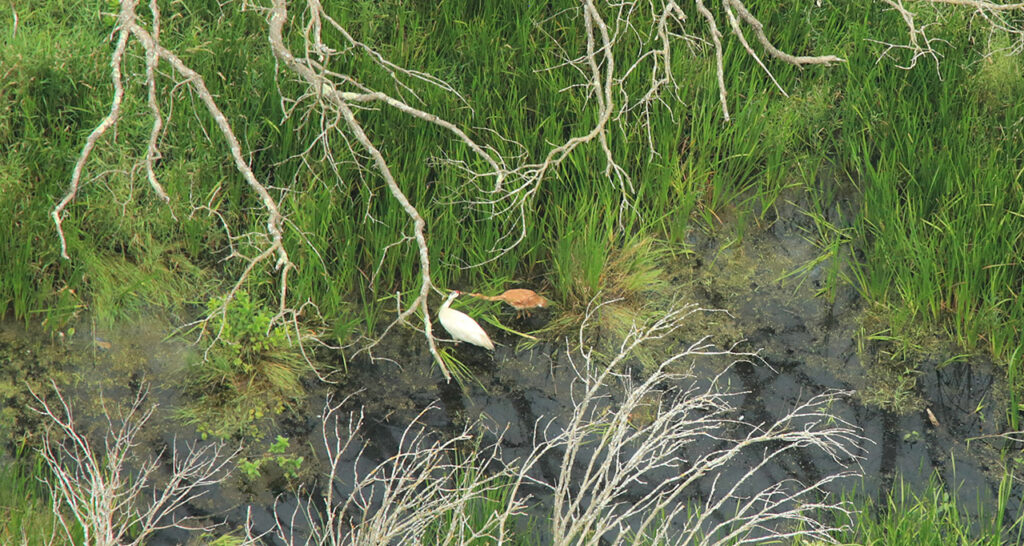
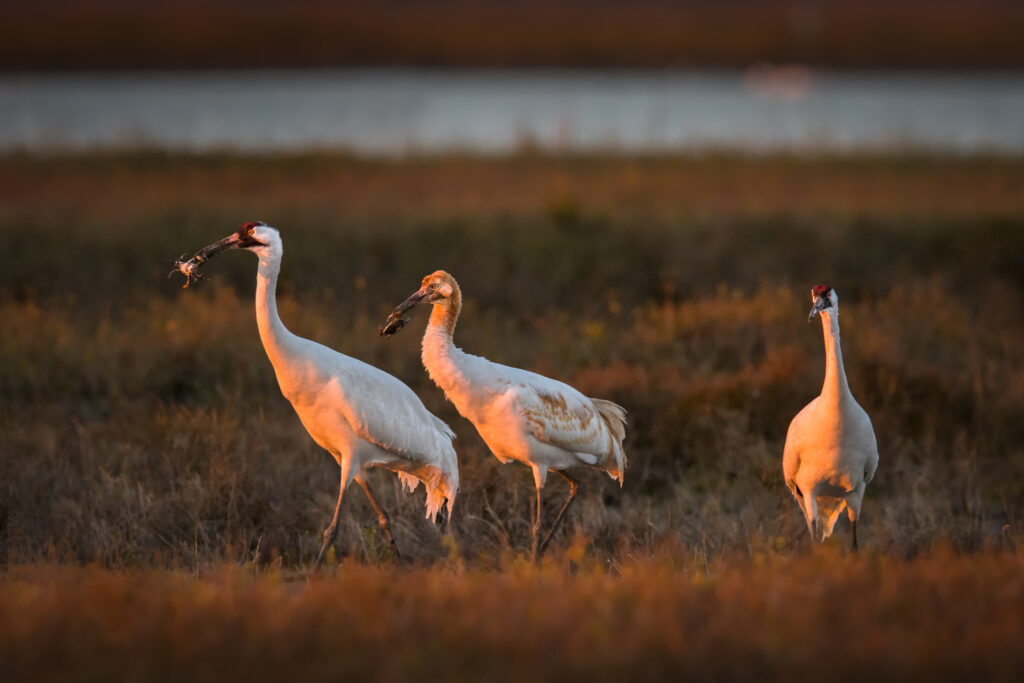
Meet the 2026 Wild-hatched Whooping Cranes Joining the Eastern Migratory Population
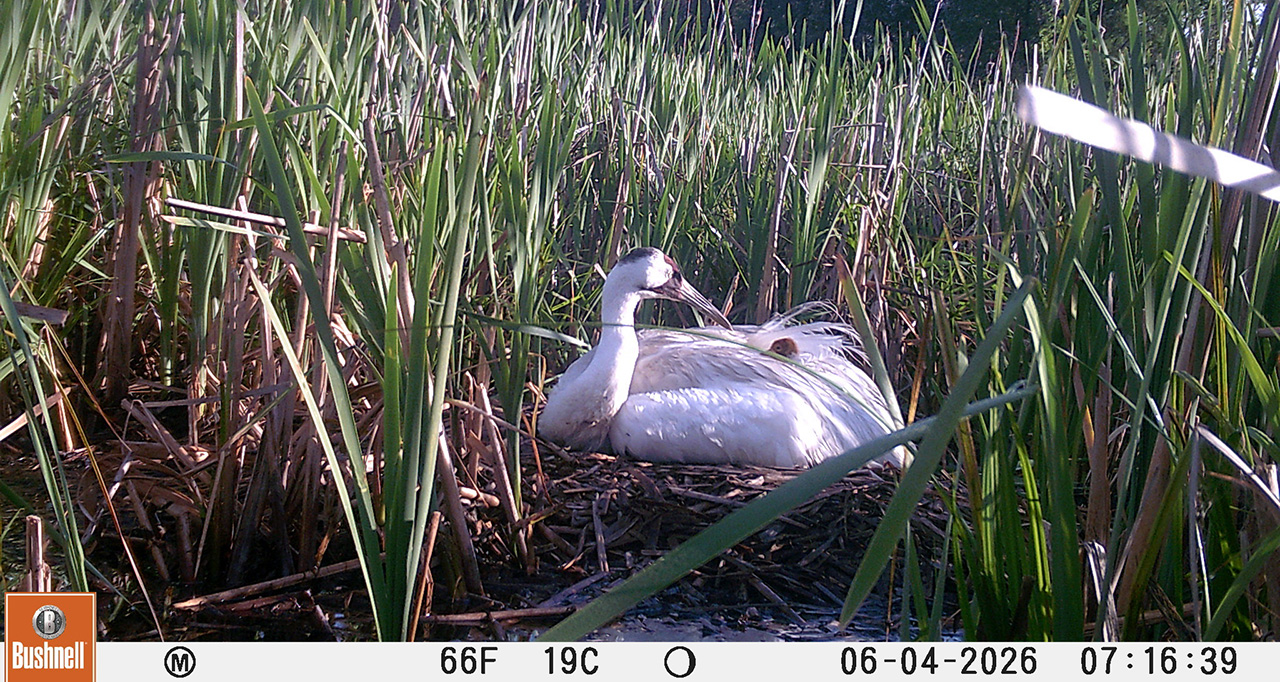
A trail camera captured a tender moment at the nest of Whooping Crane pair 3-17/67-15 and their chick in early June. Each spring, our staff places cameras near active nests to monitor pairs while they are incubating. Unfortunately, this pair’s chick didn’t survive, but what we’ve learned from their experience this year will inform future population management decisions.
We are excited to announce that there are four new Whooping Cranes flying over the wetlands of Wisconsin! Each spring, Whooping Cranes return to their home marshes, pile vegetation high to build their nests, and carefully lay up to two eggs. They incubate their eggs for about a month, and then fuzzy little Whooping Crane chicks hatch.
This year, 14 pairs nested in Wisconsin, 10 of which had at least one egg hatch. There were 11 chicks that hatched between early May and early June, and later this summer, four of them grew big enough to fly. We call this fledging, when cranes can sustain flight, making it easier to evade predators or travel to new areas to find food. Whooping Crane chicks grow quickly, about an inch per day, and typically reach this milestone around 80 days of age.
Whooping Cranes in Wisconsin are a part of the Eastern Migratory Population, a reintroduced population that began with the first cohort of cranes reared under human care in 2001. Over the past 25 years, we have learned a lot about reintroducing cranes and what they need to thrive in a new landscape. As of this year, there are about 65 cranes in the population, which migrate from the breeding grounds in Wisconsin to the wintering grounds spanning between Indiana and Florida. We still release juvenile cranes reared under human care every fall and monitor how they do in the wild after release.
One thing we’ve learned through our research is that it is important for adults to gain chick-rearing experience so they are more successful at raising chicks in the future. Once they learn how to find high-quality habitat, catch nutritious food, and watch for predators, they can pass this information on to the next generation. This year, about 36% of the chicks that hatched in the wild made it to fledging, the highest fledging rate we’ve seen in the population in 20 years! There has only been one year in which more chicks reached fledging—in 2018, there were six chicks. We are very excited to welcome these four new wild-hatched Whooping Cranes to the Eastern Migratory Population!
Meet the cranes!
W1-26 hatched in Green Lake County, near White River Marsh, to 10-15 and 4-13. This was the first time this pair fledged a chick! Both parents were raised by costumed caretakers and released at White River Marsh. They have been nesting together since 2019, and have hatched chicks a handful of times, so we were pleased to see their chick fledge this year. W1-26 hatched on May 6 and fledged in late July. By August, they were exploring more areas along the river and starting to forage in new habitats, while still returning to the marsh where they hatched at night for safety. Our team banded W1-26 this summer, so they have a transmitter that will tell us more about where they fly next, and where this family decides to spend the winter. Our bet is they will make their way down to Wheeler National Wildlife Refuge in Alabama.
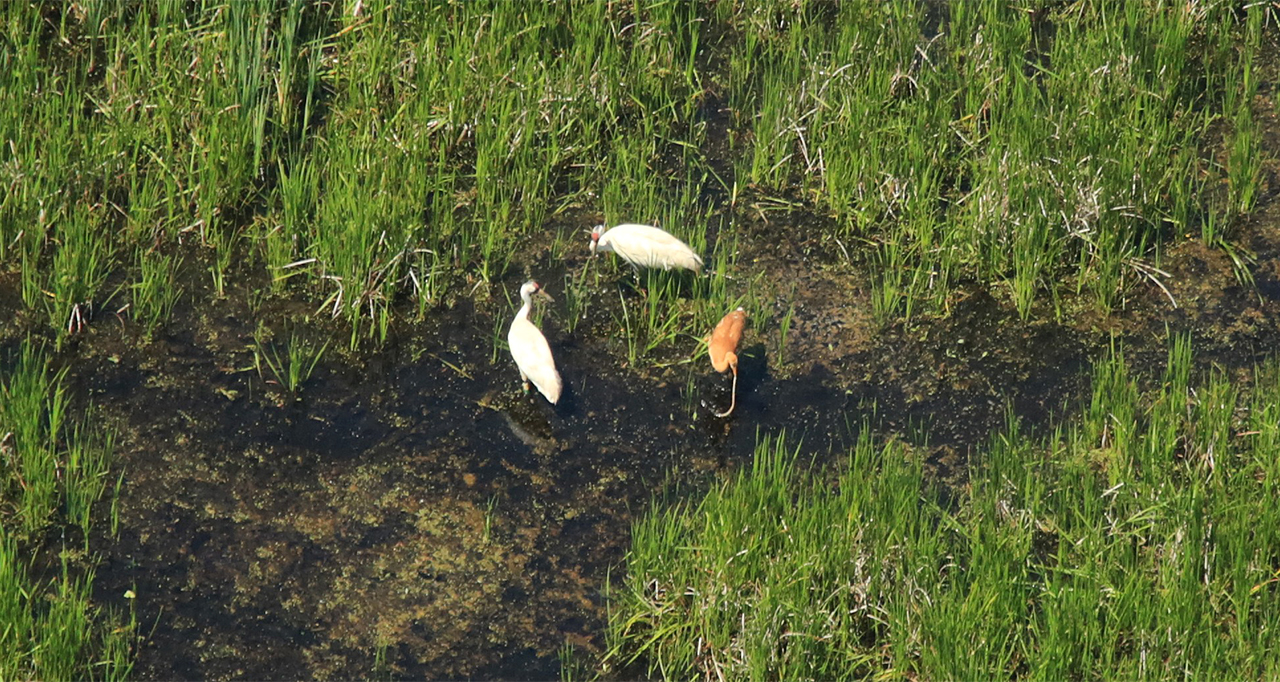 W1-26 experiments with eating a snake under the watchful eyes of its parents. Photo by Bev Paulan
W2-26 hatched in Portage County, to W1-19 and 1-17. This pair has been on a roll lately, as they fledged a chick last year, too. W1-19 has a “W” in front of her ID number because she herself hatched in the wild. She must have taken good notes from her parents, since she and her mate have become great parents themselves. They nested for the first time in 2022, and they fledged a chick on the first try! They were also the only pair to fledge a chick last year, so they have really learned how to find safe places to raise chicks with good food resources. Like W1-26, W2-26 also hatched on May 6 and fledged in late July. We have not banded this chick yet, so it is harder to keep track of where they go, but we hope to see them on the wintering grounds with their parents later this year, maybe in southern Indiana or northern Alabama.
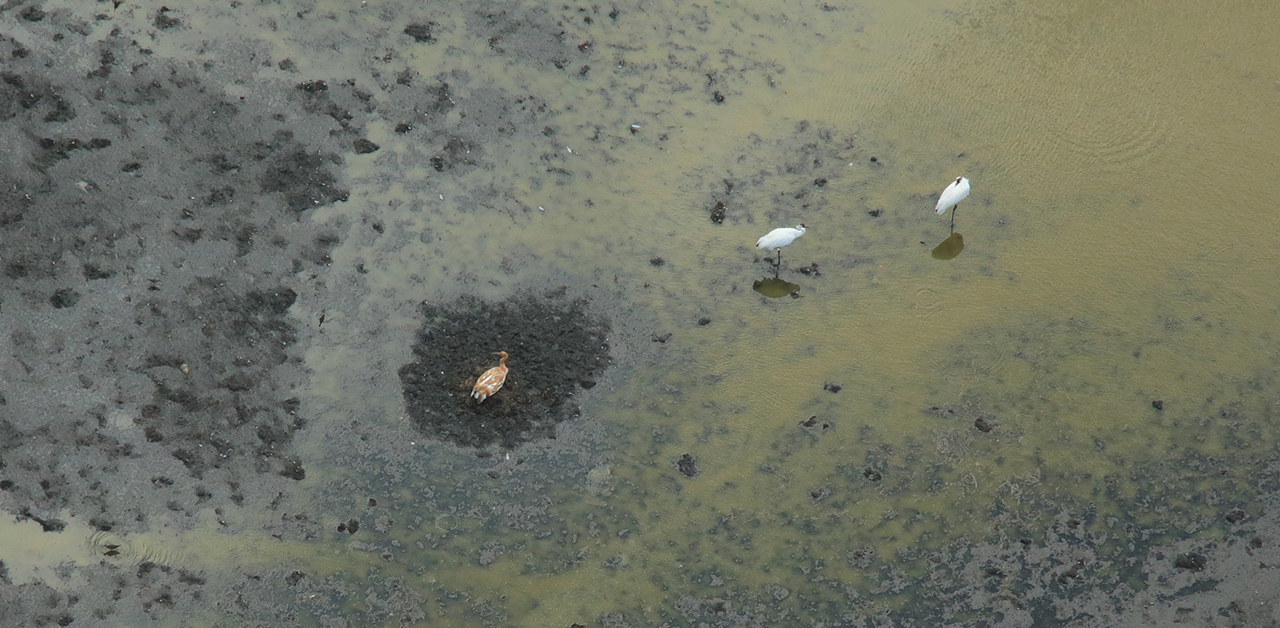 W2-26 rests on an open spot in the wetland, while its parents take a break nearby. Photo by Bev Paulan
W7-26 hatched on May 31 at Necedah National Wildlife Refuge in Juneau County, to W14-19 and 2-04. W7-26’s mother, W14-19, also hatched in the wild—not too far away from where she nests now. Her parents are two of the oldest birds in the population (23 and 21 years old) and are still nesting. W7-26’s father, 2-04, is also one of the oldest birds in the population, at 22 years old. He nested for the first time in 2010 and has since nested with four different mates. After his long-time mate disappeared, he re-paired with W14-19 in 2023. Male 2-04 fledged two chicks with his previous mate, but this is the first time he and W14-19 have fledged one together. We’re excited to see his years of experience pay off!
This summer, W7-26 fledged at a young age, much earlier than we expected. We are curious whether that could be due to a lot of nutritious food available in their territory, or maybe to a nice open habitat where they can stretch their wings. Much of our ongoing research is focused on wild-hatched chicks, where they go, what they eat, or what behaviors their parents show, all in an effort to understand what cranes need to thrive in Wisconsin. This particular pair usually migrates to Kentucky, so we are looking forward to seeing this little one soar down there this fall.
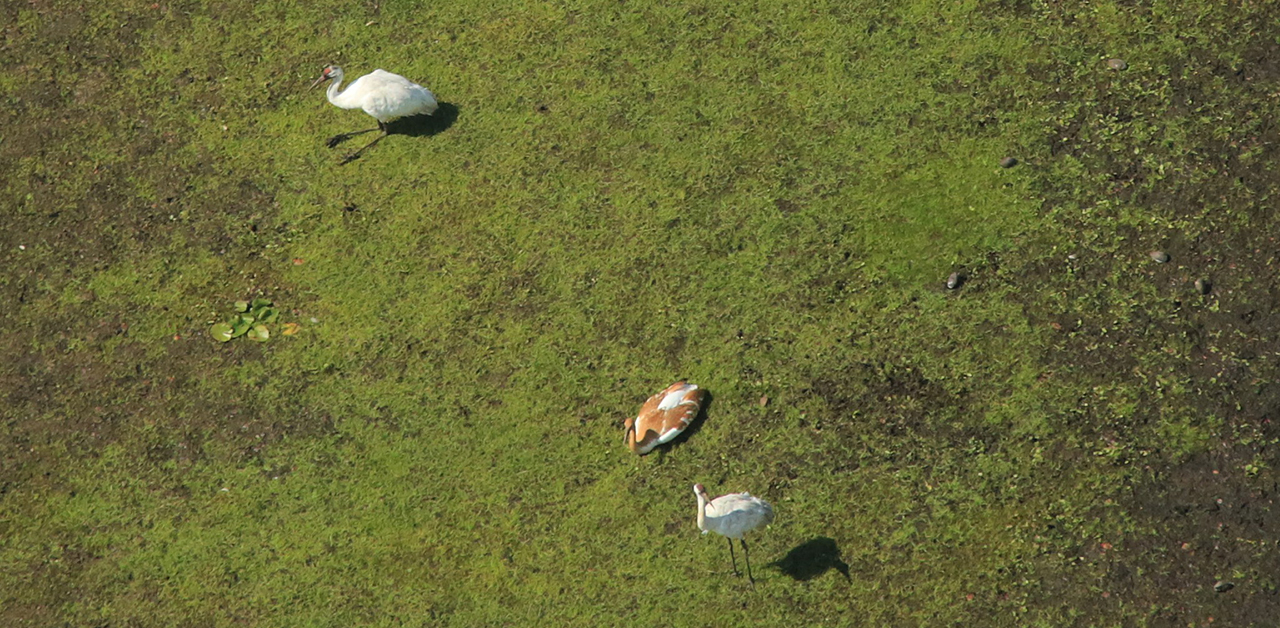 We are seeing a theme here…W7-26 rests with its parents near the marsh. Photo by Bev Paulan
W10-26, our youngest fledged chick, hatched this spring to one of our newest pairs! Pair 3-14 and 4-14 both hatched in 2014 and were costume-reared at White River Marsh. They were both paired with different cranes, but unfortunately lost their mates last year. They each spent the winter alone, and upon returning to the breeding grounds, they found each other and got right to nesting! W10-26 hatched on June 5, at White River Marsh, where they have been spending the summer eating whatever critters and wetland treats they can find. Our team banded W10-26 in August, and by the end of the month, they had fledged. This is the first time W10-26’s father has fledged a chick, but female 3-14 actually fledged a chick with her previous mate in the same territory. She certainly knows all the good spots to find food, stay safe from predators, and teach her chicks about life in the wild. We are very curious to see where this new family will go this winter, since the parents previously spent the winter in different places. We’ll see who decides on the best place to spend the winter!
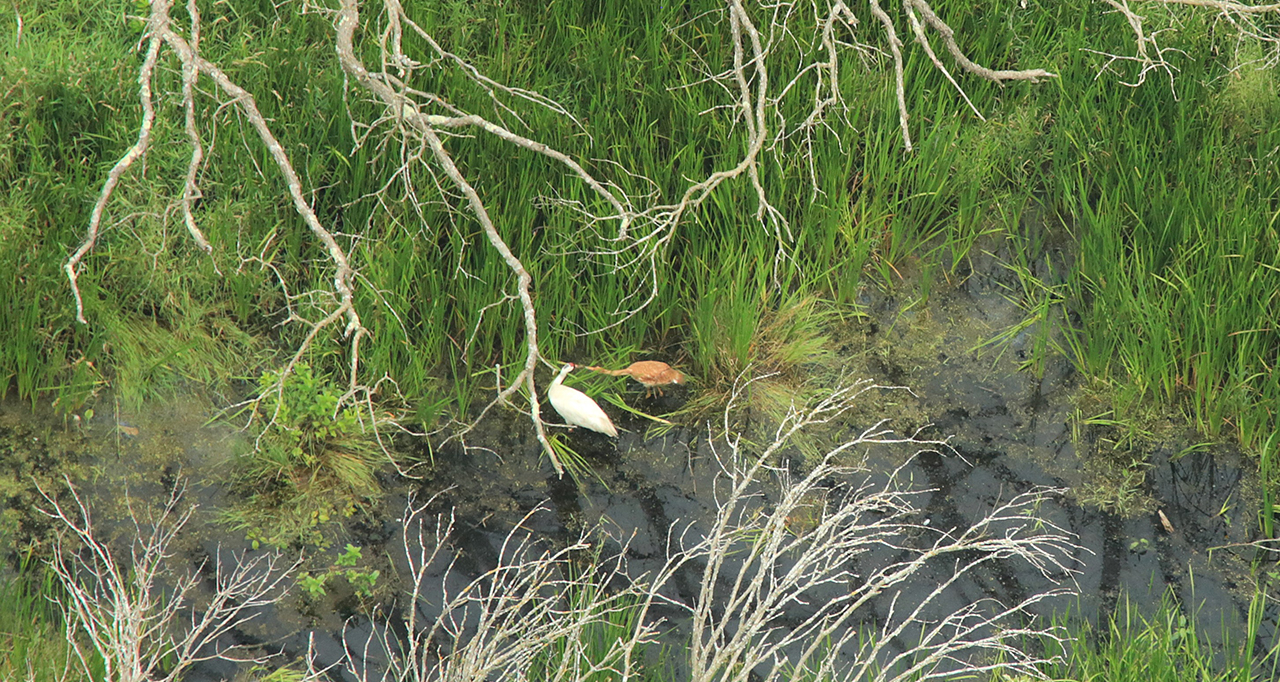 W10-26 gets a snack from male 4-14. Photo by Bev Paulan
We are excited to welcome these new Whooping Cranes to the population, and we hope they will continue to do well in the months and years to come. Please help us support the population by sharing this great news with your friends and neighbors and following their stories on our website and social media. If you’re lucky enough to see a Whooping Crane in the wild, please observe them from a safe distance, and let us know about your sighting! Every sighting helps us learn about the population and monitor their survival and successes. You can report your sightings to us at bandedcranes.org.
Finally, consider supporting the International Crane Foundation’s reintroduction efforts by becoming a member, making a donation, or attending an International Crane Foundation event. You can always support Whooping Cranes by advocating for the protection of endangered species and their habitats. We hope that by working together, we can continue to see Whooping Cranes thrive in the wetlands they call home.

Story submitted by Hillary Thompson, Director of Whooping Crane Reintroductions
September 15, 2026