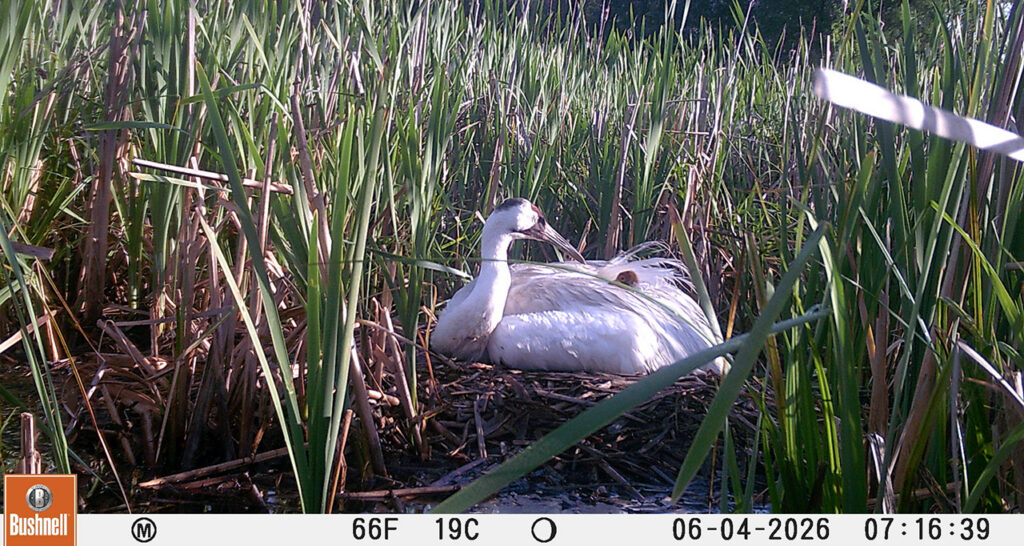
We are excited to announce that there are four new Whooping Cranes flying over the wetlands of Wisconsin! Each spring, Whooping Cranes return to their home marshes, pile vegetation high to build their nests, and carefully lay up to two eggs. They incubate their eggs for about a month, and then fuzzy little Whooping Crane chicks hatch.
We are excited to announce that there are four new Whooping Cranes flying over the wetlands of Wisconsin! Each spring, Whooping Cranes return to their home marshes, pile vegetation high to build their nests, and carefully lay up to two eggs. They incubate their eggs for about a month, and then fuzzy little Whooping Crane chicks hatch.
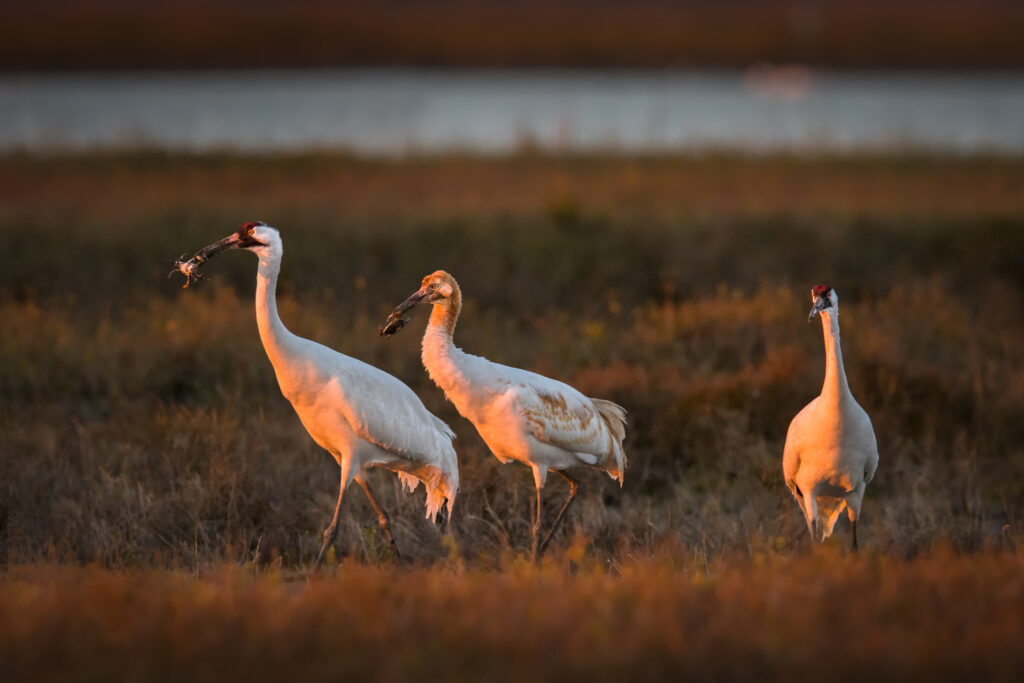
This rule change directly threatens the continued recovery of the Endangered Whooping Crane, one of the first species protected by the Endangered Species Act
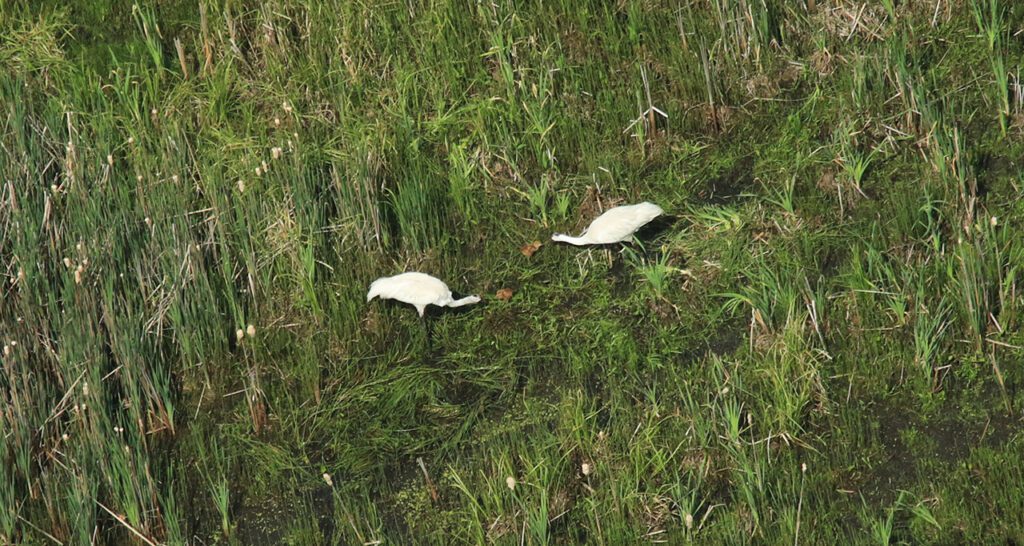
In May, chicks have started hatching in the Whooping Crane Eastern Migratory Population!
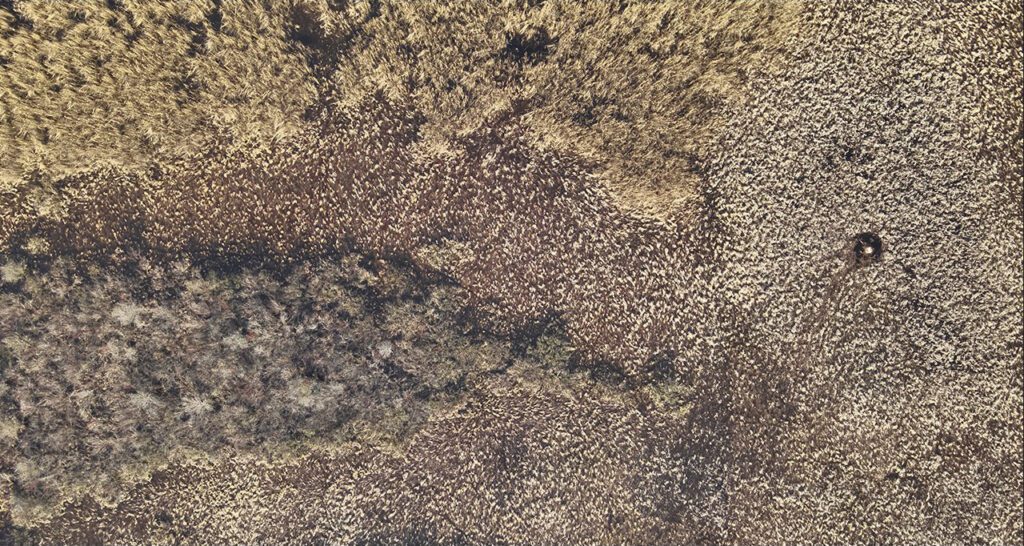
In April, the Whooping Cranes in the Eastern Migratory Population began nesting in Wisconsin!
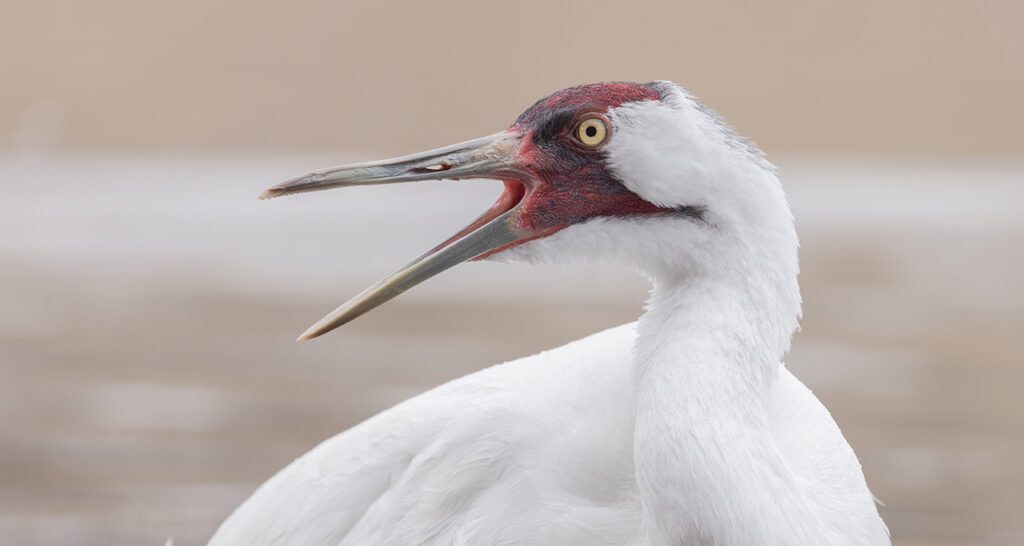
The International Crane Foundation is deeply concerned following the recent illegal shooting of a Whooping Crane in Evangeline Parish, Louisiana — the second such incident in the parish in less than two months. It is the third time in just over two years that a Whooping Crane has been poached in the parish.
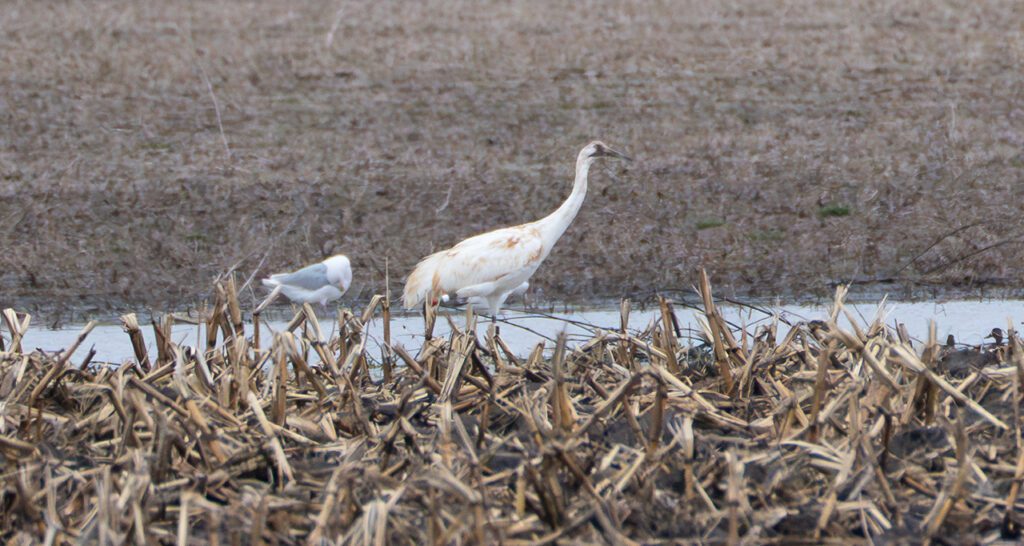
During March, most Whooping Cranes in the Eastern Migratory Population arrived on their typical breeding/summering grounds in Wisconsin!
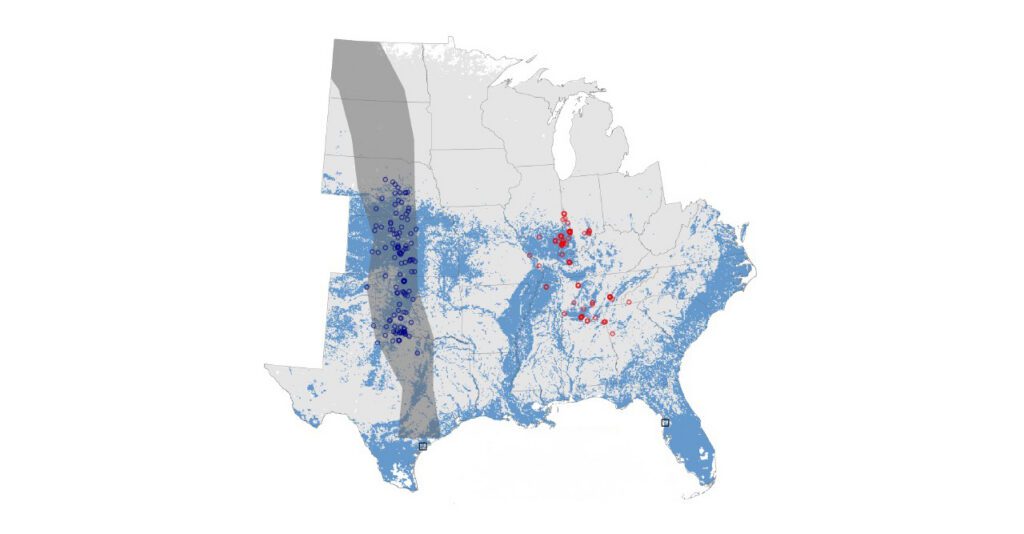
The two populations of North America’s migrating Whooping Cranes exhibit vastly different behaviors on their journey south. The remnant Aransas-Wood Buffalo Population (AWBP) migrates about 2,500 miles along the Central Flyway to reach their historic wintering grounds in coastal Texas. The Eastern Migratory Population (EMP), a reintroduced population established in 2001, was originally taught to fly to coastal Florida to salt marshes that mimic the conditions of the wintering habitat in Texas.
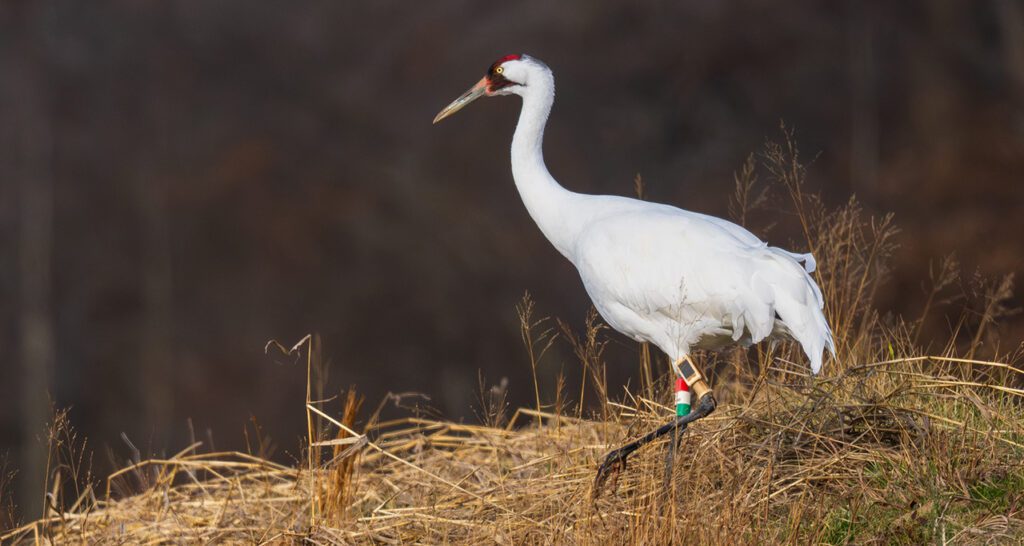
During January, most of the Whooping Cranes in the Eastern Migratory Population were still on their wintering grounds and doing well.

For decades, conservationists have worked to combat threats that nearly drove the Whooping Crane to extinction. Their population hit a historic low of only 21 individuals in the wild in the 1940s. As part of the effort to save the species, a population of migratory Whooping Cranes was reintroduced to Wisconsin in 2001, known as the Eastern Migratory Population, or EMP. Today, the EMP consists of around 70 individuals who spend their summers in Wisconsin before migrating further south for the winter, mostly in Alabama and Indiana. Through this reintroduction and countless other conservation measures, there are now about 700 Whooping Cranes in the wild in three populations. Despite this impressive growth, threats continue to emerge that threaten the species’ survival, and these must be met with creative research, dedicated partnerships, and decisive action to safeguard the future of Whooping Cranes.
No results found.
Adjust the filters and try again.