Second Whooping Crane Poached in Evangeline Parish Louisiana in Weeks
International Crane Foundation Calls for Renewed Vigilance
Contact: Ryan Michalesko, Senior Communications & Marketing Specialist, 608-356-9462 ext. 114
Evangeline Parish, Louisiana — April 16, 2026 — The International Crane Foundation is deeply concerned following the recent illegal shooting of a Whooping Crane in Evangeline Parish, Louisiana — the second such incident in the parish in less than two months. It is the third time in just over two years that a Whooping Crane has been poached in the parish.
On April 13, 2026, the Louisiana Department of Wildlife and Fisheries (LDWF) cited Michael Alaniz, 49, of Chicago, Illinois, for allegedly shooting a Whooping Crane on a privately owned crawfish farm near Highway 106, between Bayou Chicot and Pine Prairie. The crane, which had been fitted with a location transmitter, was reported missing on March 19 after biologists detected a lost signal. Agents located the deceased bird the following day, finding pellet wounds consistent with a shotgun. Alaniz subsequently contacted agents and admitted to shooting the crane on March 17.
This citation follows the March 3 citation of two individuals, Logan Q. Thrasher of St. Landry and Manuel Luis, for the February 28 shooting of a separate Whooping Crane at a crawfish pond off Millers Lake Road, also in Evangeline Parish. Together, the two birds represented approximately 2.5 percent of Louisiana’s entire non-migratory Whooping Crane population, which now numbers fewer than 80 individuals.
Critically, both birds were young males hatched and raised in the wild — exactly the outcome that decades of painstaking conservation work have been building toward.

What makes these losses especially frustrating is what these birds represent for this reintroduced population. These were wild-hatched chicks — the real measure of success for a recovering population. The Whooping Crane pairs raising these birds did everything right, and many months of parenting went into successfully fledging these chicks before sending them out on their own. The birds are doing their part. We have to do ours.
Evangeline Parish has come to the attention of the International Crane Foundation as an area of recurring concern. The parish was also the site of a well-publicized poaching incident just over two years ago. Read more about the incident here. While the parish does not support large concentrations of cranes, it has been frequented by young birds — birds who, because they are still learning the landscape, may be especially vulnerable. The recurring pattern of illegal shootings in the parish threatens to preempt these birds before they have the chance to mature and contribute to the population’s recovery.
“Every bird we lose is a year’s worth of effort gone, by the crane pair, by the field biologists, and beyond,” said Crouch. “Evangeline Parish has now seen multiple incidents in a short span of time. We are asking residents, landowners, and the broader community to help us turn that around.”
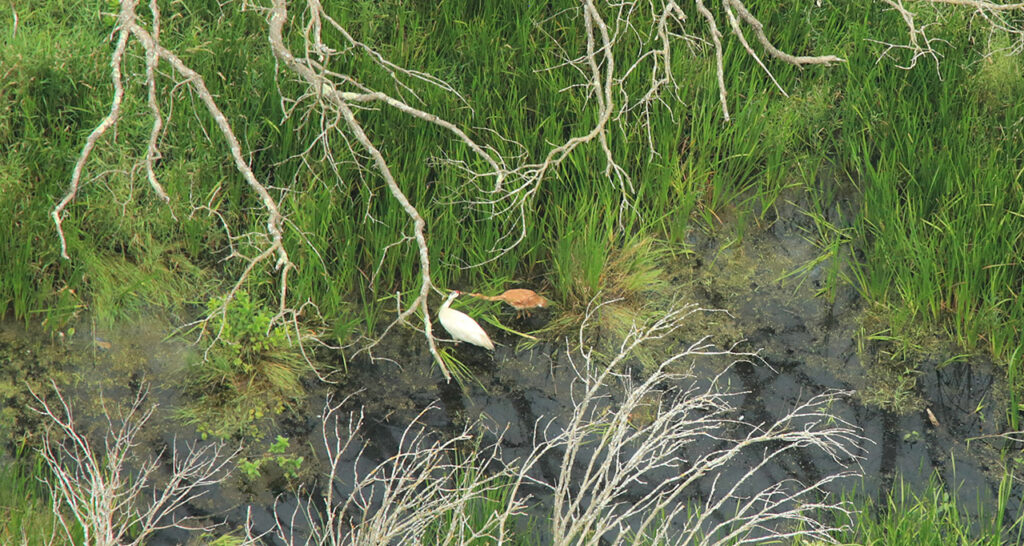
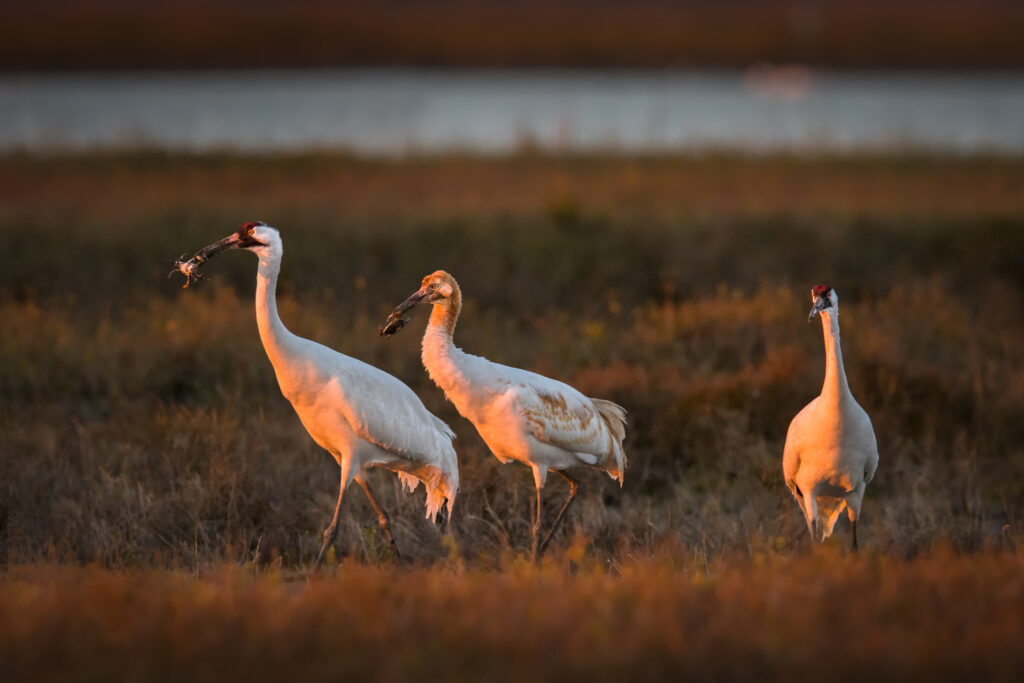
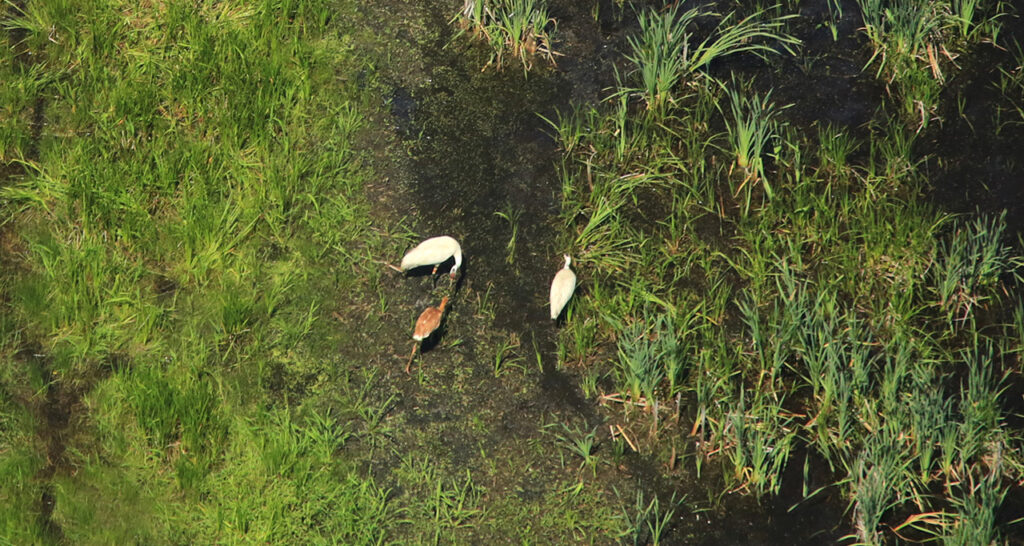
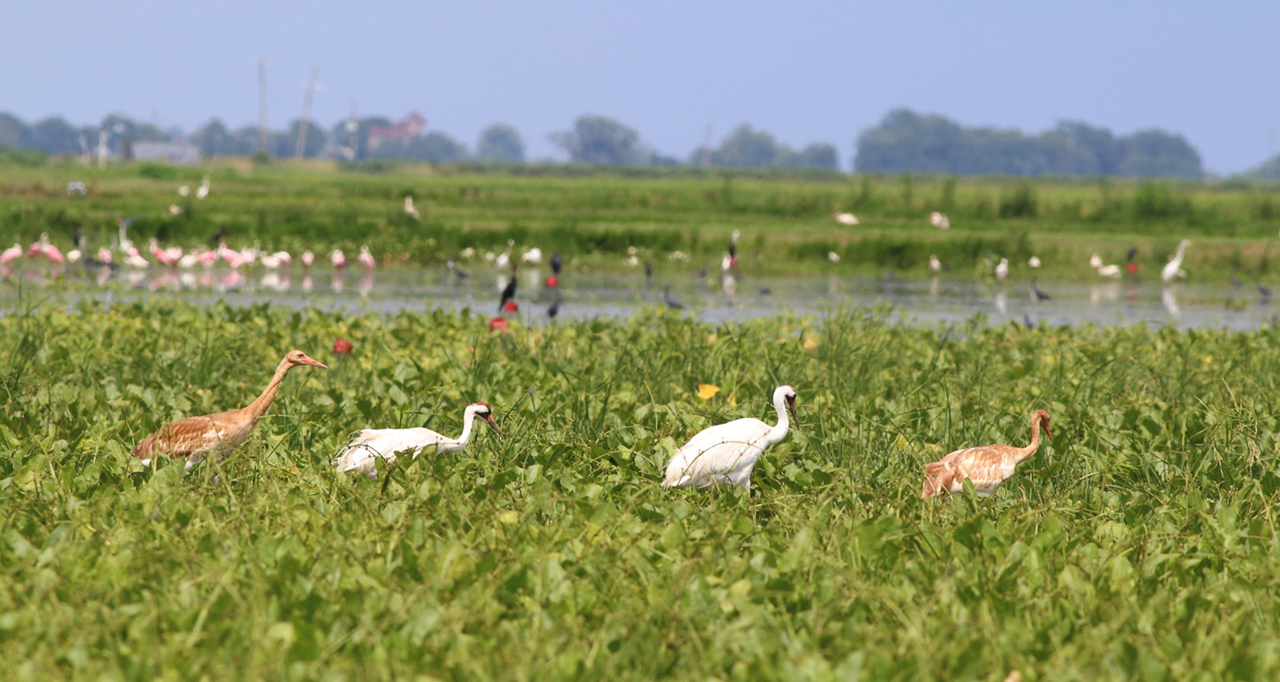 A Whooping Crane family forages in a crawfish pond in Jeff Davis Parish, Louisiana. Photo courtesy of the Louisiana Department of Wildlife and Fisheries
Violations of the Migratory Bird Treaty Act carry fines of $400 to $950 and up to 120 days in jail. Individuals may also face civil restitution of up to $15,000 per bird for the replacement value of an illegally taken whooping crane. The International Crane Foundation strongly encourages anyone with information about Whooping Crane harassment or shooting to contact the LDWF Wildlife Violator Hotline at 1-800-442-2511, or to report online here.
“We are grateful to LDWF agents for their swift and thorough work in both of these cases,” added Dr. Crouch. “Accountability matters, but enforcement alone cannot protect this species. Community awareness and a genuine sense of shared responsibility and pride in these Louisiana birds are what will ultimately lead to the success of this population.”
The Whooping Crane (Grus americana) is one of the rarest and most endangered birds in North America. Once reduced to just 21 wild individuals on the brink of extinction, the species has recovered to several hundred birds thanks to intensive international conservation efforts spanning more than half a century. Yet, there are still only about 700 Whooping Cranes in the wild.
The International Crane Foundation has been a central partner in the reintroduction of a non-migratory population in Louisiana, working alongside LDWF, the U.S. Fish & Wildlife Service, Audubon Nature Institute, the Dallas Zoo, and other partners.
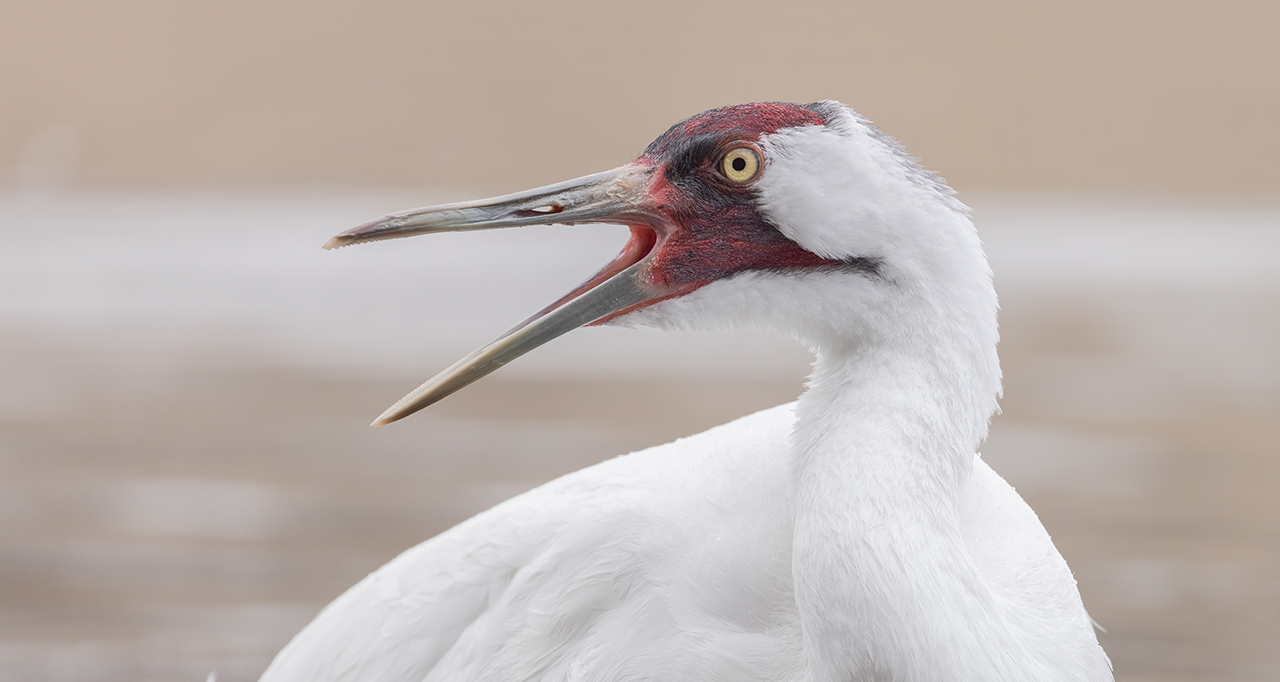
Top photo: Ted Thousand