Protecting Cranes and Communities in Zambia’s Kafue Flats
The Lower Kafue Basin is one of Zambia’s most vital landscapes—economically, ecologically, and socially—supporting nearly 9% of the country’s population. Its wetlands, floodplains, and grasslands sustain farming, fishing, livestock, energy production, and tourism. However, growing pressures from pollution, encroachment, deforestation, and climate change are threatening both the livelihoods of rural communities and the rich biodiversity of the Kafue Flats, home to the endemic Kafue Lechwe antelope and numerous other wildlife species.
Recognized as a Ramsar Site and a UNESCO Man and the Biosphere Reserve, the Kafue Flats are now the focus of two newly approved Global Environment Facility (GEF-8) projects, securing about US$9 million to strengthen conservation, community livelihoods, and climate resilience. These initiatives are led by the Government of Zambia, in partnership with the International Crane Foundation, WWF Zambia, and other stakeholders.
The Kafue Flats Climate Resilience and Adaptation Project (Kaf-Adapt), funded by the Least Developed Countries Fund (LDCF), focuses on sustainable landscape management, reducing climate-related risks, and ensuring that local development aligns with environmental and social safeguards.
Complementing this is the Kafue Flats Wildlife, Habitat, Health and Livelihoods Project (Kaf-Wild), supported by the GEF Trust Fund, which aims to secure key wildlife species and enhance wildlife-based economies. The project will promote coexistence between people and wildlife, strengthen conservation governance, and create sustainable livelihood opportunities linked to nature.
Together, these five-year projects will engage communities in a climate-resilient, nature-based development model, fostering harmony between people, livestock, and wildlife while protecting one of Zambia’s most ecologically important and productive landscapes.
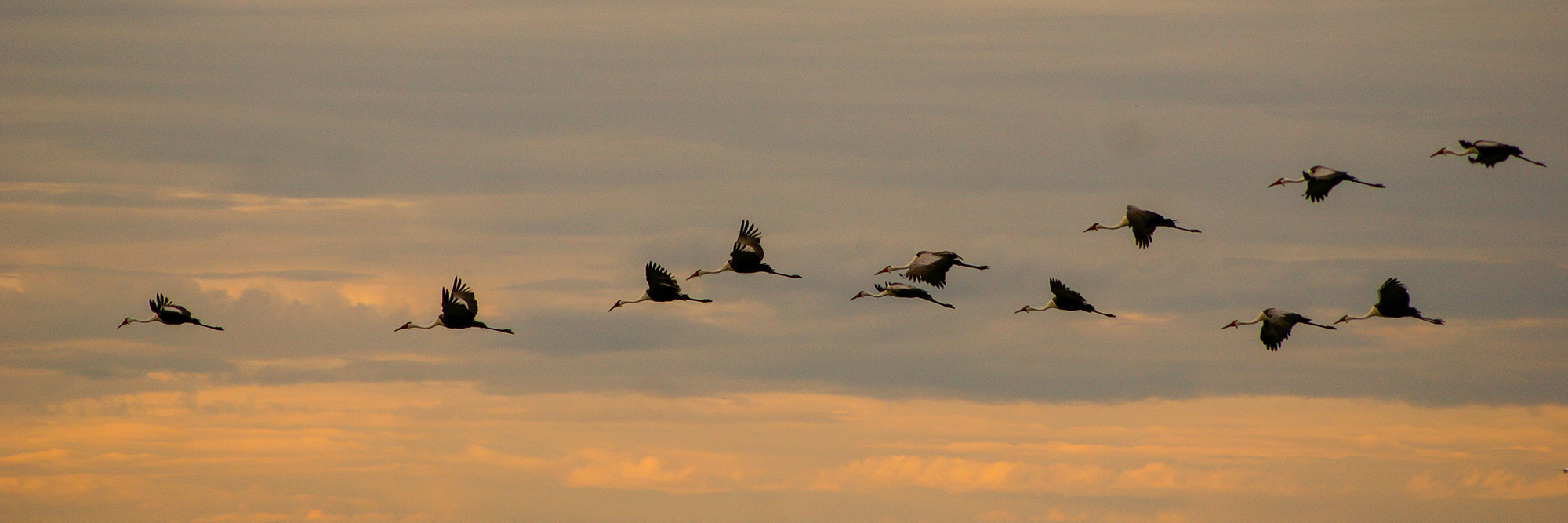
Photo: Wattled Cranes by Griffin Shanungu