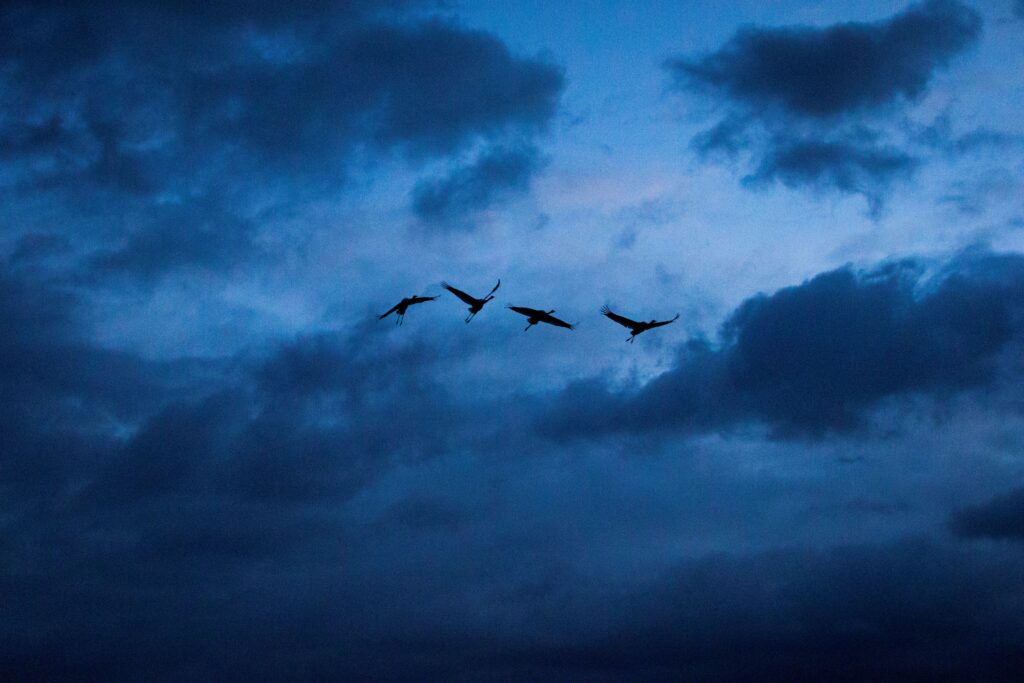
Today’s actions directly threaten recovery of the Endangered Whooping Crane, one of the first species protected by the Endangered Species Act
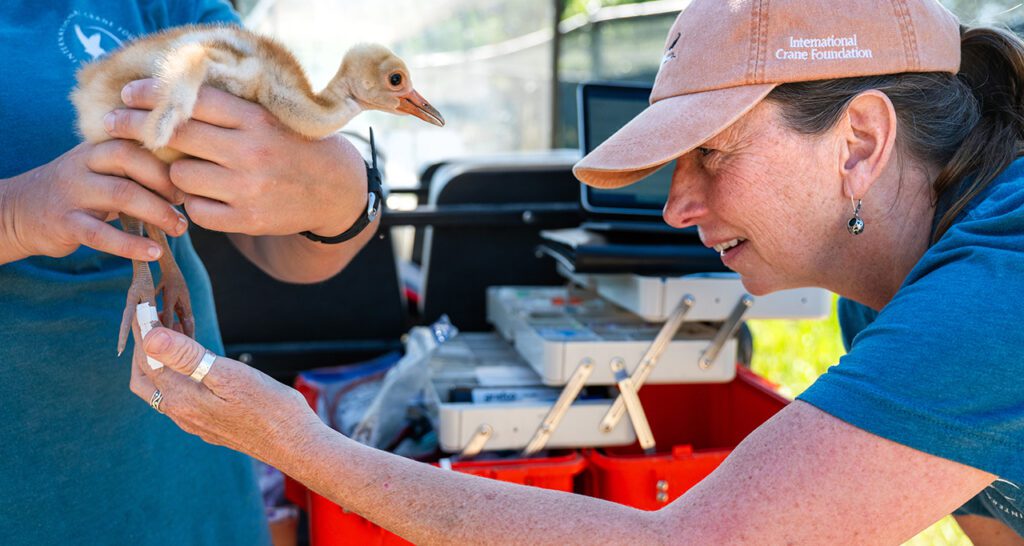
Over the past five years, our aviculture staff has been working to strategically increase the number of Sarus Cranes in our residential flock at our Global Headquarters, aiming to meet our specific collection goals for this species. We acquired an established pair, Yuva and Minu, to serve as our Sarus Crane ambassadors on exhibit at the Crane Discovery Center.
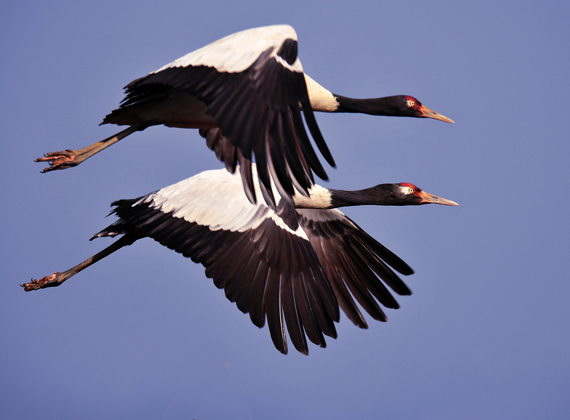
We asked our staff for their top ten facts about crane migration to create this list – we hope you are inspired to learn more about the mystery of bird migration!
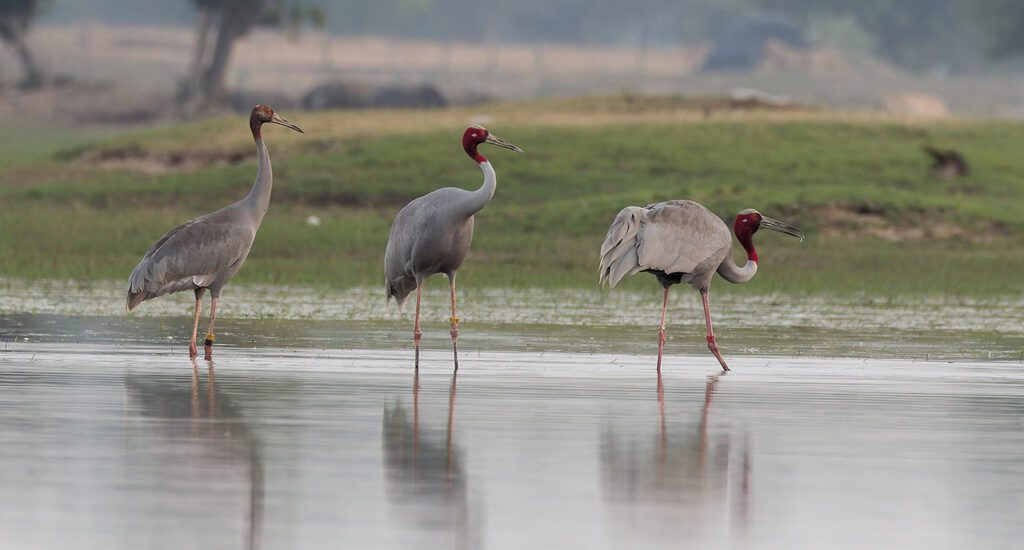
Six juvenile Sarus Cranes will soon have a new home at Tram Chim National Park in Vietnam’s Mekong Delta.
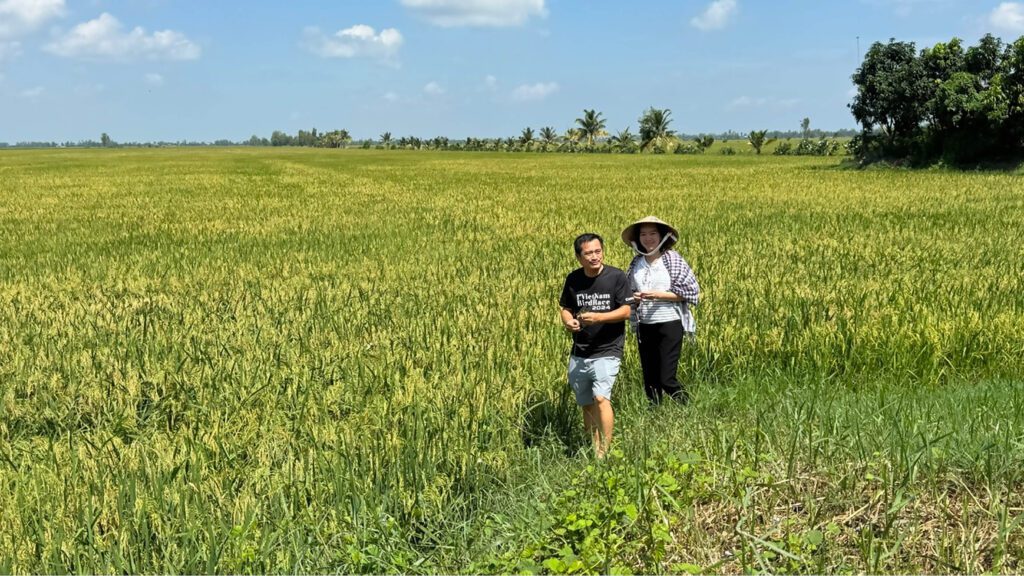
The International Crane Foundation, in partnership with Mekong Organics and Vietnam Wild Tour & Research LTD (WILDTOUR), is thrilled to announce the project entitled “Sarus Crane Restoration and Regenerative Agriculture Pilot” at Tram Chim National Park, Vietnam.
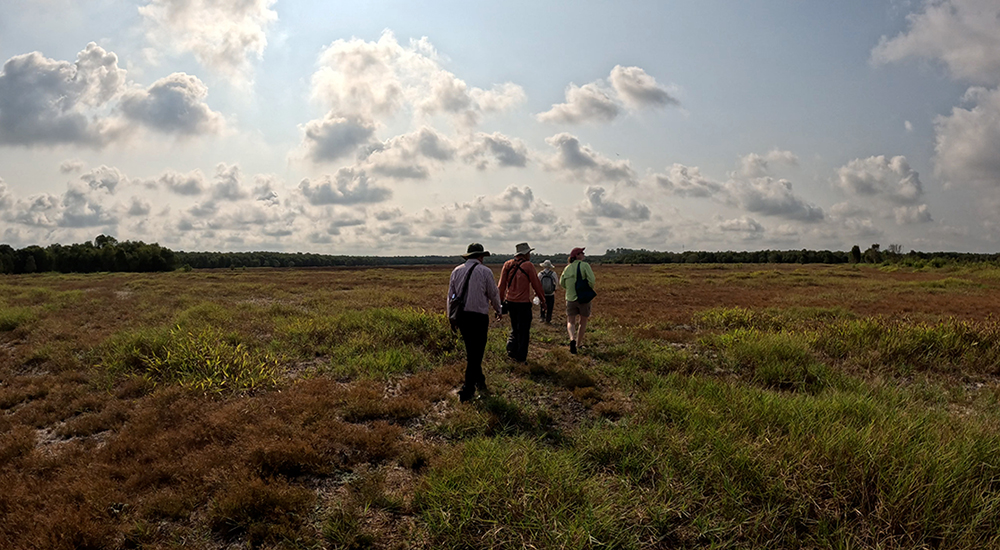
This spring, our Curator of Birds, Kim Boardman, and Director of Conservation Medicine, Dr. Diana Boon, traveled to Vietnam and Thailand to join Dr. Tran Triet, our Southeast Asia Program Director.
Ancient. Elegant. Endangered. Cranes inspire us to work for a better world. Reflecting on our golden anniversary, I am drawn to the amazing places where cranes have led us, and how decades of commitment and partnership inspire innovative new ways to safeguard cranes and the lands and waters we share.
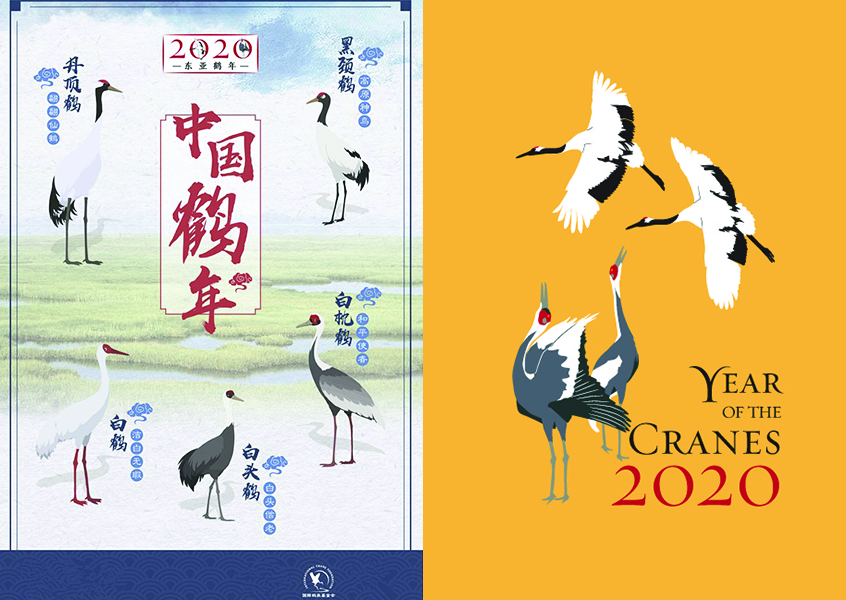
[vc_row][vc_column][vc_column_text]In October 2019 our Vice President International Asia – Spike Millington introduced 2020 as the “Year of the Cranes” at the International Workshop on Crane Conservation in East Asia convened in Beijing, China. Read more about the workshop. The campaign aims to leverage public, political, and financial support for crane and wetland conservation.
No results found.
Adjust the filters and try again.