Asia
About Our Work
Cranes are well-known and much-loved throughout the Asia-Pacific and serve as powerful flagships for the protection and conservation of wetlands, grasslands, and agricultural lands.
Our work across the region emphasizes conservation-friendly regenerative farming practices, wetland restoration, improved water resource management, conservation education, and sustainable livestock management. We also focus on One Health strategies to reduce the risk of Highly Pathogenic Avian Influenza (HPAI, or bird flu), advancing healthier landscapes for diverse wildlife and thriving local communities.
We are working to secure and increase the populations of the four threatened crane species of East Asia—Endangered Siberian Cranes and Vulnerable Red-crowned, White-naped, and Hooded Cranes—while promoting adaptive management for Near Threatened Black-necked Cranes in response to changing conditions on their high plateau breeding grounds.
In the Indo-Pacific, our work focuses on stabilizing Vulnerable Sarus Crane populations through wetland management, wildlife-friendly agriculture, and reintroduction efforts, and on increasing their populations in India/Nepal through transboundary conservation. And in Central Asia and the Middle East, we are working to reduce hunting pressure and public awareness to reverse the decline of Demoiselle Cranes.
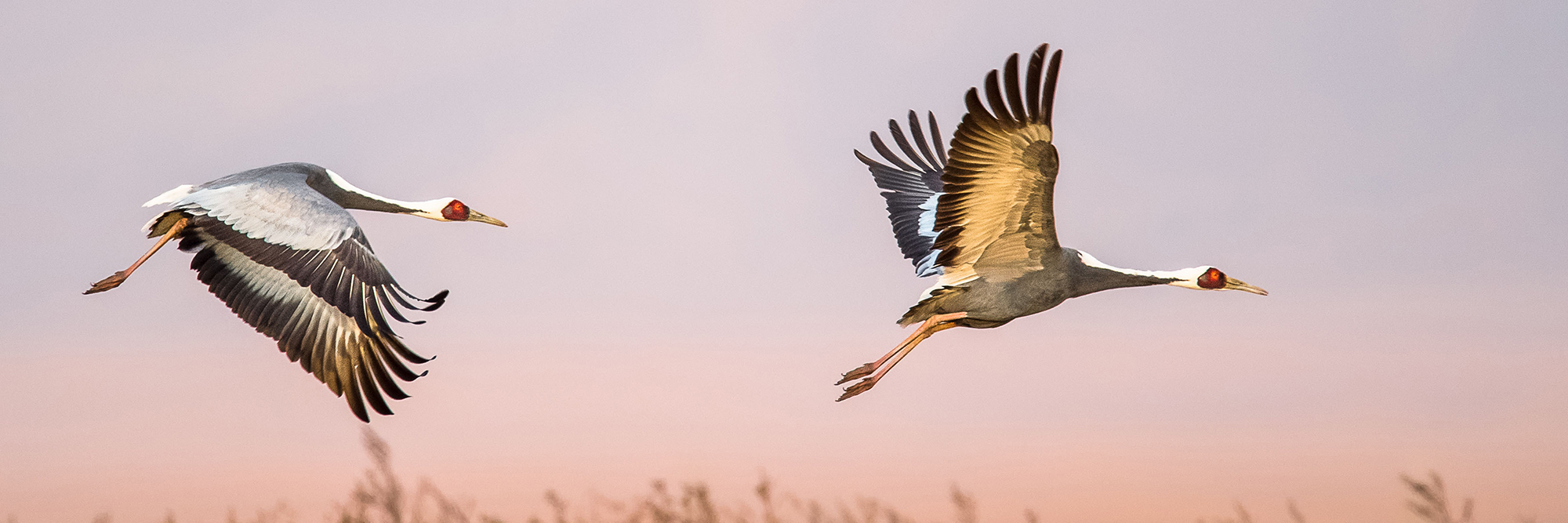
Photo: White-naped Cranes in flight by Ciming Mei


On September 9, 2026, the Government of Mongolia awarded Dr. George Archibald, Co-founder of the International Crane Foundation, the Medal of Nairamdal (Friendship) in recognition of his more than three decades of contribution to crane and wetland conservation and international cooperation in Mongolia.
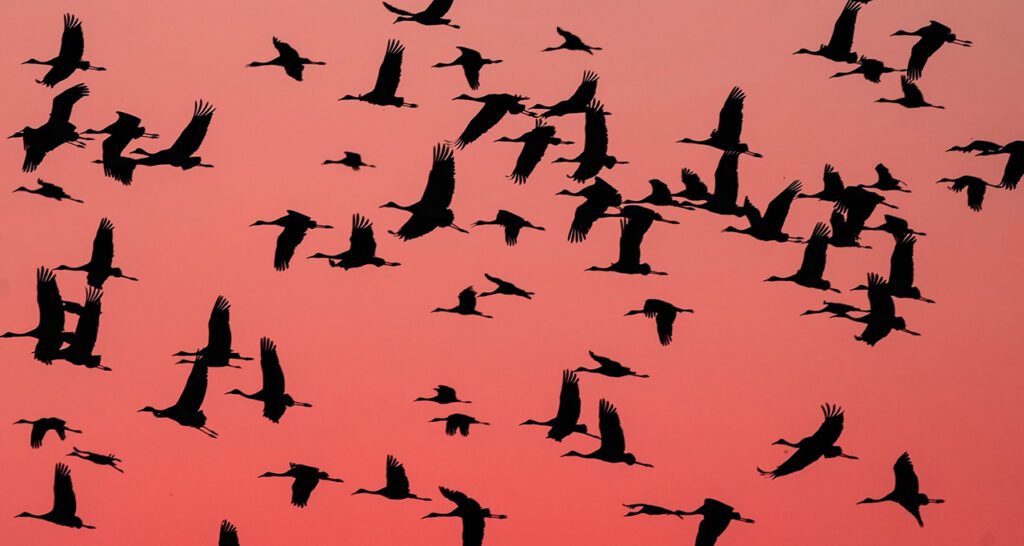
Join us for an inspiring evening with acclaimed naturalist and author Scott Weidensaul, as we celebrate one of nature’s most breathtaking phenomena—migration.
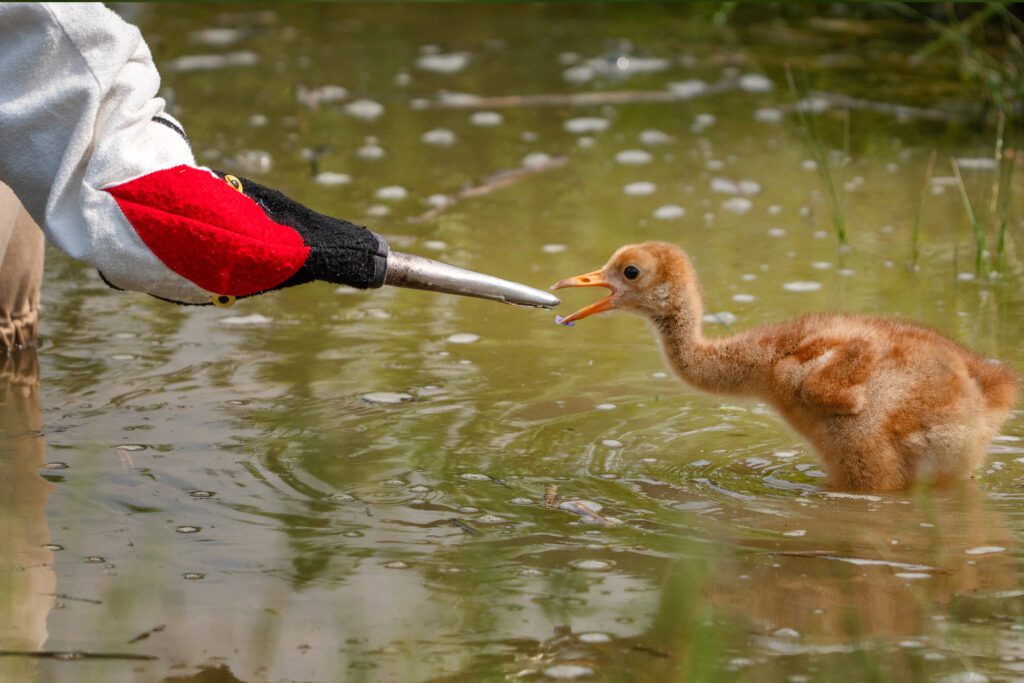
As we reflect on another amazing year of crane conservation, we are highlighting some of our favorite photos from the field.