Cranes, Nomads, & Livestock
Khurkh-Khuiten Nature Reserve, Mongolia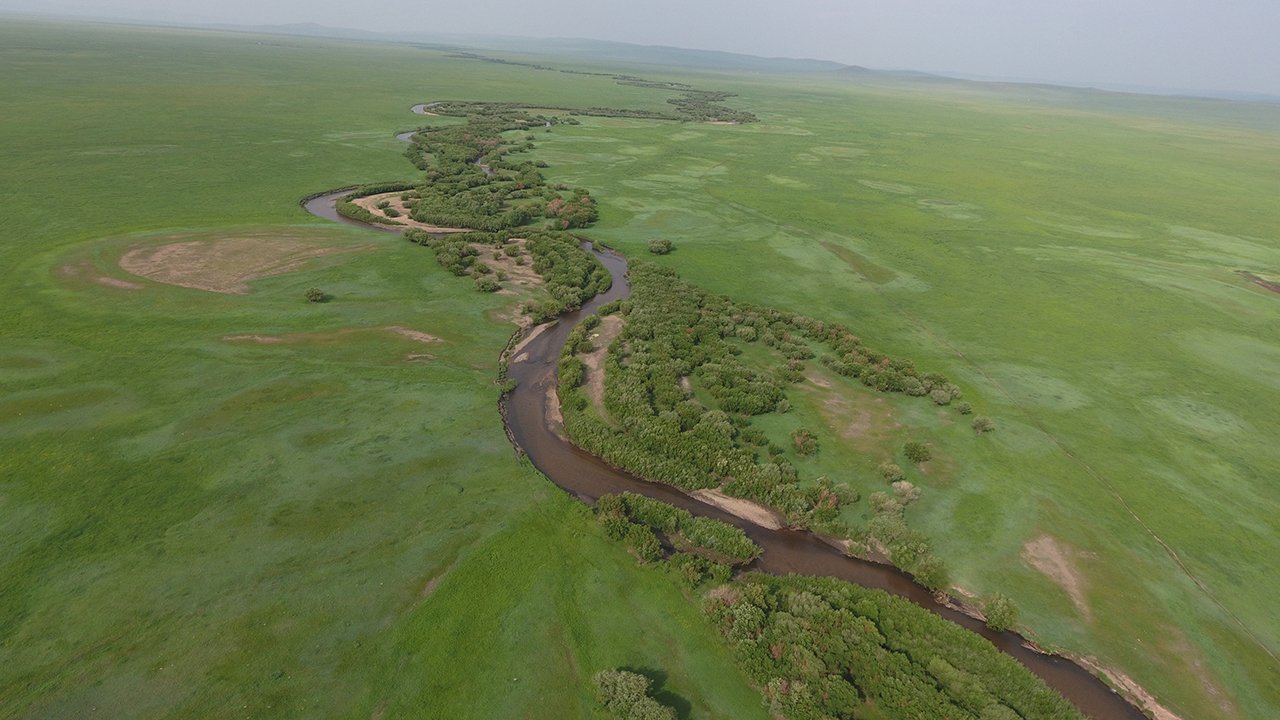

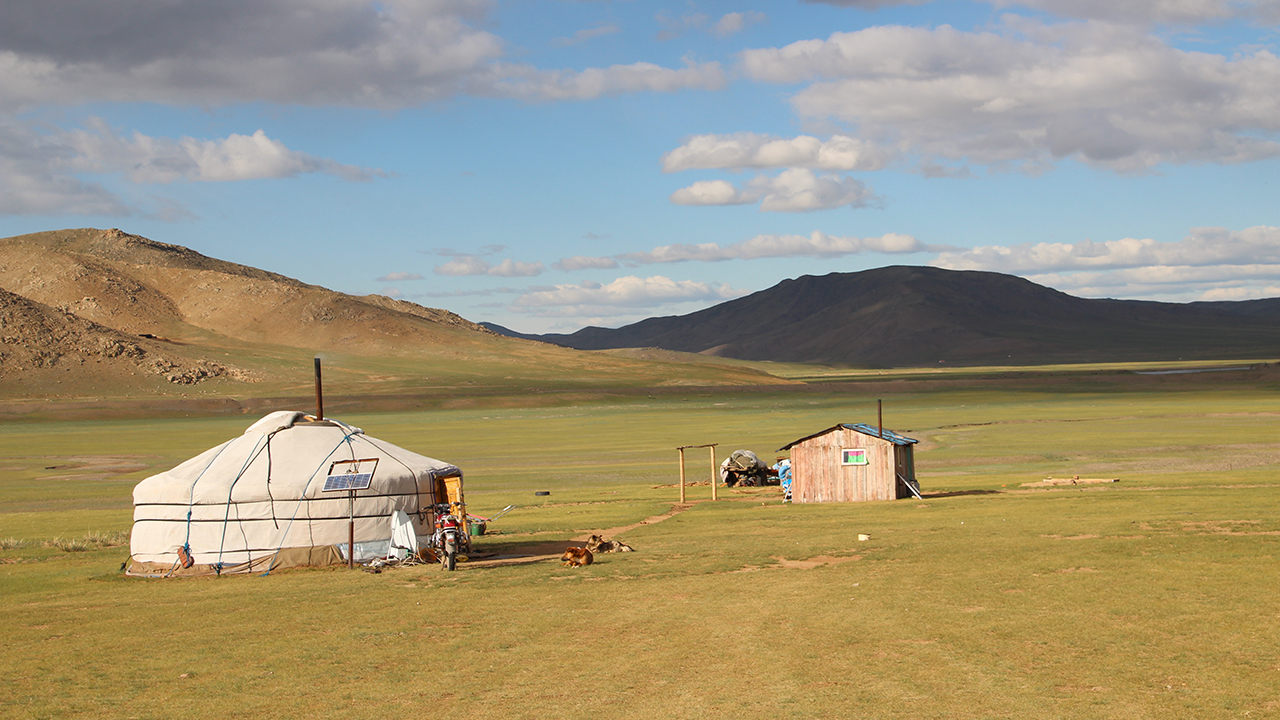
The Khurkh-Khuiten River Valley (KKRV) in northeastern Mongolia is an extensive 200,000 ha area of grassland with scattered wetlands that is an important breeding site for White-naped, Demoiselle, and Eurasian Cranes, as well as other threatened breeding species.
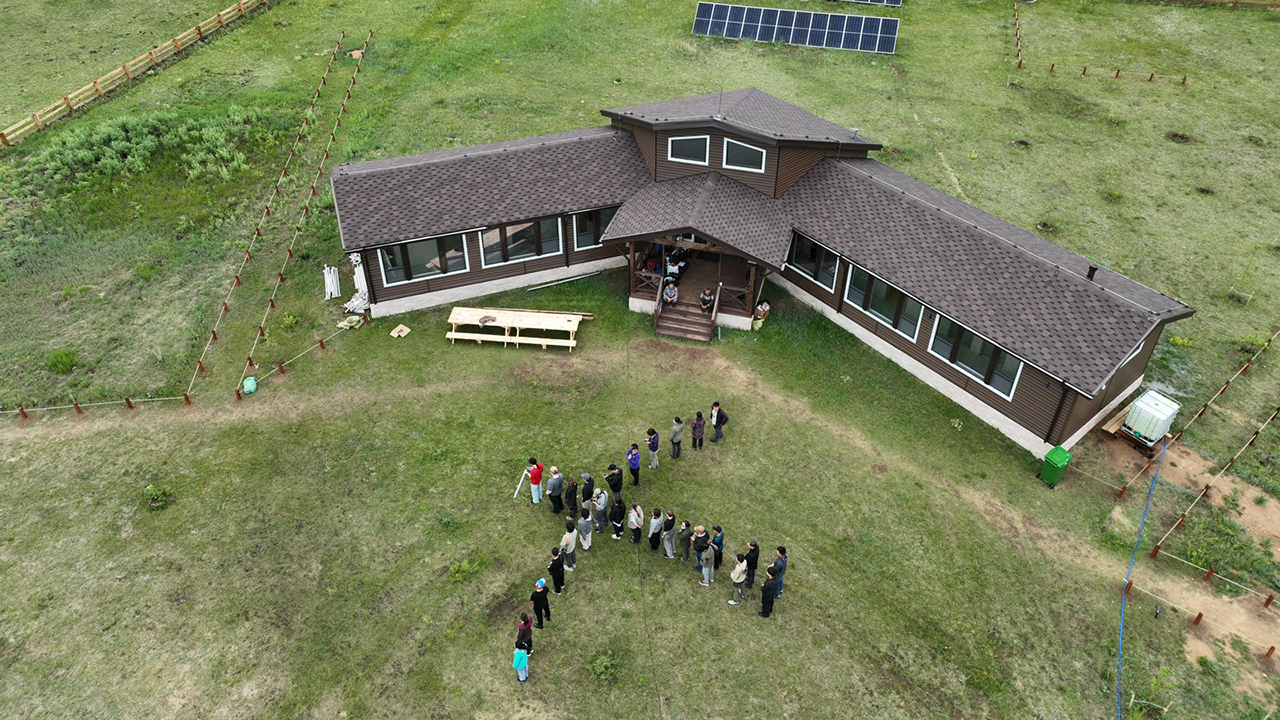
Overgrazing, livestock in wetlands, and predation by dogs are all threats to breeding cranes, and climate change poses a longer-term challenge, especially with permafrost melt. The area has recently been designated as a National-level Nature Reserve of global significance for biodiversity conservation. The Wildlife Science and Conservation Center (WSCC) of Mongolia co-manages KKNR alongside the government. Over the next decade, we will expand our impact through hands-on training sessions across the region. We will demonstrate KKNR’s role as a source population for threatened species and will lobby to improve national policies, protected area management, and Mongolia’s alignment with international environmental agreements.
Land, Water, & Fire for Whooping Cranes
Texas, USA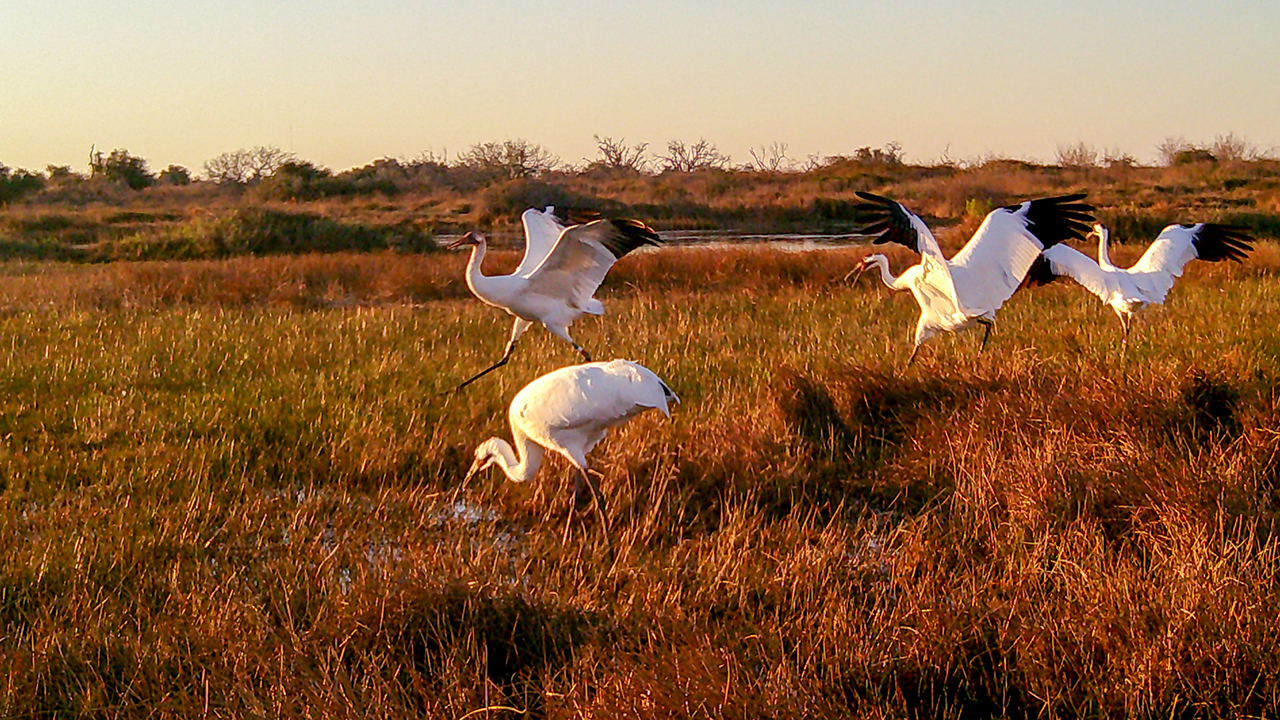
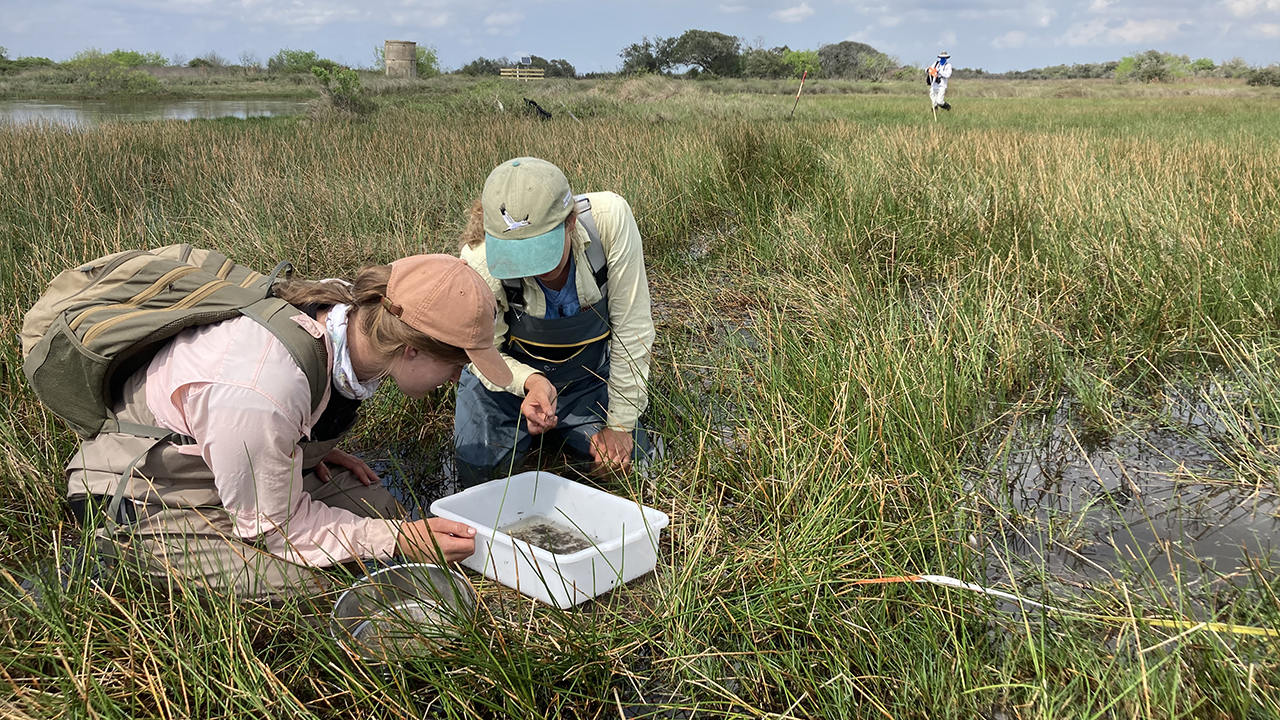


Whooping Cranes are slowly coming back from the brink of extinction, with an estimated 536 cranes in the Aransas-Wood Buffalo Population in 2023. While still growing, the population faces many threats from habitat loss, lack of freshwater inflow, shrub encroachment, powerline collisions, and incidental and intentional shootings.
Over the next 10 years, the population will continue expanding into new wintering areas along the Texas Gulf Coast, onto private properties, and into communities unfamiliar with them. We will meet these challenges by protecting new and existing Whooping Crane habitats, reaching new audiences, and conducting applied research to ensure the long-term success of this incredible species. As of 2025, we have purchased our first “Flagship Property” on the Texas Coast to protect important Whooping Crane habitat and strengthen our other strategies.
Sandhill Cranes in Working Landscapes: Building Connections and Solving Problems
Wisconsin, USA
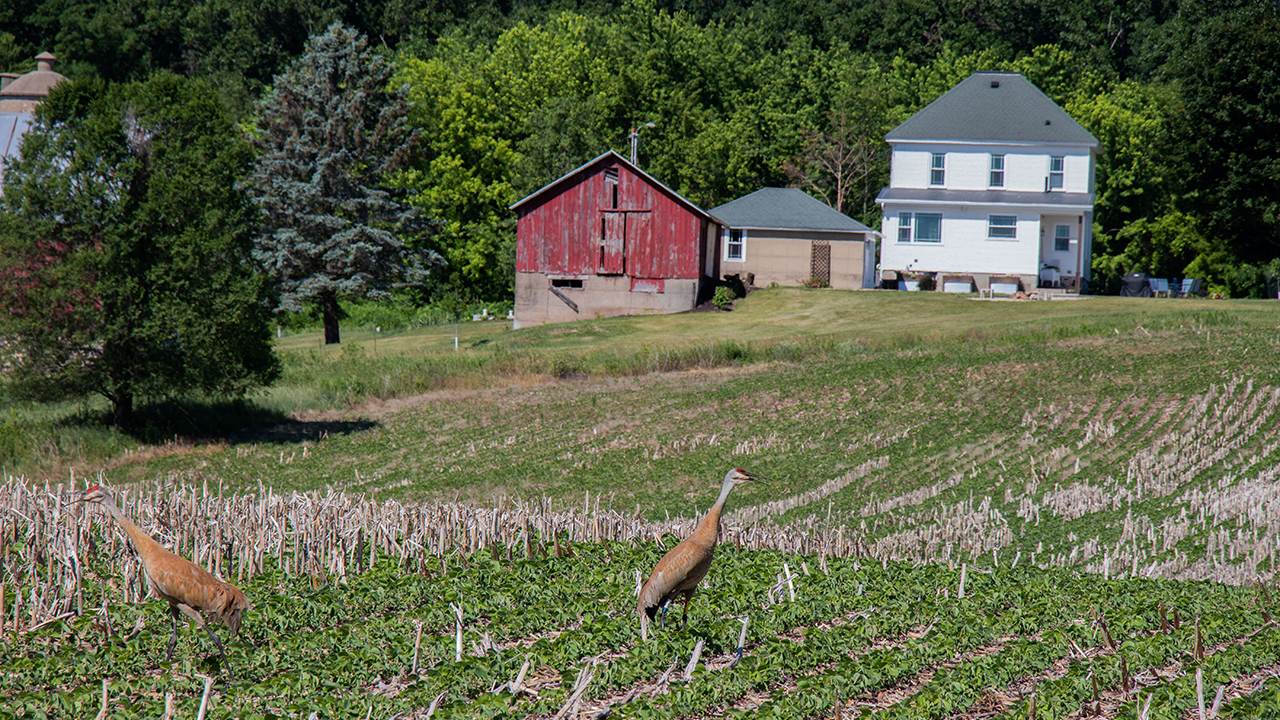
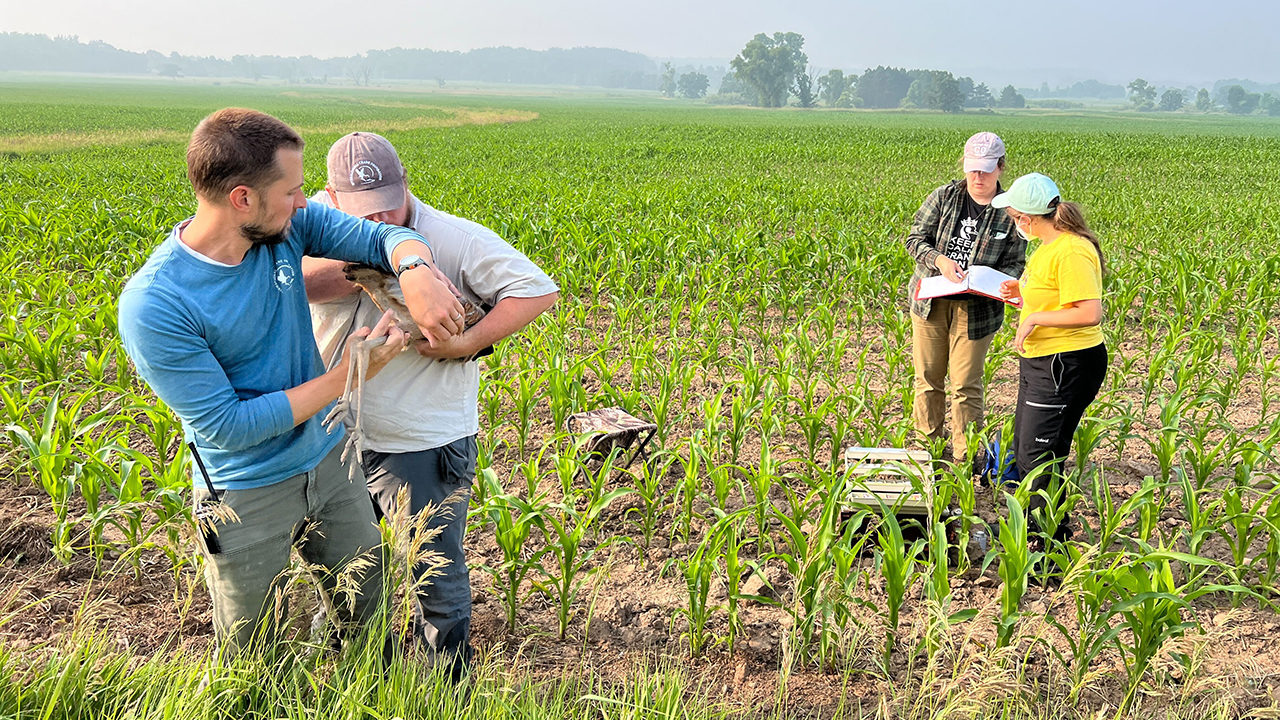

Sandhill Cranes are a conservation success story—having recovered a significant portion of their historic range, they are now abundant in the Upper Midwest agricultural landscape. We focus on mitigating crane crop damage with innovative on-farm solutions and ensuring any impact of hunting is minimized. Future management of the Eastern Sandhill Crane population depends on our ability to mitigate their impacts on working lands. We face challenges of poor marketing of Avipel, high cost and limited availability of treated seed, uncertainty if Avipel will be as effective when applied at scale, and a lack of other solutions when Avipel can’t be used.
Over the next 10 years, we will expand our program range, supporting farmers and improving access to solutions. We will engage state and federal partners to find sustainable funding sources for extension and direct crop damage mitigation efforts. Knowledge gained will aid our conservation programs globally, and anywhere else cranes and farmers come into direct conflict.
Power Migration through Quality Stopover Habitat in Central Flyway
Nebraska, USA

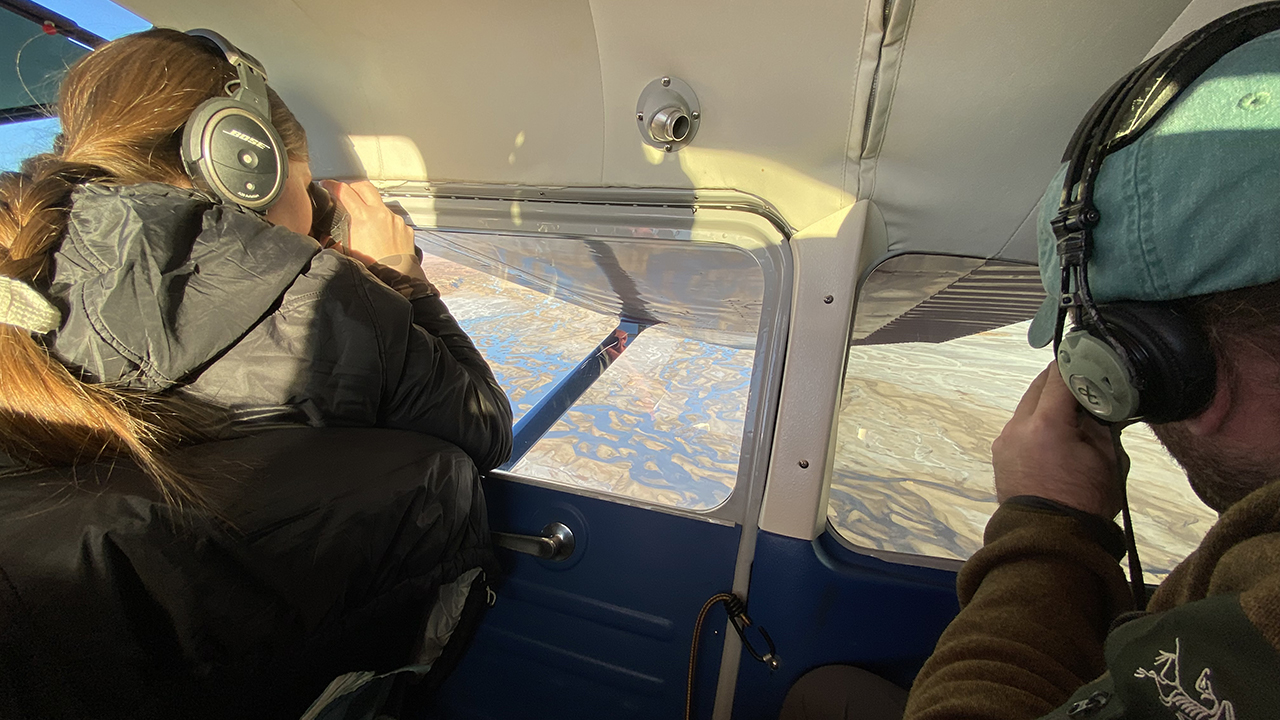


Stopover events are very important to Whooping Cranes, as quality sites offer abundant food, safe roosting locations, and a reprieve from the intensity of migration. This lack of stopover habitat is particularly pronounced in central Oklahoma and has been documented as a potential problem for more than 30 years. Whooping Cranes have high dependence on a few sites, a narrow migration corridor, and occasional dryland stopovers. Despite these indicators, central Oklahoma, and the southern Great Plains broadly, from Kansas to central Texas, has seen limited investment in wetland restoration aimed at supporting Whooping Cranes.
We have established a robust working group, Partnership for Oklahoma Wetland Restoration, that includes institutions dedicated to tackling this issue for cranes and other migratory species. We will continue to stay involved in wetlands management research and water conservation policy in Nebraska and South Dakota, and use insights to inform work in Oklahoma and Kansas.
Restoring a Self-Sustaining Flock of Whooping Cranes in Eastern North America
Wisconsin, USA


As part of our commitment to saving Whooping Cranes in the wild, the International Crane Foundation is a leader in reintroducing a migratory population of Whooping Cranes in the eastern U.S., while supporting efforts to establish a non-migratory population in Louisiana.
Through the Whooping Crane Reintroduction Team, we are breeding and raising Whooping Cranes at our Headquarters, and releasing them on wetland wildlife refuges in Wisconsin. The growth and security of these reintroduced populations are important to the recovery of the species and provides redundancy for the last remnant flock against disasters like widespread avian disease or natural disaster impacts. While the reintroduced birds have become a thrilling addition to our landscape, significant challenges remain, including chick mortality, predation, illegal shootings, increasing energy development.
Ending Illegal Trade for Grey Crowned Cranes
Uganda, Kenya, Rwanda

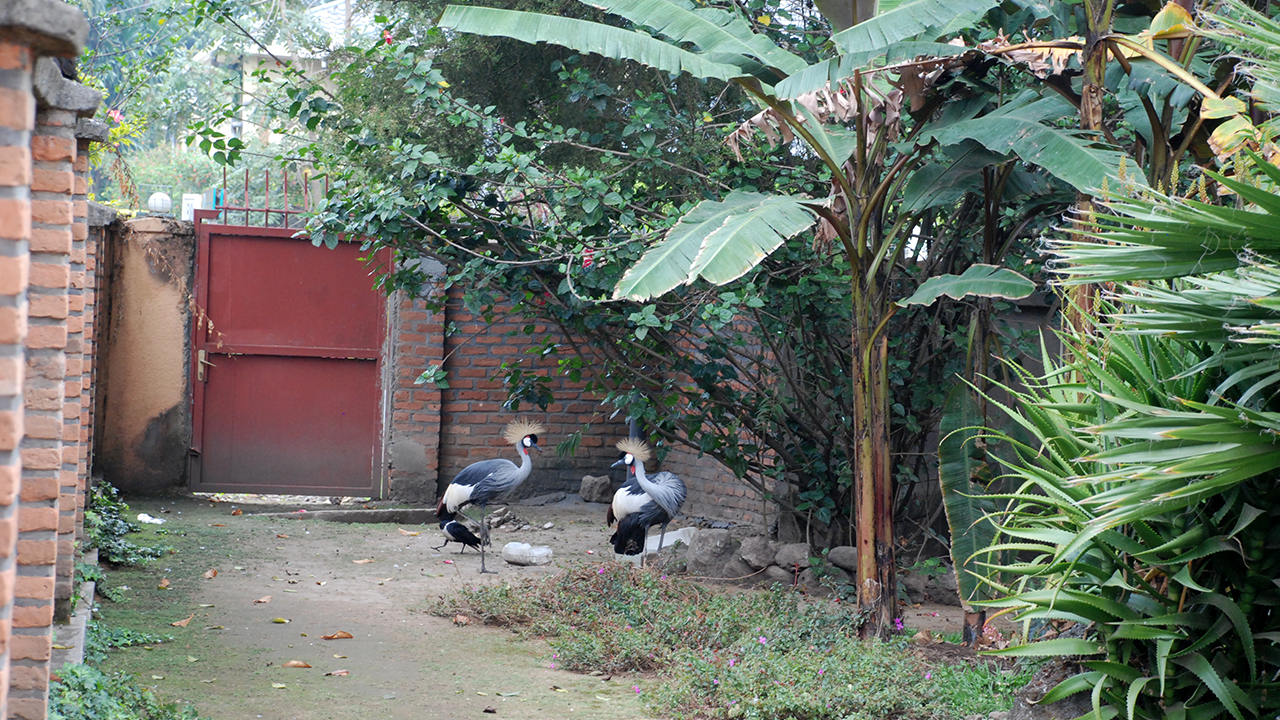
Illegal trade affects thousands of species of plants and animals worldwide. The impact of illegal live trade of many bird species, including cranes, is increasingly severe and poorly understood. In Africa, live trapping of Grey and Black Crowned Crane adults and removal of chicks and eggs is a significant threat to the survival of both species, especially when habitat loss and degradation expose their nests to people looking for cash opportunities linked to established illegal markets.
We are pioneering a multi-pronged approach to tackling the illegal crane trade at every level of the chain—from poaching hotspots to domestic markets to consumer demand. To curtail the supply of cranes from the wild, we are working to improve law enforcement, living standards, and community stewardship of cranes in Africa’s trade hotspots. We work with national governments, conservation agencies, volunteers, and non-profit organizations to document trade routes, investigate criminal networks, and advocate for stronger legislation and enforcement.
Kafue Flats Restoration Partnership
Blue Lagoon & Lochinvar National Parks, Zambia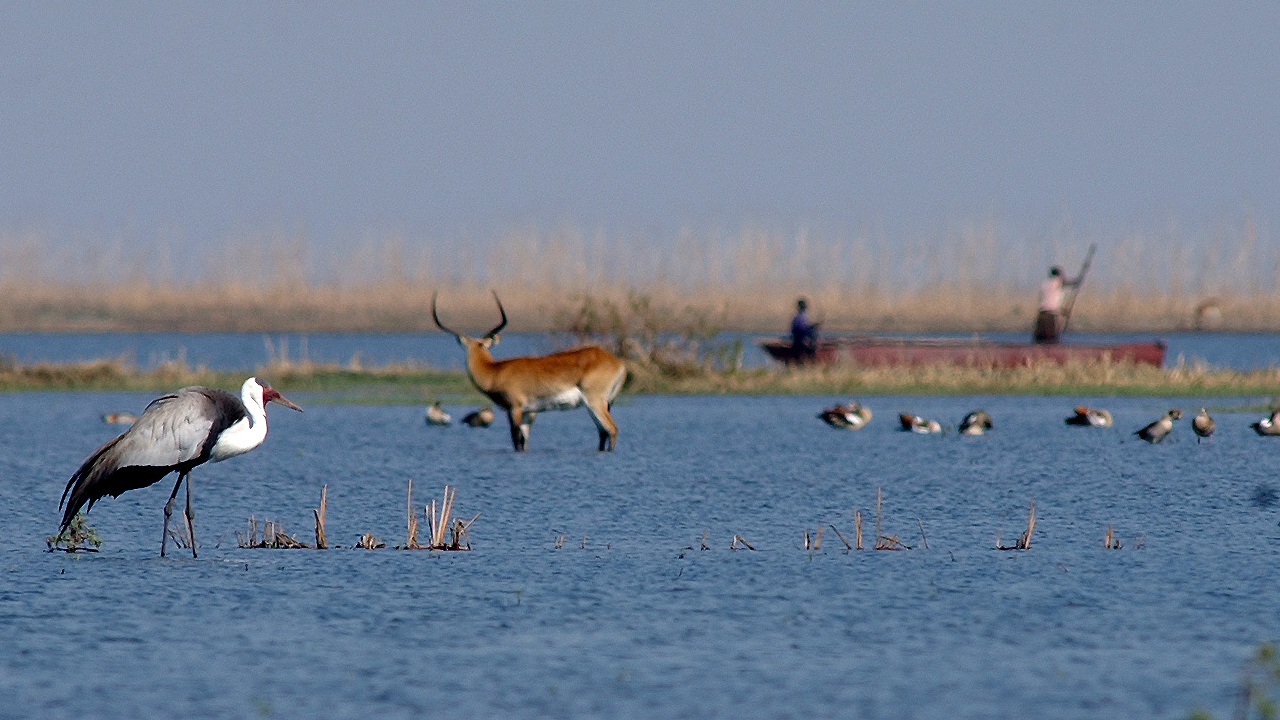
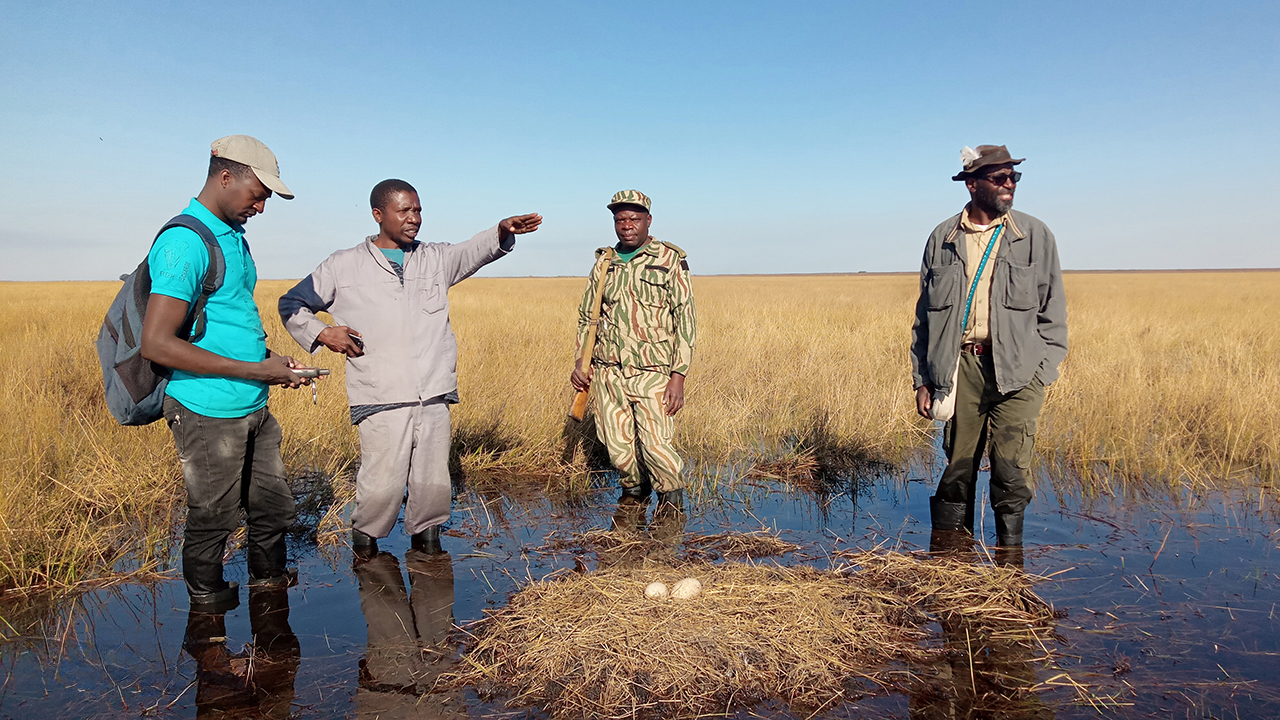


The Kafue Flats are a Key Biodiversity Area, covering about 6,500 km² across Southern and Central Provinces. They include two National Parks—Blue Lagoon and Lochinvar. The flats support 30% of the global Wattled Crane population, Grey Crowned Cranes, the endemic Kafue Lechwe, and over 460 bird species. Culturally and socioeconomically vital, they provide 50% of Zambia’s hydroelectricity, and supply 44% of water to Zambia’s capital, Lusaka. However, threats have caused declines in biodiversity and habitat. Wattled Crane numbers fluctuate, possibly due to undocumented regional wetland movements.
We will expand the restoration of the Kafue Flats through invasive species control, strengthened research, and improved monitoring of cranes to improve understanding of wetland changes. Collaboration with government partners will promote sustainable livelihoods and community stewardship, including reorganizing grazing to improve grasslands and advancing self-policed sustainable fishing. In 2025, we opened an office at Blue Lagoon National Park—the most significant infrastructure in 30 years—which demonstrates our commitment to scaling up this project.
Population, Health, & Environment
Uganda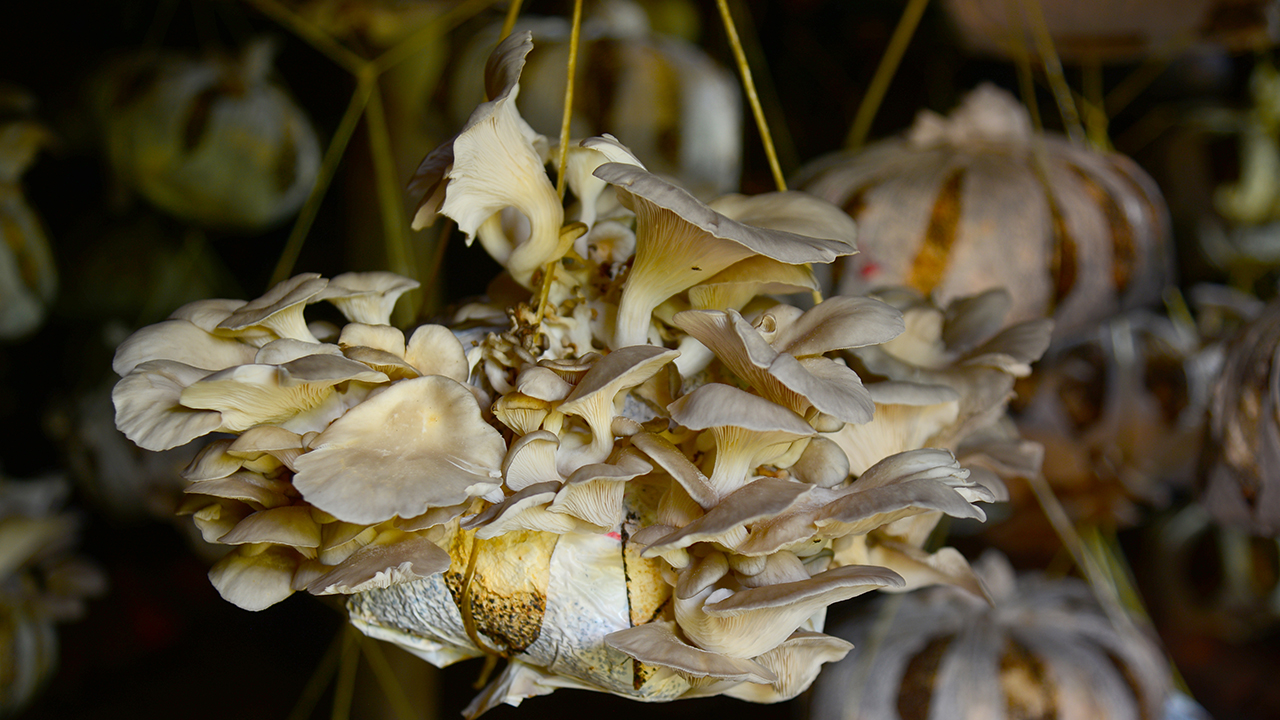

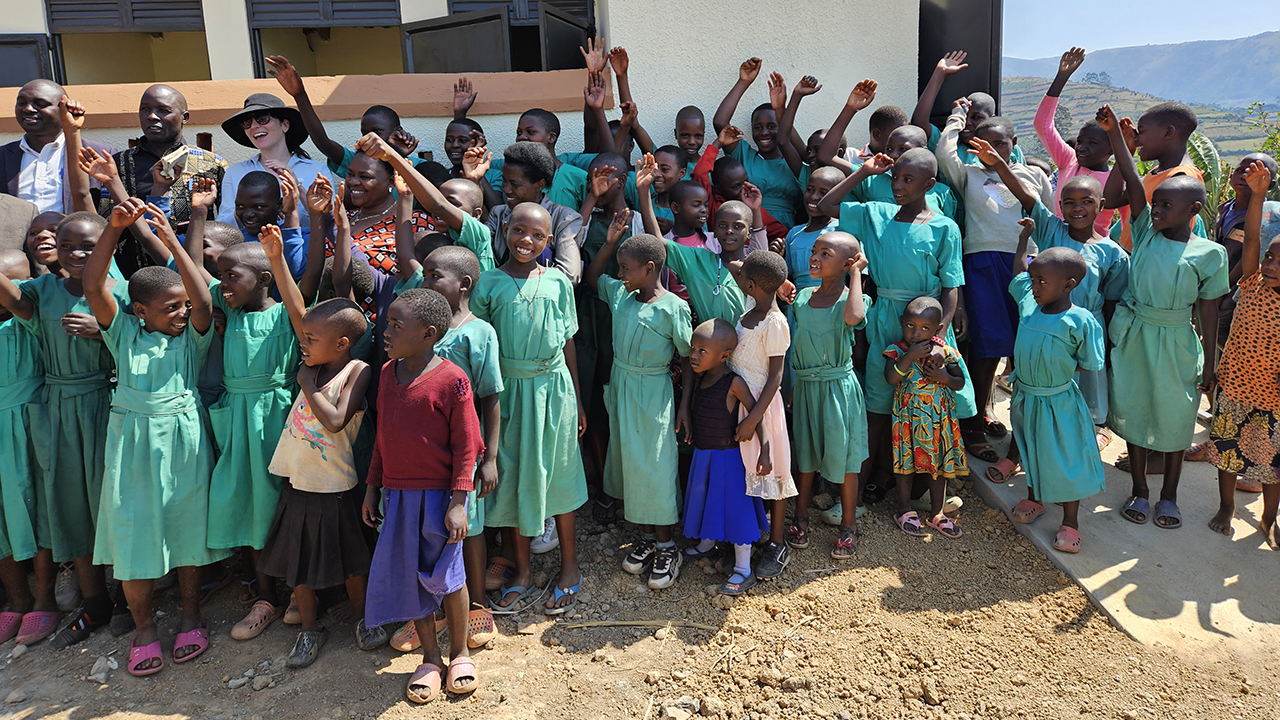
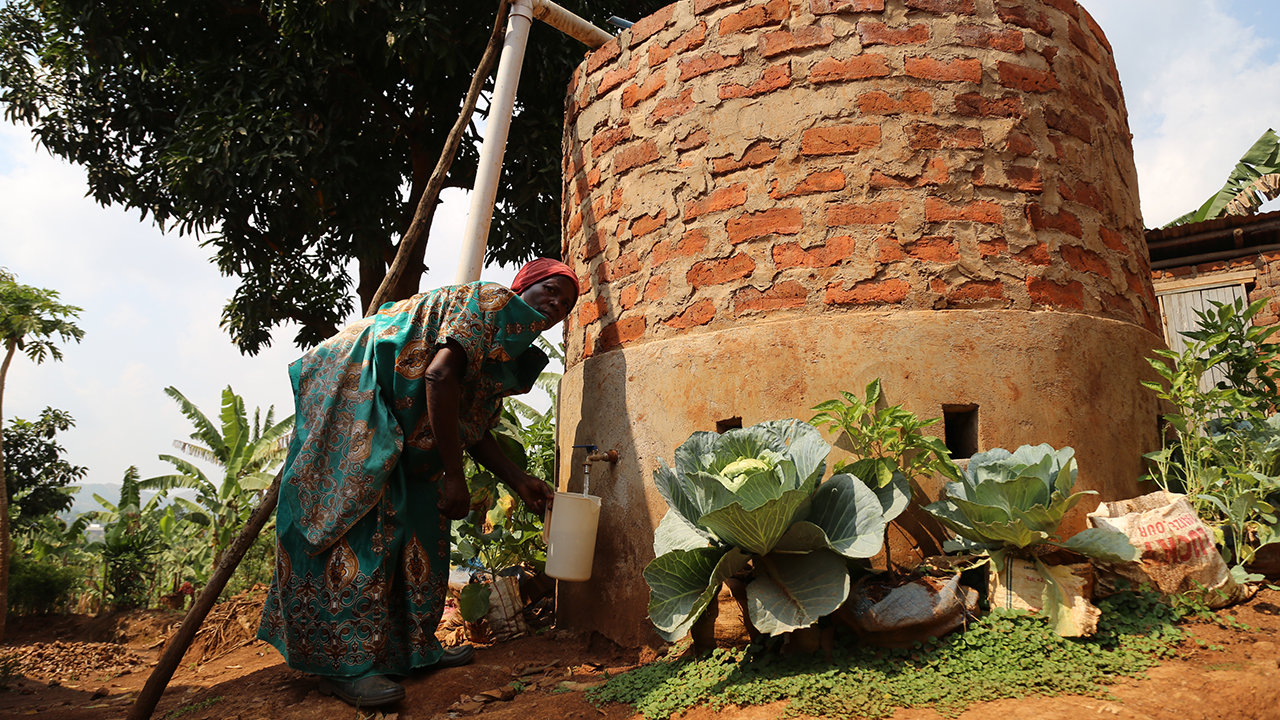
Uganda is the regional hub for the Our East Africa Program, leading conservation efforts through our integrated model combining conservation, human health, and sustainable livelihoods. Our goal is to successfully address community healthcare needs, gender equality, and climate resilience while protecting Grey Crowned Cranes and their wetland habitats. This model has expanded from initial pilot sites to encompass five major catchments across 10 districts.
The Grey Crowned Crane, Uganda’s national bird, faces a conservation crisis with populations declining by 80% over the last 25 years. Uganda declared 2025 as the “Year of Wetland Conservation”, officially protecting 8,613 wetlands, providing unprecedented legal backing for our conservation efforts.
Population, Health, & Environment
Kenya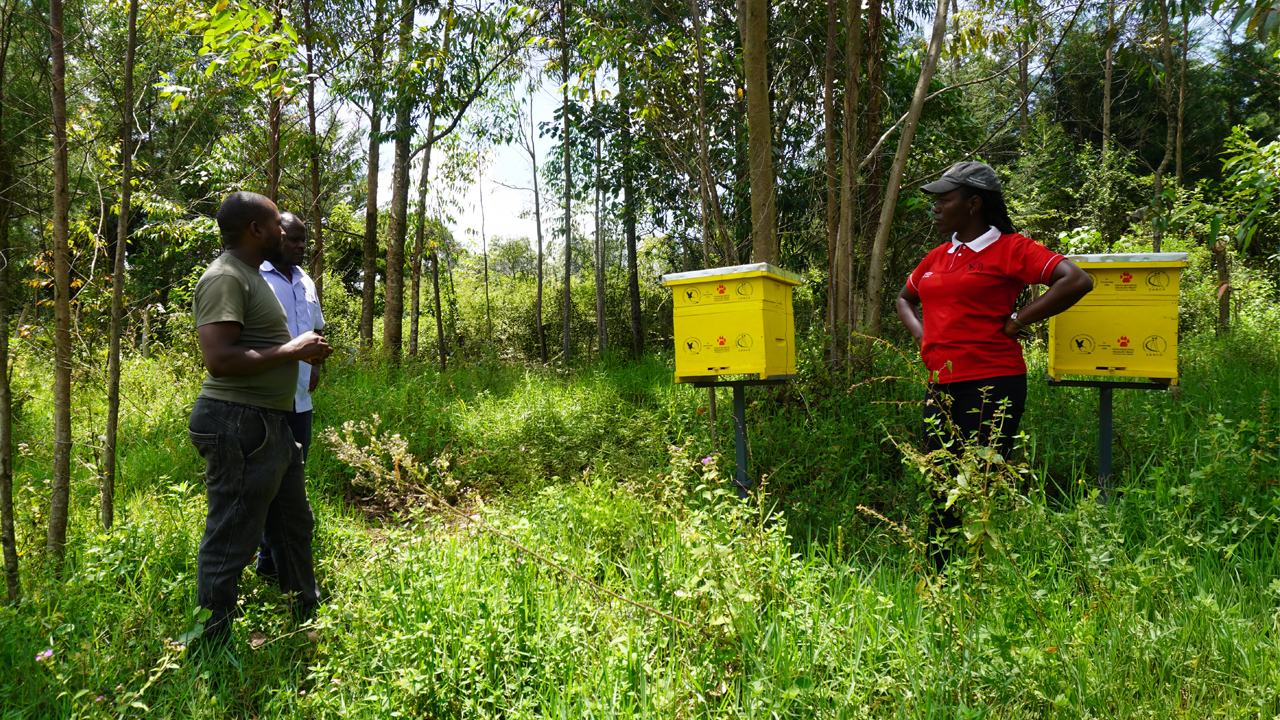

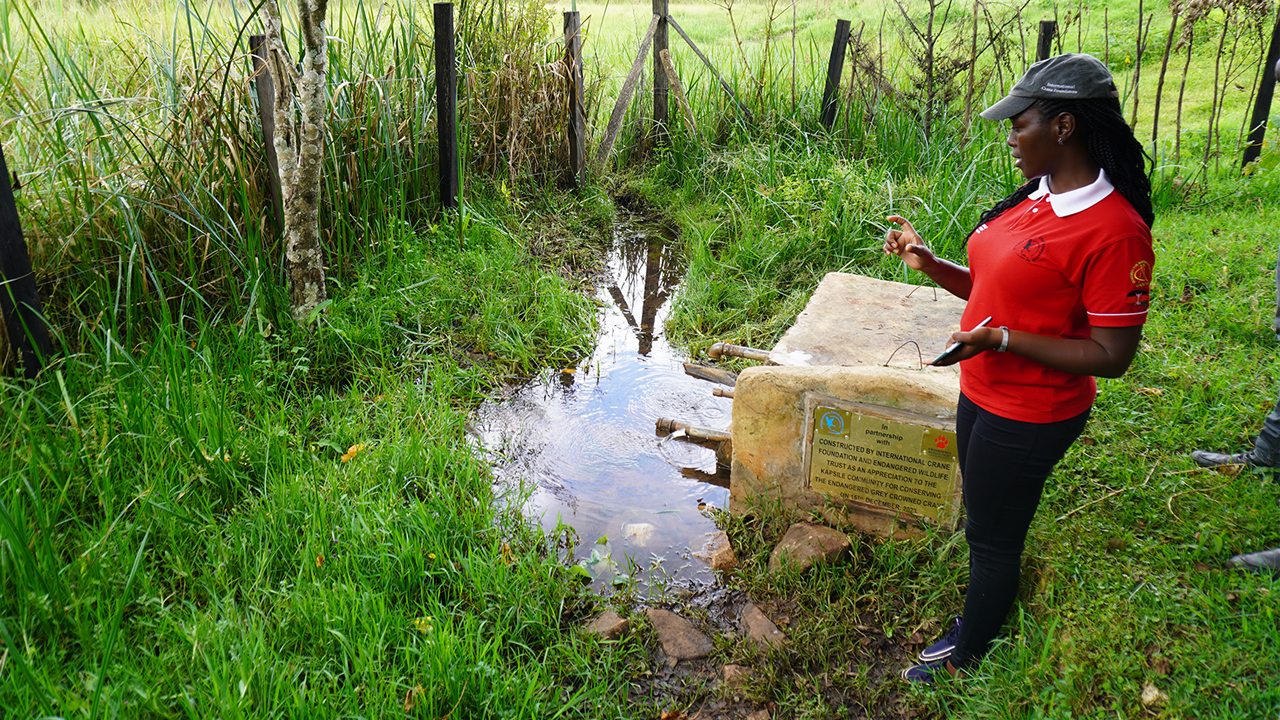
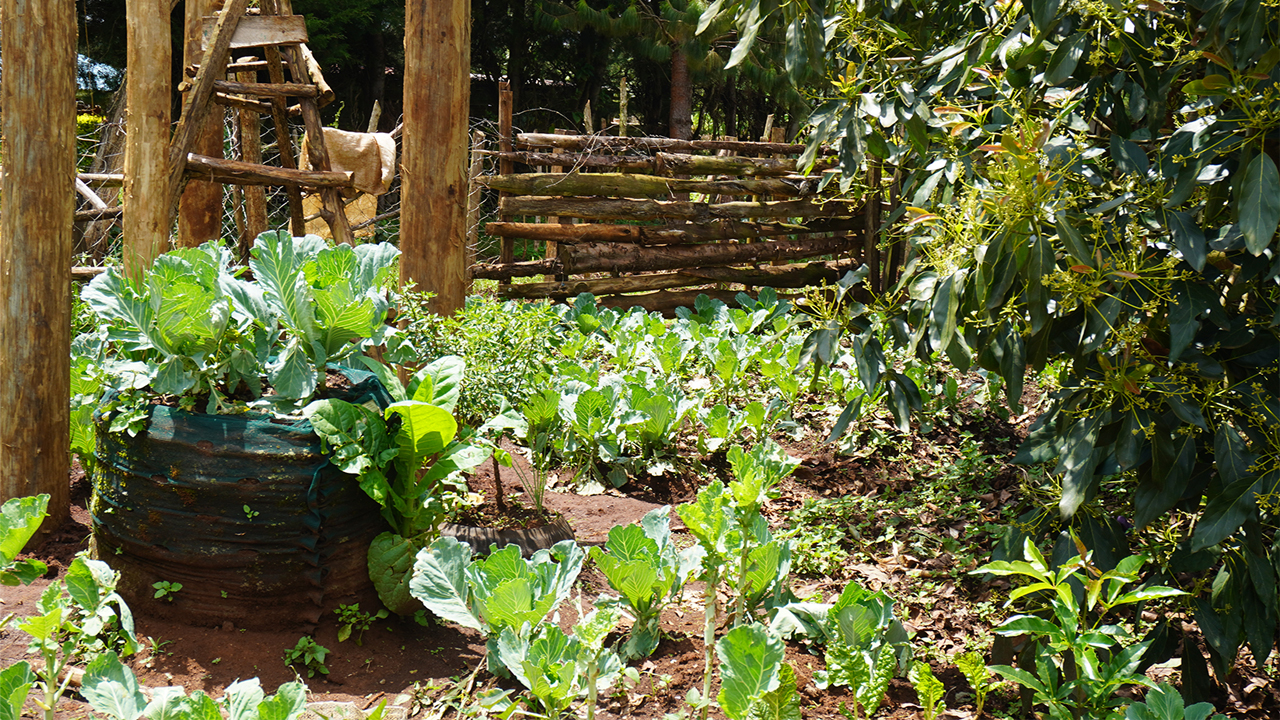

Our Kenya Program has worked since 1994 to conserve Grey Crowned Cranes, an endangered species, and their wetland home. Our current scope covers 75% of the national crane population range, with plans to expand.
This program implements eight strategies, including crane monitoring, community livelihoods, and wetland conservation. We contributed to national crane censuses in 2019 and 2023, developed the National Single Species Action Plan launched in 2025, and contributed to the forthcoming National Wetlands Regulations to designate a key crane site as a National Reserve. Partnerships range from a 30-year collaboration with the Kipsaina Crane and Wetland Conservation Group to ongoing support for Crane Conservation Volunteers.
Population, Health, & Environment
Rwanda

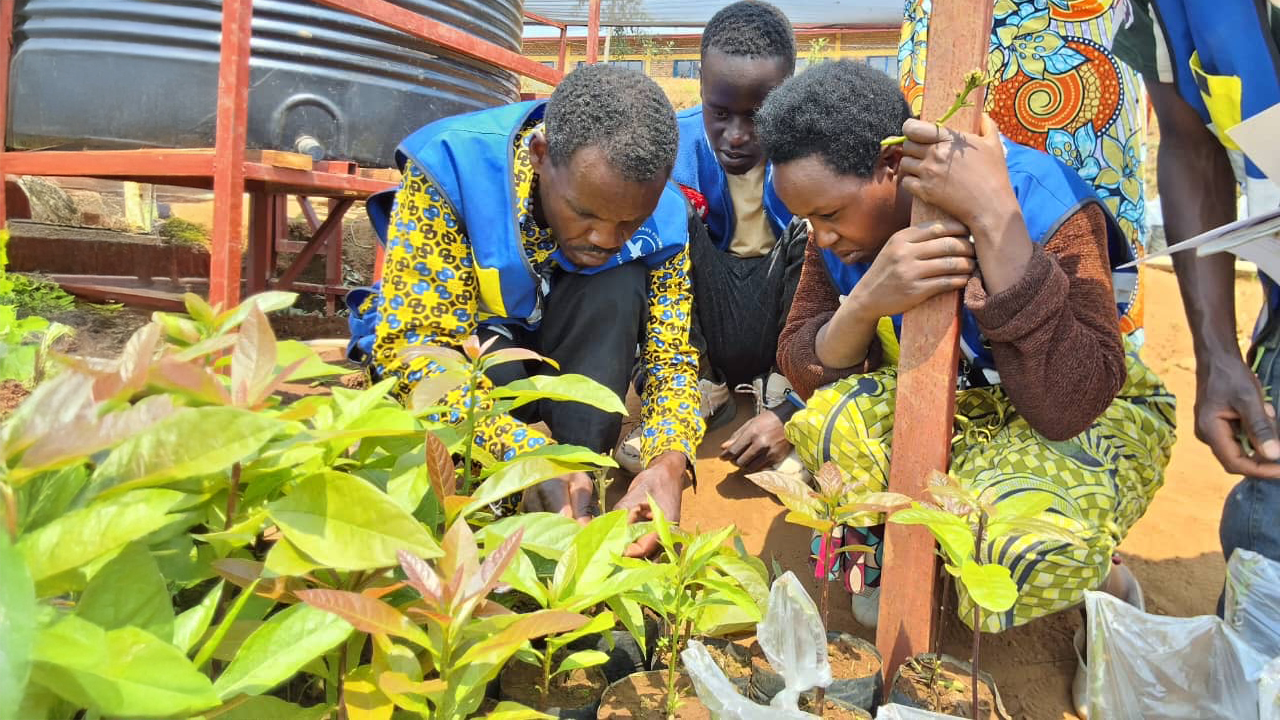

Rugezi Marsh is a 6,735-hectare (16,642-acre) high-altitude wetland in northern Rwanda that is vital to national hydroelectric power, with over 300,000 people relying on its resources. It is also home to the Endangered Grey Crowned Crane and rich biodiversity, including over 40 bird species.
Threatened by land degradation and unsustainable use driven by poverty, conservation efforts since 2012, have focused on community education, sustainable farming, and alternative livelihoods. This model enhances both biodiversity and local well-being. Future goals include national park status, ecotourism growth, catchment restoration, and climate resilience to support Rwanda’s sustainable development goals, and the future of Grey Crowned Crane populations.
Soil Carbon Sequestration through Long-term Sustainable Carbon Financing
Drakensburg, South Africa


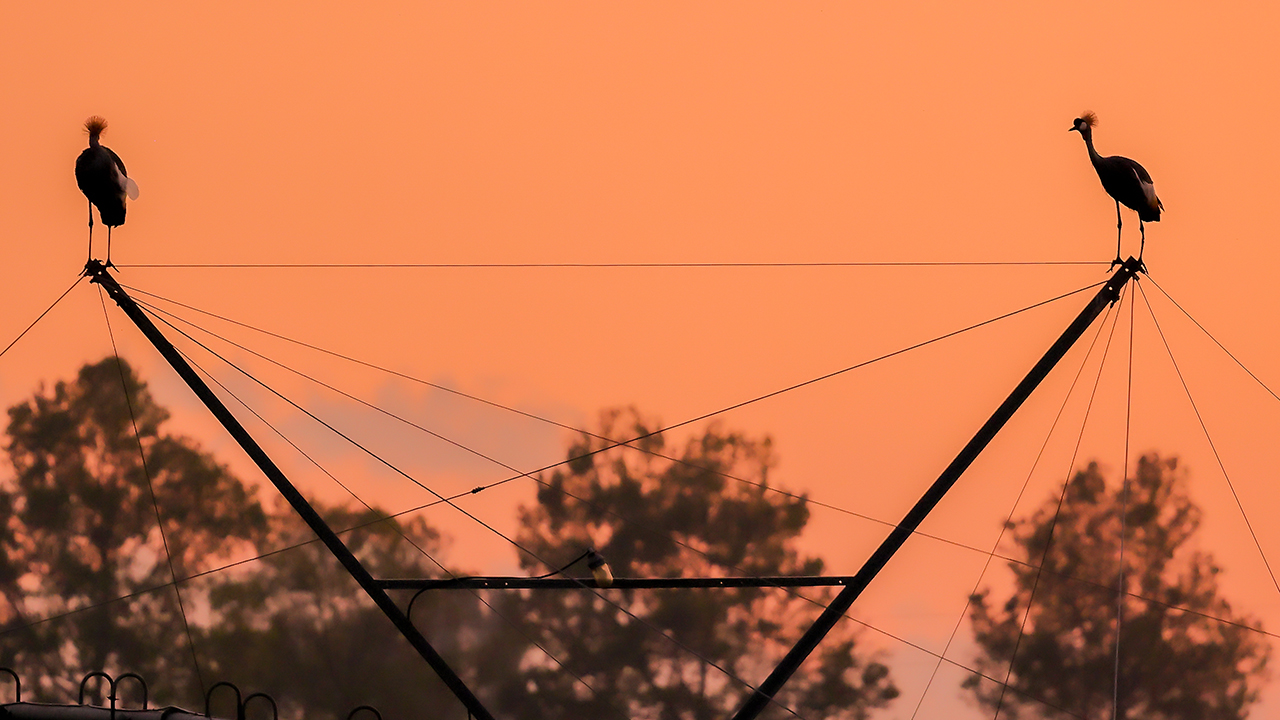
The Drakensberg is a high-biodiversity landscape, with diverse grasslands and wetlands that support 95% of South Africa’s Wattled Crane population, 70% of South Africa’s Grey Crowned Crane population, substantial numbers of Blue Cranes, and many other rare and endemic bird species. However, the region’s biodiversity and water resources are severely threatened due to intensified and expanding agriculture and mining. Across South Africa, more than 50% of natural wetlands have been lost, and only 3% of the grassland biome is protected.
Over the next decade, we will increase the amount of Drakensberg land that is secured under the Biodiversity Stewardship Program. Our carbon offsetting project will cover more than 130,000 hectares (321,236 acres) of this. We will use revenue generated from carbon offsets to increase support to landowners to ensure they can fulfil their obligations for biodiversity conservation and carbon sequestration. We will apply lessons learned from this effort to help establish new carbon-offsetting projects in other regions where we work across Africa and Asia.
East Asia Flyway Education & Conservation Awareness Program
East Asia Flyway
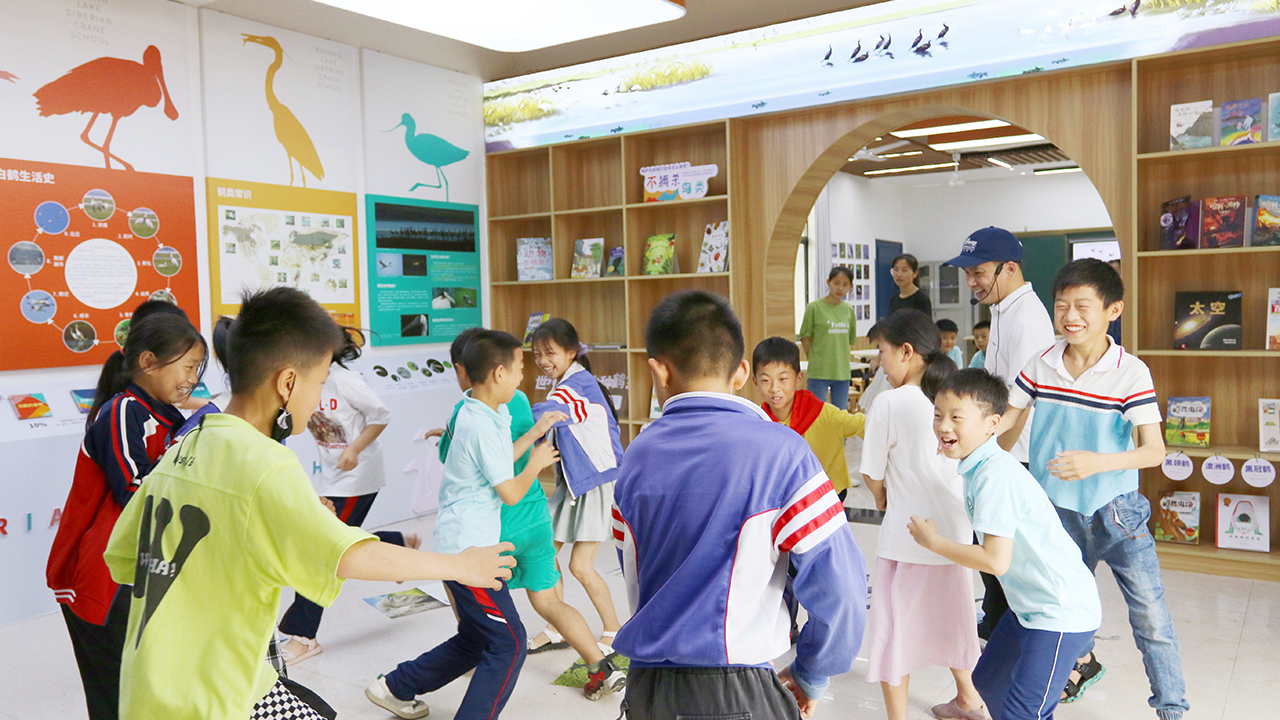
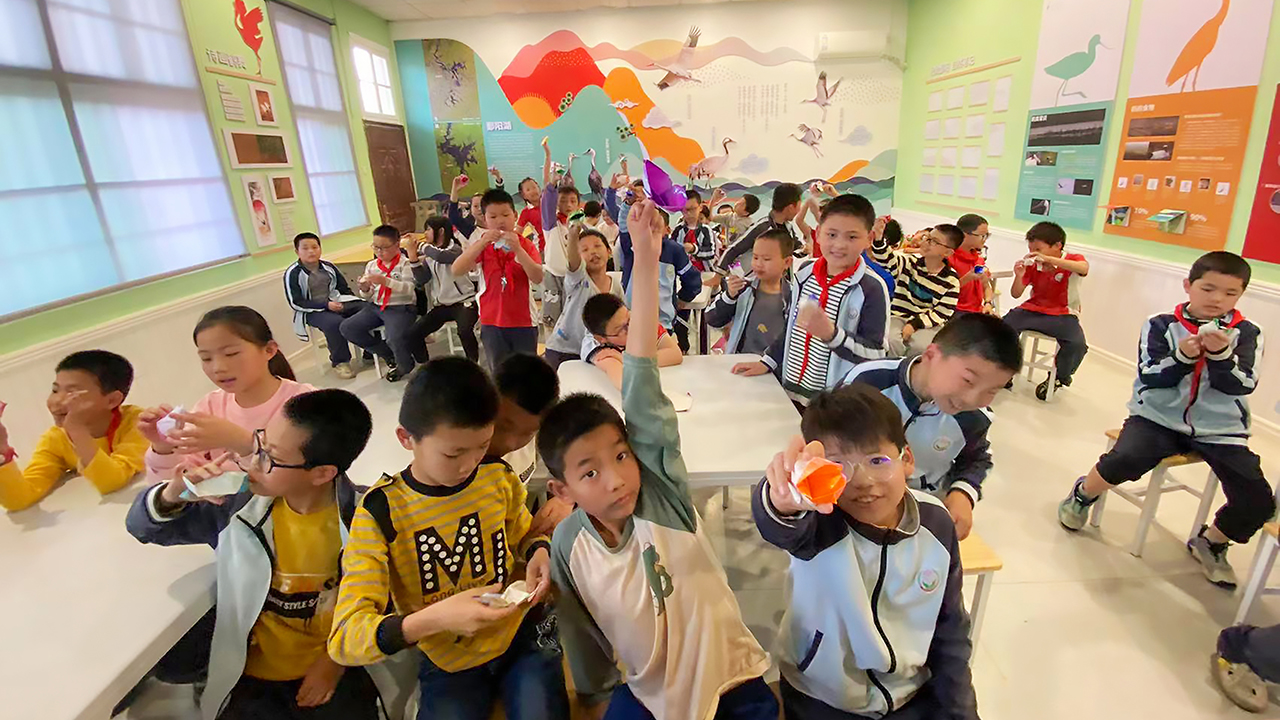
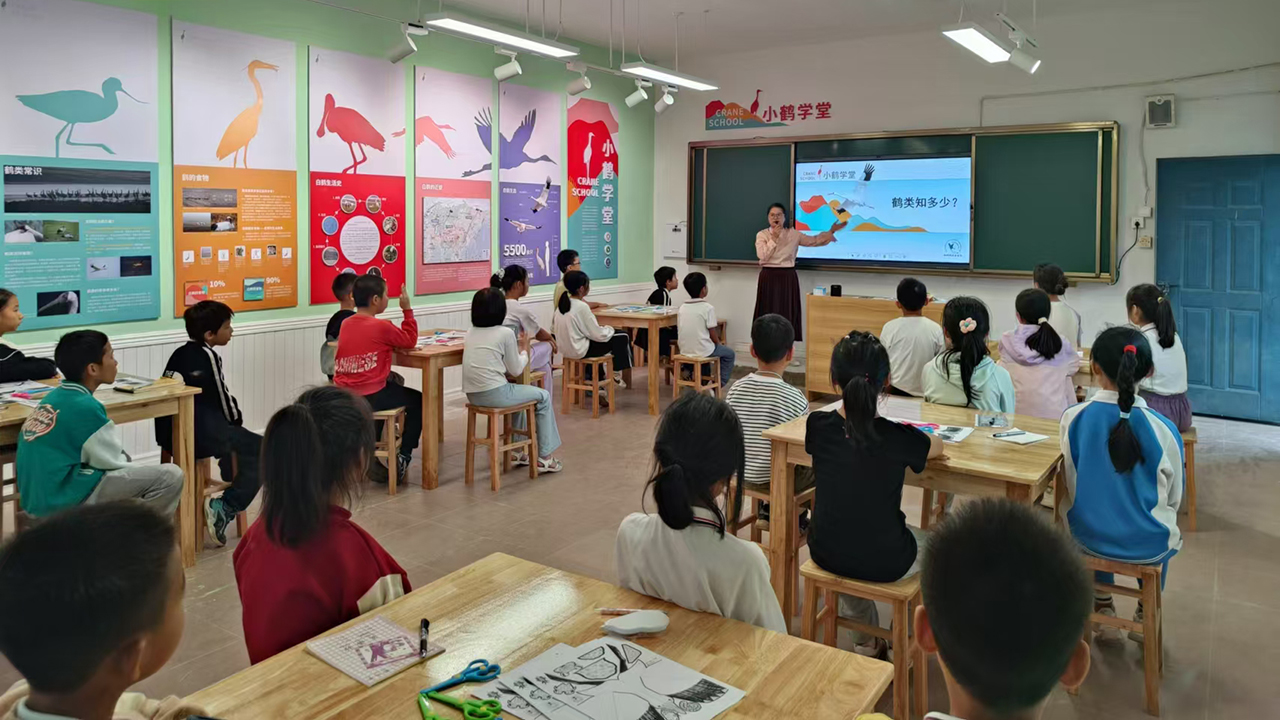
This model project is dedicated to inspiring and equipping a skilled network of educators who champion crane and wetland conservation. Through innovative, hands-on curriculum, we empower communities living near key crane habitats to protect these vital landscapes and strengthen local conservation efforts.
We continue to expand our collection of impactful education tools—such as the acclaimed “Crane School”, vibrant crane festivals, and international outreach events—that connect people to the beauty and importance of cranes. By building a strong network of teachers, reserve staff, researchers, and nonprofit partners, we foster collaboration and capacity building across the flyway. Together, we’re delivering meaningful awareness initiatives at both local and regional levels, ensuring that the conservation of cranes and wetlands becomes a shared goal throughout East Asia.
Tackling Avian Influenza
South Korea, China, Japan, Global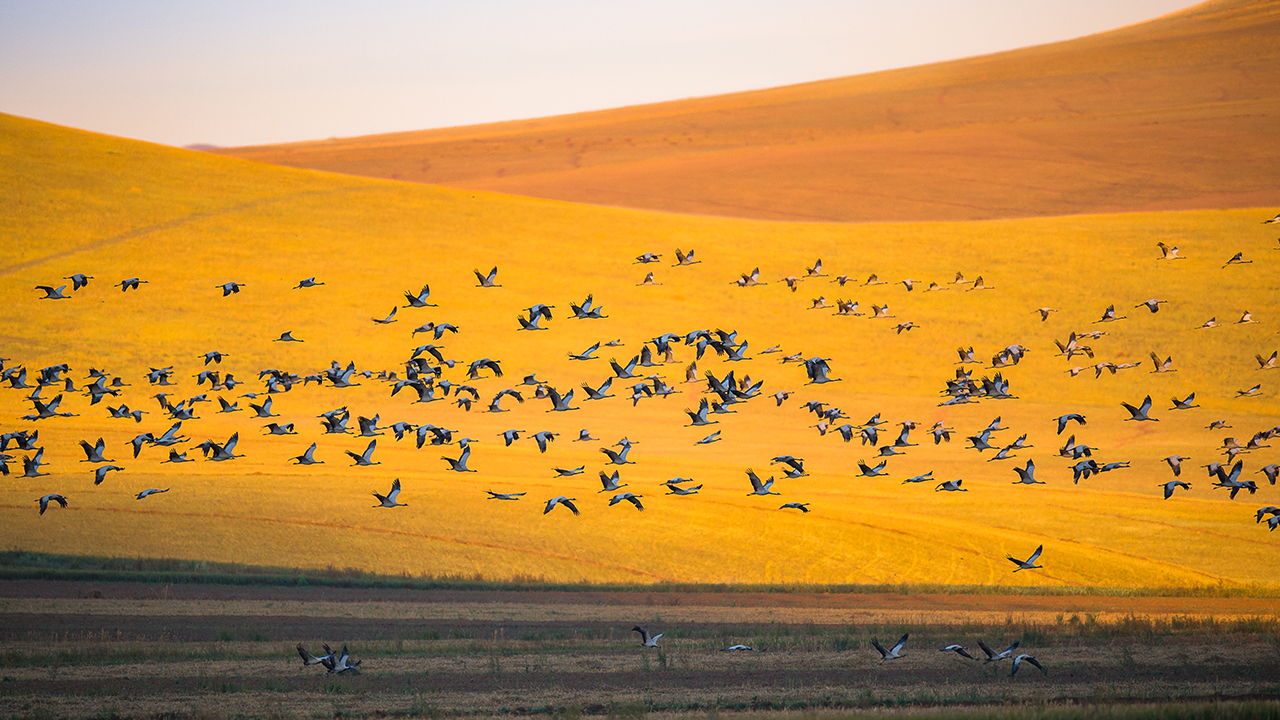


Highly Pathogenic Avian Influenza (HPAI) is a major threat to many crane populations worldwide. Since 2022, crane deaths from HPAI have numbered in the thousands in Japan, India, Israel, and Hungary, and smaller outbreaks have been identified in cranes in Africa and North America. The risk of HPAI (and other highly transmissible diseases) to cranes is increasing due to the degradation and loss of critical staging and wintering habitats, coupled with feeding stations that attract large concentrations of cranes to confined areas.
This global model project focuses on proactive “One Health” to reduce crane concentrations at feeding stations, secure alternate wintering sites, enhance local capacity to manage outbreaks, and rapidly deploy emergency response funding and teams. Our “One Health” response recognizes how the risks to people and wildlife are deeply interwoven, and our Director of Conservation Medicine will provide global leadership on this issue, in close coordination with regional programs and partners who will be instrumental in lessening the risk of disease to cranes and other wildlife.
Protections, Policies , & Management for East Asia’s Most Critical Wetland
Poyang Lake, China
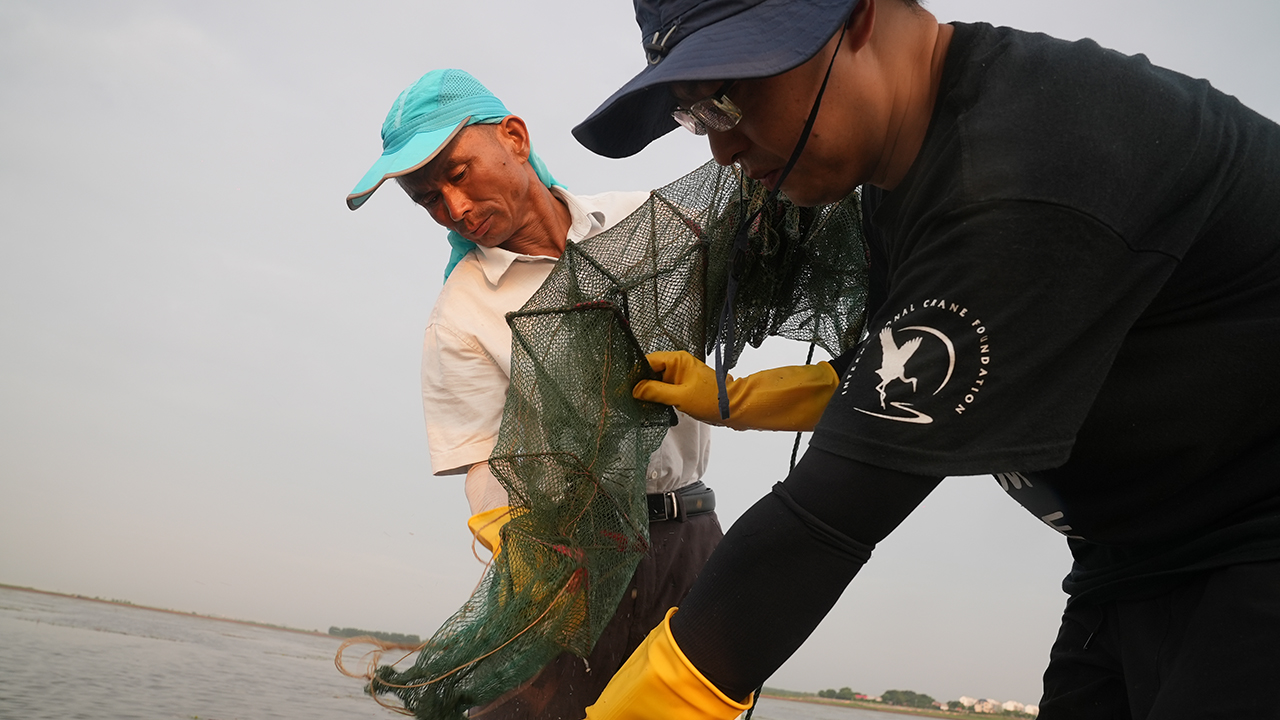


Poyang Lake is the most important wetland in the East Asia Flyway, supporting almost all the wintering population of Siberian Cranes and the western population of White-naped Cranes, as well as thousands of migratory waterbirds. The annual pattern of high water in summer and low water in winter creates a mosaic of sub lakes that provide vital wintering habitat for migratory waterfowl.
Degradation of sub lake ecosystems and recent extreme weather events caused a massive loss of submerged aquatic vegetation, the main food source for cranes. Consequently, cranes move to agricultural areas as refuge habitat. Our goal is for effective habitat restoration and crane-friendly community development, along with management of agriculture when natural food abundance is low or inaccessible. Our China Program works closely with local communities, nature reserves, government, and research institutions to ensure this critical landscape is available for future generations of cranes and people.
Wetland Conservation, Regenerative Agriculture, & Restoring Sarus Cranes in the Mekong Region
Tram Chim National Park, Vietnam
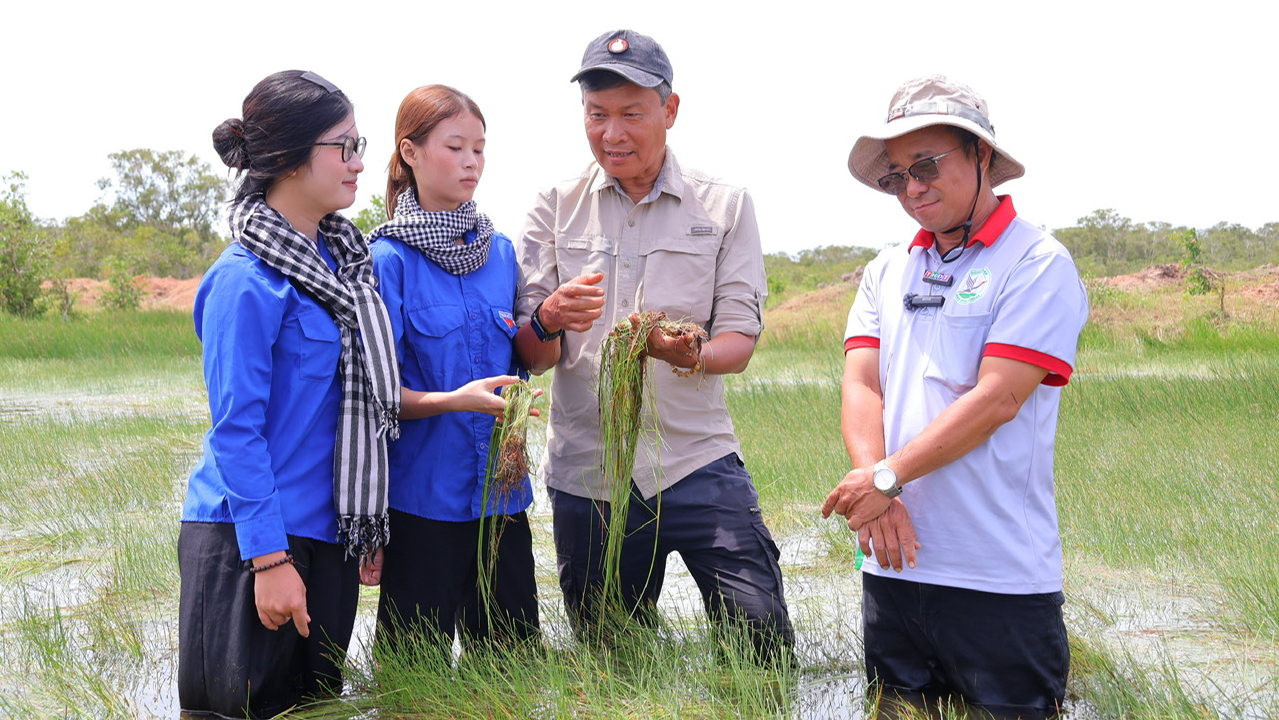


The Sarus Crane, the world’s tallest flying bird, is highly threatened and declining in Southeast Asia due to wetland loss and degradation. To combat these losses, we have been deeply involved in Vietnam, Cambodia, Myanmar, and Thailand. In Vietnam, we helped establish and manage Tram Chim National Park now the country’s largest wetland protected area. Today, the provincial government and our partners are committed to supporting efforts to restore a breeding population of Sarus Cranes at Tram Chim, historic breeding grounds for the species.
This project models a well-rounded approach to the reintroduction of endangered species on the brink of extinction, combining captive rearing and reintroduction efforts with best management practices for protected areas and sustainable buffer zone development that supports wildlife and local communities. We will scale-up this project over time around Tram Chim to ensure optimal habitat availability for the newly reintroduced Sarus Cranes to thrive in the wild as the population grows.

Platte River Migration Stopover
Nebraska, USACritical stopover site for migrating Sandhill and Whooping Cranes.
Whooping Crane Breeding Grounds
Wood Buffalo National Park, CanadaLorem ipsum dolor sit amet consectetur. Mi risus nunc at suspendisse ut. Tristique feugiat amet integer odio. Hac at id sed nisi. Morbi semper eget ut mollis eget. Ultricies nunc euismod aenean ullamcorper sapien. Eu tortor fringilla proin enim enim nunc tortor. Eget diam at sapien massa vitae maecenas enim libero. Donec tortor leo nullam erat integer sed fermentum enim congue.
Nullam mattis feugiat vitae rutrum lorem a. Molestie euismod enim nulla sed vestibulum et id nulla.
Aliquet mauris vestibulum suspendisse nisl dictumst volutpat risus. Nec lectus et quis molestie sodales. Nisi morbi cursus sed ultricies fermentum cursus erat ac rhoncus. Leo accumsan in sed tortor nunc bibendum dolor ornare nec. Senectus vitae nunc ac lectus neque purus placerat suspendisse augue,
Viverra eget mollis facilisi aliquam erat nunc facilisi.
Boeung Prek Lapouv Nature Reserve
Takeo Province, CambodiaOne of the most wintering sites for the Cambodia-Vietnam Eastern Sarus Crane population. Seasonally flooded freshwater wetlands.
Saskatoon Potholes & Lakes
Saskatchewan, CanadaImportant spring and fall stopoover site for Whooping Cranes. A limited portion is protected through conservation easements.
Marcelin Wetlands & Lakes
Saskatchewan, CanadaImportant spring and fall stopoover site for Whooping Cranes. A limited portion is protected through conservation easements or as local ecological reserves.
Lake Fitri
Batha, ChadRamsar Wetland of International Importance
Zakouma National Park
Guéra, ChadImportant Black Crowned Crane flocking area.
Lake Chad
Lac, ChadRamsar Wetland of International Importance
Aouk National Park
Salamat, ChadImportant Black Crowned Crane breeding area.
Huize
Yunnan Province, ChinaOne of major wintering sites for Black-necked Cranes on the Yunnan-Guizhou Plateau.
Keerqin National Nature Reserve
Inner Mongolia, ChinaBreeding area for Red-crowned Cranes in Inner Mongolia.
Hengshui Lake National Nature Reserve
Hebei, ChinaMigration stop-over site for Siberian Cranes in Hebei Province.
Dashanbao National Nature Reserve
Yunnan Province, ChinaWintering site for Black-necked Cranes in Yunnan Province.
Xundian Provincial National Nature Reserve
Yunnan Province, ChinaWintering site for Black-necked Cranes in Yunnan Province.
Lake Tana
Amhara, EthiopiaUNESCO Biosphere reserve. Wattled Crane and Black Crowned Crane breeding area.
Gambella National Park
Gambella, EthiopiaImportant Black Crowned Crane area.
Bale Mountains National Park
Oramia, EthiopiaImportant Wattled Crane bredding area.
Izumi Wintering Habitat of Cranes
Izumi City, JapanRamsar Wetland of International Importance (478 ha) designated Nov. 2021. Also nationally Special Protected Area.
Ahero rice scheme
Kisumu, KenyaA key Grey Crowned Crane flocking site
Botwa/Karara wetland
Trans Nzoia County, KenyaBreeding site for Grey Crowned Cranes
Chemalal wetland
Uasin Gishu County, KenyaBreeding site for Grey Crowned Cranes
Kibirong Wetland
Nandi, KenyaBreeding and flocking site for Grey Crowned Cranes
Kiplombe Wetland
Uasin Gishu County, KenyaBreeding site for Grey Crowned Cranes
Kobos Wetland
Trans Nzoia County, KenyaBreeding and flocking site for Grey Crowned Cranes
Lake Ol' Bolossat
Nyandarua, KenyaDesignated as a Key Biodivesity Area (IBA), proposed for Ramsar Site and National Reserve status designation; 100+ Grey Crowned Crane breeding pairs
Mararen Wetland
Uasin Gishu County, KenyaGrey Crowned Crane breeding site
Marura Wetland
Uasin Gishu County, KenyaImportant Grey Crowned Crane breeding site
Ngegu wetland
Homa Bay, KenyaKey breeding site for Grey Crowned Cranes
Ngorika Complex
Nyandarua, KenyaBreeding sites for Grey Crowned Cranes
Saiwa Swamp NP
Trans Nzoia County, KenyaBreeding site for Grey Crowned Cranes
Ziwa Wetland
Uasin Gishu County, KenyaImportant breeding and flocking site for Grey Crowned Cranes
Shwe Laung and Achaw
Ayeyarwady, MyanmarHabitat for Sarus Cranes
Muraviovka Park
Amur Region, RussiaPrivately protected area since 1994 for breeding Red-crowned and White-naped Cranes, and staging Hooded and Siberian Cranes.
Rugezi Marsh
Burera, RwandaRamsar Wetland of International Importance
Casamance
SenegalSenegal
Djoudj National Park
SenegalSenegal River Delta represents an important waterbird area, which includes Black Crowned Cranes.
Cheorwon
Gangwon-do, South KoreaWintering area for several East Asia crane species, including Red-crowned and White-naped Cranes.
Buriram Province
Buriram Province, ThailandThe release site of the reintroduced Sarus Crane population in Thailand. There are approximately 150 Sarus Cranes in the reintroduced population in 2023.
Rukiga
District, UgandaKey breeding site for Grey Crowned Cranes
Kiyanja-Kaku Wetland
Lwengo district, UgandaLwengo district, Uganda
White Lake Wetlands Conservation Area
Louisiana, USAAlong with nearby Rockefeller Wildlife Refuge, introduction area for non-migratory Whooping Crane flock. Adult birds now occupy multiple parishes in and around this area, mostly nesting in private ag lands and natural wetlands.
White River Marsh State Wildlife Area
Wisconsin, USABreeding and Release site for the Eastern Migratory Whooping Crane Population.
Horicon National Wildlife Refuge
Wisconsin, USABreeding and release site for Eastern Migratory Whooping Crane Population
Red River
Texas/Oklahoma, USAImportant spring and fall stopover site for Aransas-Wood Buffalo Whooping Crane Population.
Salt Plains National Wildlife Refuge
Oklahoma, USAVery important spring and fall stopover. In fact, a higher proportion of Whooping Cranes use this stopover site during migration than any other water body. Designated “critical habitat.”
Quivira National Wildlife Refuge
Kansas, USAVery important spring and fall stopover; 76 Whooping Cranes were detected at Quivira at one time in the spring of 2010. Designated “critical habitat.”
Cheyenne Bottoms Wildlife Management Area
Kansas, USALargest inland marsh in the United States. Designated “critical habitat” for the Whooping Crane.
Loup River System
Nebraska, USARecieves similar Whooping Crane use to the nearby Platte but has no protections. However, it still exists in a mosiac of ranchlands and is in good ecological condition. Includes the North, Middle, and mainstem Loup Rivers
Niobrara River
Nebraska, USAVery important spring and fall stopover. Partially protected as a National Senic River as well as smaller areas protected as State Wildlife Areas and State Parks. Similar levels of use to the Loup.
Lake Andes Wetland Management District
South Dakota, USAImportant spring and fall stopoover. A singificant portion is privately owned but protected through federal easements.
Huron Wetland Management District
South Dakota, USAImportant spring and fall stopoover. A singificant portion is privately owned but protected through federal easements.
Long Lake Wetland Management District
North Dakota, USAImportant spring and fall stopoover. A singificant portion is privately owned but protected through federal easements.
Crosby Wetland Management District
North Dakota, USAImportant spring and fall stopoover. A singificant portion is privately owned but protected through federal easements.
Phu My Nature Reserve
Kien Giang Province, VietnamOne of the most important wintering sites of Eastern Sarus Cranes in Cambodia and Vietnam. Coastal seasonally flooded marshes with several rare wetland plant communities.
Tram Chim National Park
Dong Thap Province, VietnamOne of the most important sites for the Cambodia-Vietnam Eastern Sarus Crane population. The site is selected for a Sarus Crane population restoration project, a cooperation among Thailand, Vietnam and the International Crane Foundation over the next 10 years.
Lang Sen Wetland Nature Reserve
Long An Province, VietnamWintering site of Eastern Sarus Cranes of Cambodia-Vietnam population.
Lo Go Xa Mat National Park
Tay Ninh Province, VietnamStop-over site on seasonal migration route for the Cambodia-Vietnam Eastern Sarus Crane population.